Is Your Garden Getting Enough Water and Light?
The ECOWITT WH51 leads because it reads root zone soil moisture over long radio range instead of Bluetooth. Netro Whisperer suits single plants with moisture, temperature and sunlight data together. Choose the AcuRite Iris 5-in-1 for rainfall, wind and humidity across the whole yard.
Root zone moisture, not air temperature, tells you whether a plant needs water. The ECOWITT WH51 buries a probe there and reports over long range radio, while the Netro Whisperer tracks moisture, light and heat for one plant at a time. Gardeners who want rainfall and wind data instead should look at the AcuRite Iris weather station.
These seven devices measure completely different things, from soil moisture to airflow to water flowing through a hose, yet marketing rarely spells out the difference. Some also require a separate hub before any reading reaches an app. We compared published specifications, measured parameters, range and power source, alongside owner feedback on outdoor durability and app reliability.
How to pick the right one
What does a smart garden sensor actually measure? Soil sensors answer one question: is the root zone wet or dry right now. Weather stations report what fell from the sky, plus temperature, humidity and wind. Flow meters measure water delivered through a hose or valve. Buying the wrong category causes most disappointment, since a weather station never reports soil moisture and a soil probe never reports rainfall. Match the sensor type to the actual question before comparing brands.
Wi-Fi, Bluetooth or radio: which range do you need? Bluetooth sensors like the SensorPush HT.w need a phone within short range to pull data. Long range radio units such as the ECOWITT WH51 report continuously to a gateway instead, covering a full property. Wi-Fi sensors, including the Govee H5179, connect straight to a router with no separate hub. Radio and hub based systems add a purchase step but reach corners Wi-Fi and Bluetooth cannot. Confirm gateway or hub requirements before ordering, since a sensor without one may sit silent.
Can these sensors survive outside all year? Terms like weather resistant usually mean sheltered placement, not full year rain and snow exposure. AcuRite’s pole mounted station and Ecowitt’s buried probe are built for direct exposure through winter. Indoor style sensors placed on an open fence post often fail after one prolonged wet spell. Battery performance also drops in cold weather regardless of the weatherproofing rating. Check the manufacturer’s exposure rating, not just the word weatherproof on the box.
Where should you place a soil probe or weather station? A probe pushed in near a downspout or bed edge reports conditions plants never experience at their roots. Place soil probes at root depth, in the same soil type as the plants being tracked. Weather stations need open sky and airflow, away from walls that trap heat and skew wind readings. Greenhouse sensors like the SensorPush HT.w work best hung at plant height, away from vents and doors. A few inches of placement difference can shift a reading enough to change a watering decision.
The shortlist, ranked

ECOWITT WH51 Wireless Soil Moisture Sensor
A capacitive probe pushes into the root zone and sends moisture percentage back over long range radio, not Bluetooth. That link keeps working from the far end of a half acre lot. Multiple WH51 units can report into a single Ecowitt gateway, so separate beds get separate readings, and batteries typically last many months.
Pros
- Reads moisture at real garden distances
- Multiple sensors share one gateway
- Batteries last many months between changes
Cons
- Requires a gateway purchased separately
- Setup involves more steps than an app only sensor

Netro Whisperer Smart Plant Sensor
This sensor tracks moisture, temperature and sunlight for a single plant or small bed rather than one blended number. Solar cells eliminate battery changes entirely. Pairing with a Netro watering controller lets the same app schedule irrigation off the same readings.
Pros
- Combines three readings from one sensor
- Solar power removes battery maintenance
- Links directly to Netro watering controllers
Cons
- Covers only one plant or small bed per unit
- Locked into the Netro app ecosystem
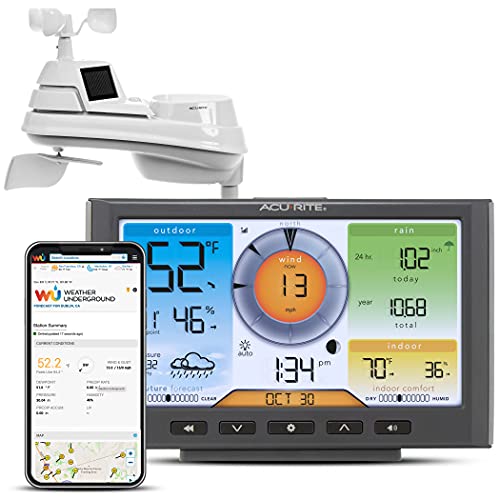
AcuRite Iris 5-in-1 Weather Station
Five sensors in one housing track rainfall, temperature, humidity, wind speed and wind direction across the whole yard. An indoor console shows readings without opening an app, and data also syncs to a phone. Mounting on a pole or post keeps the unit clear of walls and trees that skew wind and temperature readings.
Pros
- Rainfall total can settle the watering question alone
- Indoor console works without a smartphone
- Wind and humidity data cover the whole yard
Cons
- Does not measure soil moisture directly
- Needs an open, unobstructed mounting location

SwitchBot Outdoor Meter
Weather resistant housing protects this temperature and humidity sensor on a porch, shed wall or garden fence. It joins an existing SwitchBot setup and can trigger scenes, such as a smart plug controlled fan when humidity climbs. Soil moisture is outside its scope, so it answers frost and humidity questions rather than watering ones.
Pros
- Fits directly into an existing SwitchBot ecosystem
- Triggers automations and phone alerts
- Pairs in minutes through the SwitchBot app
Cons
- No soil moisture measurement
- Remote access away from home needs the SwitchBot hub
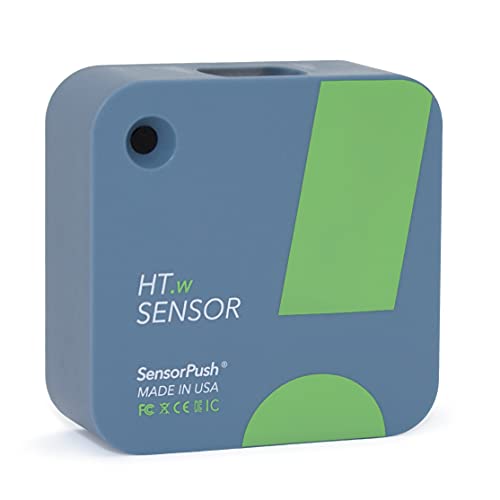
SensorPush HT.w Wireless Thermometer Hygrometer
Precision is the focus here, useful in a greenhouse or cold frame where two degrees can decide whether seedlings survive overnight. The app logs a continuous history instead of showing only a current reading. Bluetooth range stays short unless a gateway accessory extends it toward Wi-Fi distances.
Pros
- High measurement precision for temperature swings
- Continuous logging builds a searchable history
- Compact housing suits tight greenhouse spaces
Cons
- Bluetooth range is short without the optional gateway
- No soil moisture or light measurement

Govee WiFi Thermo-Hygrometer H5179
A direct Wi-Fi connection skips the hub that pricier sensors require, which keeps setup to a single app download. Placed in a greenhouse or potting shed, it sends frost and heat alerts straight to a phone. Full outdoor exposure sits outside its design, so sheltered spots work best.
Pros
- No hub needed for Wi-Fi setup
- Sends frost and heat alerts to a phone
- Simple enough to place several around a property
Cons
- Not built for full outdoor exposure
- Needs reliable Wi-Fi signal at its location

Rachio Smart Hose Timer with Wireless Flow Meter
This measures water actually delivered through a hose, not soil condition, filling the other half of the watering picture. A phone app schedules cycles or starts one manually from anywhere with signal. Weather skip logic checks local forecasts and cancels cycles when rain is expected.
Pros
- Tracks real water usage through the hose
- Cancels cycles automatically before forecast rain
- Installs at a standard hose bib in minutes
Cons
- Requires the separate Rachio wireless hub
- Does not read soil moisture or plant condition
How they stack up
| # | Model | Measures | Best for | Score | Price |
|---|---|---|---|---|---|
| 1 | ECOWITT WH51 Wireless Soil Moisture Sensor | Soil moisture percentage | Best overall | 9.4 | Check price |
| 2 | Netro Whisperer Smart Plant Sensor | Moisture, temperature, sunlight | Best for individual plants | 9.2 | Check price |
| 3 | AcuRite Iris 5-in-1 Weather Station | Rain, temperature, humidity, wind | Best for whole yard weather tracking | 9.0 | Check price |
| 4 | SwitchBot Outdoor Meter | Temperature and humidity | Best for SwitchBot smart home users | 8.7 | Check price |
| 5 | SensorPush HT.w Wireless Thermometer Hygrometer | Temperature and humidity | Best for greenhouse precision | 8.5 | Check price |
| 6 | Govee WiFi Thermo-Hygrometer H5179 | Temperature and humidity | Best value for budget monitoring | 8.2 | Check price |
| 7 | Rachio Smart Hose Timer with Wireless Flow Meter | Water flow and usage | Best for automated watering control | 8.0 | Check price |
Questions worth asking
Do smart garden sensors need Wi-Fi?
Some models, like the Govee H5179, connect directly to Wi-Fi. Others use Bluetooth or a proprietary radio link through a gateway that holds the network connection. Check which method a listing specifies, since a plain Wi-Fi router rarely reaches a garden’s far corners.
How accurate is a soil moisture sensor?
Capacitive probes such as the ECOWITT WH51 give consistent relative readings, useful for spotting a drying trend. Absolute percentages shift with soil type and mineral content. Most gardeners learn what a wet and dry reading looks like in their own beds rather than trusting one fixed number.
Can garden sensors stay outside through winter?
Purpose built outdoor units, including pole mounted weather stations and buried soil probes, are designed for year round exposure. Battery output still drops in freezing temperatures. Sensors labeled weather resistant rather than weatherproof are safer moved under cover for winter.
How many soil sensors does a vegetable garden need?
One sensor per distinct watering zone is the common approach, since a shaded bed and a sunny border dry at different rates. Systems that support several sensors on one gateway, like Ecowitt’s, keep multi zone monitoring manageable. A single sensor for an entire mixed garden misses those differences.
Will a soil sensor water plants automatically?
Not on its own. A sensor only reports conditions, so a controller or smart hose timer, such as the Rachio unit, has to act on that data. Some ecosystems link their own sensors and controllers directly through one app.
How long do garden sensor batteries last?
Long range radio soil sensors, like the ECOWITT WH51, commonly run many months on one set of batteries. Wi-Fi connected sensors drain faster, since holding a network connection uses more power. Solar powered units such as the Netro Whisperer avoid the question entirely.
Is a full weather station worth it for a home garden?
Only if rainfall, wind or humidity change what you do in the garden day to day. A soil probe answers watering questions more directly. A weather station adds value mainly for frost warnings and irrigation timing decisions across a larger property.
Are plant sensors useful for houseplants too?
Individual plant sensors like the Netro Whisperer work indoors, though solar powered versions need a bright windowsill. A single capacitive probe is usually enough for a handful of houseplants. Full outdoor weather stations offer little benefit indoors.
What is the best garden sensor for a greenhouse?
The SensorPush HT.w targets greenhouse conditions specifically, with high precision temperature and humidity readings plus continuous logging. That accuracy matters where a couple of degrees decides whether seedlings survive overnight. The Govee H5179 offers a simpler alternative for the same sheltered environment.
Soil sensor vs weather station: which one answers watering questions?
A soil sensor reports root zone moisture directly, which answers whether to water today. A weather station reports rainfall, temperature and wind instead, which explains why the soil is behaving that way. Pick the soil sensor for watering decisions and the weather station for broader yard planning.
The bottom line
The ECOWITT WH51 answers the watering question most directly, since root zone moisture over long radio range beats any weather guess. Add the Netro Whisperer where individual plants need closer attention, and pair either with the AcuRite Iris for rainfall and wind context. Choose the Rachio flow meter once you want to act on those readings automatically.
Sierra Daniels
Sierra's background is in landscape design and nursery retail. She focuses on lawn and garden equipment, outdoor furniture and gear durability, weighing published specs against how materials actually hold up outside.


