Small Animal Toys: Matching Chews To Your Pet’s Species
Niteangel’s Wooden Chew Sticks Set covers the most species for dental wear across a single cage. Persistent chewers do better with Oxbow Enriched Life Timber Twist and its dense willow braid. Bwogue’s twelve-piece set is the cheapest way to test chew toys with hamsters and gerbils.
Niteangel’s Wooden Chew Sticks Set is the strongest all-around pick, since mixed shapes suit rabbits, guinea pigs, hamsters and chinchillas without species-specific guesswork. A determined chewer wears down individual pieces within days, so heavy gnawers may need the denser Oxbow Timber Twist instead. Budget-minded owners can start with Bwogue’s twelve-piece set sized for hamsters and gerbils.
Six different pet species bring six different jaw strengths and dietary needs, which makes picking toys harder than it looks. We compared listed materials, chew density, cage attachment methods and species guidance from each product page, then weighed owner feedback on how fast pieces wore out or unraveled.
Our top picks

Niteangel Wooden Chew Sticks Set
Mixed shapes, balls, sticks and rings, are cut from unfinished apple and pear wood with no coating. Variety keeps rabbits, guinea pigs, hamsters and chinchillas interested longer than a single chew shape would. Continuous gnawing on the wood wears down teeth that never stop growing.
Pros
- Variety of shapes keeps interest across sessions
- Untreated wood is safe if fully ingested
- Works for several species without buying separate toys
Cons
- Individual pieces wear down quickly under heavy chewers
- No clip or attachment point for hanging on cage bars
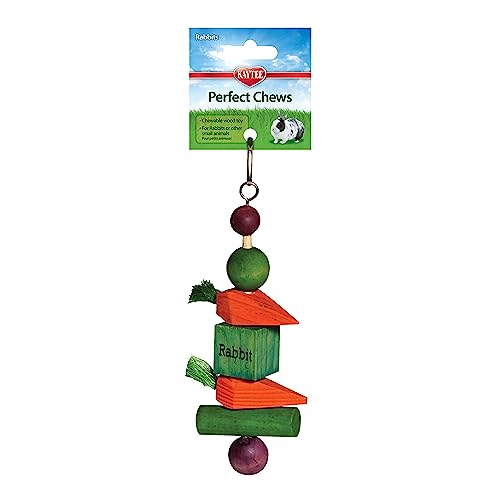
Kaytee Perfect Rainbow Chews Toy
Stacked discs of vegetable-dyed wood thread onto a wire core, then clip to the top of a cage. Bright colors draw more attention from rabbits and guinea pigs than plain wood does. Hanging the toy keeps it off soiled bedding between cage cleanings.
Pros
- Vegetable-based dye is considered safe to chew
- Hanging design saves floor space
- Bright colors add visible enrichment variety
Cons
- Wire core is exposed once the wood wears away
- Smaller pets may not reach a toy hung too high
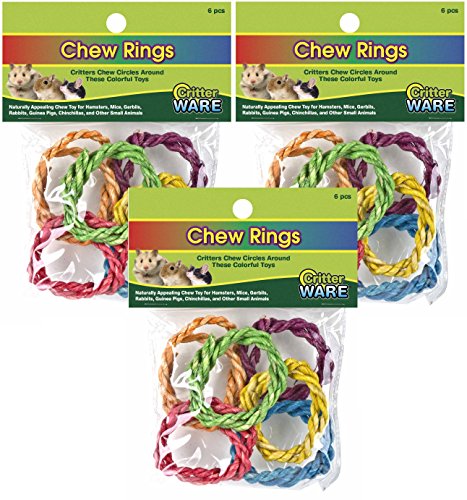
Bwogue 12-Piece Small Animal Chew Toy Set
Twelve chew items mix natural wood knots, loofah slices and corn husk pieces sized for pocket pets. A mesh bag doubles as storage between cage cleanings. Smaller pieces fit through cage door openings that block bulkier toys.
Pros
- Low cost per individual chew piece
- Loofah slices add texture beyond plain wood
- Compact sizing fits small cage doors and corners
Cons
- Small pieces get lost in bedding quickly
- Not sized for larger chewers like rabbits

Kaytee Critter Cave
A dome-shaped hut pressed from compressed grass and paper fiber gives pets somewhere to retreat from noise or handling. Two entry points keep a pet from getting cornered by cagemates. Since the shell itself is chewable, it doubles as slow enrichment beyond just hiding.
Pros
- Dual openings prevent cornering between cagemates
- Edible shell adds chewing beyond simple hiding
- Lightweight enough to reposition during cage cleaning
Cons
- Fiber shell softens quickly in humid enclosures
- Guinea pigs can chew through the roof within weeks
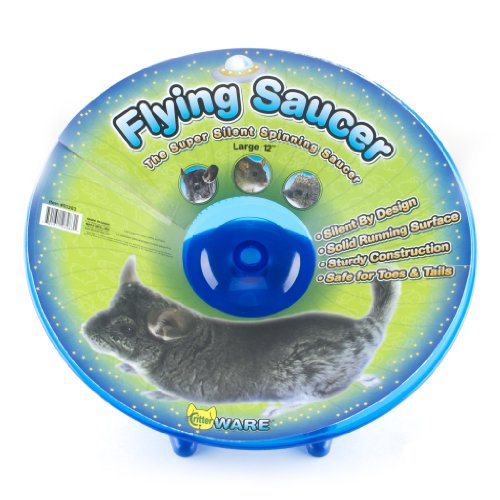
Ware Manufacturing Flying Saucer Small Pet Exercise Wheel
A tilted disc design lets hamsters and gerbils run without arching the spine the way a standard upright wheel forces. Its bearing runs close to silent, which matters for cages kept in a bedroom. A freestanding base sits directly on the cage floor without needing bar clips.
Pros
- Flat running surface is gentler on the spine
- Near-silent rotation suits bedroom placement
- Stable base resists tipping during fast running
Cons
- Exposed outer edge can pinch a tail if oversized for the pet
- Too small for guinea pigs or rabbits
Kathson Hanging Loofah Chew Balls
Hollow loofah and grass balls can be stuffed with hay or small treats, turning chew time into a foraging task. String hangers with clips keep the balls at nose height instead of resting in soiled bedding. Natural loofah fiber cleans teeth as pets gnaw through the outer layer.
Pros
- Stuffing hay inside encourages natural foraging behavior
- Hanging placement keeps toys off soiled bedding
- Loofah fiber is fully digestible in small amounts
Cons
- Balls unravel fast under determined chewers
- Refilling with hay adds an extra weekly chore

Oxbow Enriched Life Timber Twist Toy
Willow branches twisted into a tight braid take longer to wear down than the loose chew sticks packaged in most sets. Timothy hay woven through the braid adds a fiber source pets nibble alongside the wood. Its shape resists rolling, so it tends to stay put in a cage corner.
Pros
- Dense willow lasts longer than typical loose chew sticks
- Woven hay adds a dietary fiber source
- Braided shape stays in place without anchoring
Cons
- Thick braid is hard for hamsters and gerbils to grip
- Costs more per piece than basic wood chew sets
What to look for
Chew Toys vs Activity Toys: What Small Pets Actually Need Small pet toys fall into four rough categories: chew toys for dental wear, activity or foraging toys for mental stimulation, hideouts for stress reduction and exercise wheels for cardio. Rodents like hamsters, gerbils and rats have teeth that grow continuously, so gnawing on wood or hay keeps incisors worn to a manageable length. Guinea pigs and chinchillas also benefit from chewing, though hay intake handles more of that work for guinea pigs specifically. Stocking a cage with only one toy type usually leaves gaps, since a pet that never runs or never hides can still show stress signs despite a full chew supply.
Which Toy Materials Are Safe to Chew Untreated wood such as apple, pear or willow branches is generally considered safe, since it carries no pesticide residue or finish. Loofah, dried grass and hay based toys are edible outright and pass through digestion without issue in small amounts. Vegetable-based dye used in some wood assortments is widely accepted as safe, though any toy with unspecified paint or glue is worth skipping. Plastic components outlast wood but offer no dental wear, so they work best paired with an edible chew rather than replacing one.
Matching Toys to Species: Rabbits, Guinea Pigs, Hamsters, Gerbils, Rats and Chinchillas Rabbits and chinchillas need denser, longer-lasting wood, since their jaw strength wears through soft chew sticks quickly. Guinea pigs chew less aggressively and lean more on hideouts and tunnels for enrichment, because unlimited hay already covers most of their dental needs. Flat exercise wheels matter more than bulky chew blocks for hamsters and gerbils, and toy pieces sized for a rabbit can be too large for them to grip. Rats favor hanging and foraging toys they can manipulate with their paws, closer to how they would forage in the wild.
Signs a Toy Needs Replacing Remove wood chews once they’re gnawed into small splintered fragments, before a pet swallows a sharp piece. Fiber hideouts made from compressed grass or paper degrade in humid cages and can develop mold along the base, which isn’t obvious without lifting the hut to check underneath. Wire cores inside wrapped chew toys become exposed once the wood coating is gone, creating a snag risk for claws or whiskers. A wobble or squeak in a wheel usually points to a worn bearing, and a loose axle can pinch a foot mid-run.
How they stack up
| # | Model | Material | Best for | Score | Price |
|---|---|---|---|---|---|
| 1 | Niteangel Wooden Chew Sticks Set | Natural apple and pear wood | Best overall | 9.4 | Check price |
| 2 | Kaytee Perfect Rainbow Chews Toy | Vegetable-dyed wood discs on wire | Best value | 9.0 | Check price |
| 3 | Bwogue 12-Piece Small Animal Chew Toy Set | Natural wood, loofah, corn husk | Best budget | 8.7 | Check price |
| 4 | Kaytee Critter Cave | Compressed grass and paper fiber | Best for hideouts and stress reduction | 8.4 | Check price |
| 5 | Ware Manufacturing Flying Saucer Small Pet Exercise Wheel | Durable molded plastic | Best for exercise wheels | 8.2 | Check price |
| 6 | Kathson Hanging Loofah Chew Balls | Natural loofah and dried grass | Best for foraging and enrichment | 8.1 | Check price |
| 7 | Oxbow Enriched Life Timber Twist Toy | Twisted willow branches and timothy hay | Best for chinchillas and heavy chewers | 8.0 | Check price |
Good to know
How often should small pet chew toys be replaced?
Replace wood chews once they’re gnawed into small splintered pieces, often every two to four weeks for heavy chewers. Hideouts and fiber toys should be checked monthly for mold or thinning walls.
What toys are safe for guinea pigs versus rabbits?
Guinea pigs do well with hideouts, tunnels and softer chew items since hay covers most of their dental wear. Rabbits chew more aggressively and need denser wood, like willow or apple branches, to keep pace with tooth growth.
Can hamsters use the same exercise wheel as gerbils?
Yes, a flat-surface wheel around 6.5 inches works for both, since neither species needs the larger diameter a rat or guinea pig would require. Check that the running surface is solid, not wire, to protect small feet.
Is dyed wood safe for small animals to chew?
Wood colored with vegetable-based dye, as used in some Kaytee toys, is generally considered safe for chewing. Avoid toys where the coloring method isn’t specified on the packaging.
Do guinea pigs need chew toys if they eat hay daily?
Unlimited hay handles most of a guinea pig’s dental wear on its own, but chew toys still add mental stimulation and a backup dental outlet. Skipping toys entirely isn’t recommended even with a hay-heavy diet.
What is the best toy for a chinchilla’s teeth?
Dense braided willow, like the Oxbow Enriched Life Timber Twist, lasts longer than loose wood sticks and matches a chinchilla’s strong chewing habit. Pumice or lava-based chew stones are a common secondary option.
What are the best small pet toys for reducing cage boredom?
Foraging toys that hide hay or treats inside, such as loofah balls, give pets a task rather than just a chew object. Rotating two or three toy types weekly keeps a cage from feeling stale faster than adding more of the same toy.
Are loofah toys digestible if swallowed?
Natural loofah fiber breaks down in the digestive tract in small amounts and is considered a safe material for gnawing. Large swallowed chunks can still cause issues, so monitor pets that shred loofah quickly rather than chewing it slowly.
Wood chews vs loofah toys: which lasts longer?
Dense wood, especially braided willow, generally outlasts loofah, which shreds and unravels faster under determined chewers. Loofah wins on digestibility and foraging value instead of raw durability.
What is the best small animal toy for a multi-species household?
Niteangel’s Wooden Chew Sticks Set covers rabbits, guinea pigs, hamsters and chinchillas from one bag, which simplifies shopping for a mixed-pet home.
The verdict
For most multi-pet households, Niteangel’s Wooden Chew Sticks Set is the easiest starting point, since it works across species without extra research. Chinchilla owners and anyone with a persistent chewer should go straight to the Oxbow Enriched Life Timber Twist, since its braided willow holds up far longer than loose sticks. Shoppers who just need a cheap way to test whether a hamster or gerbil will use chew toys at all can start with the Bwogue set instead.
Olivia Hartley
Olivia spent several years working at an animal shelter and a pet-supply retailer before joining the editorial team. She researches pet gear with an emphasis on safety, comfort and the fine print that owners often miss.