Which Small Animal Bowls Survive Chewing and Tipping
Kaytee Ceramic Small Animal Bowl leads with a heavy, chew-proof base that resists tipping during normal foraging. Niteangel Ceramic Chew-Proof Bowl delivers similar durability for less money. Owners with wire cages should pick the Bwogue Stainless Steel Hanging Bowl, since it clips onto the bars instead of sitting loose on the floor.
Kaytee Ceramic Small Animal Bowl suits owners of guinea pigs or rabbits that flip and chew through lighter dishes. Its glazed stoneware resists chew marks entirely, and a wide base keeps it planted, though the bowl is heavier to lift out for cleaning. Niteangel Ceramic Chew-Proof Bowl matches that durability for less, and wire-cage owners do better with the clip-on Bwogue Stainless Steel Hanging Bowl.
Guinea pigs, rabbits, hamsters and chinchillas all gnaw on whatever holds their food, so material decides how often you replace the bowl. We compared stated material, dishwasher safety, weight and owner reports on tipping, chew damage and how well pellets and hay stay contained.
What to look for
What to look for in a washable small animal bowl Material decides how a bowl survives daily chewing, and stoneware ceramic or stainless steel outlasts plastic by years. Weight and base width determine tip resistance, since a light bowl gets flipped during normal foraging. Capacity should match your pet’s daily portion rather than the cage size. Confirm the listing actually states dishwasher safe instead of just wipeable.
Ceramic vs stainless steel vs plastic Ceramic resists chewing completely and adds weight that stops tipping, though it can chip or crack if dropped. Stainless steel resists rust and chewing while staying lighter than ceramic, and it clips onto wire cages when needed. Plastic costs the least and works for hamsters that chew less aggressively, but rabbits and guinea pigs wear through it fast. Match the material to how hard your specific pet actually chews.
Best bowls for guinea pigs and rabbits These pets chew constantly and push bowls around while foraging, so weight and chew resistance matter most. A wide, heavy ceramic base like the Kaytee bowl resists both problems at once. Corner and dual-compartment designs help in smaller hutches where floor space runs tight. Thin plastic bowls rarely survive these species past a few weeks.
Best bowls for hamsters and small cage setups Smaller pets need smaller capacity bowls, since oversized dishes waste cage floor space better used for exercise. A clip-on stainless steel bowl frees up that floor space entirely by mounting to the bars. Corner-fit designs like the Qpets bowl also work well in compact hamster cages. Rinse and dry any bowl fully before refilling, since trapped moisture spoils dry food faster.
The shortlist, ranked

Kaytee Ceramic Small Animal Bowl
Glazed stoneware shrugs off chew marks that plastic bowls pick up within days. A wide, heavy base keeps the dish planted even as a guinea pig noses it around the floor. Multi-pet households report it surviving years of dishwasher cycles without cracking.
Pros
- Ceramic resists chewing damage entirely
- Wide base stops tipping and sliding
- Handles years of dishwasher cycles
Cons
- Heavier to lift out for cleaning
- Can crack if dropped on a hard floor
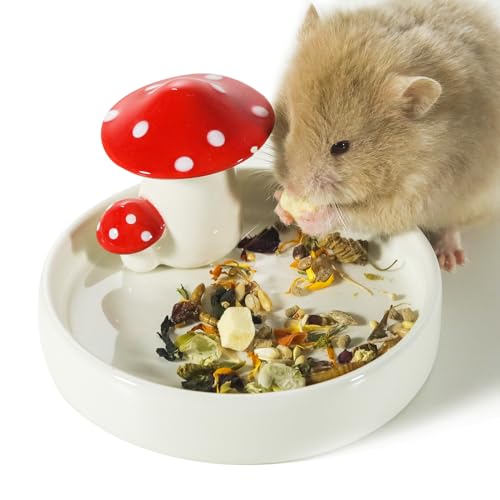
Niteangel Ceramic Chew-Proof Bowl
The same chew-proof stoneware used in premium bowls ships in several sizes for hamsters through rabbits. A rounded rim keeps loose pellets from spilling during eager feeding. Multi-pet owners buy several sizes from this line to match each cage.
Pros
- Available in several sizes for different pets
- Rounded rim cuts down on pellet spillage
- Costs less than comparable premium ceramic bowls
Cons
- Rim glaze can chip after years of use
- Larger sizes eat up cage floor space

Bwogue Stainless Steel Hanging Food Bowl
A spring clip locks the bowl onto wire cage bars, keeping food off the bedding entirely. Stainless steel resists rust and chew marks better than coated metal alternatives. Chinchilla and rabbit owners like that it frees up floor space other bowls take up.
Pros
- Clip mount keeps food off bedding
- Stainless steel resists rust and chewing
- Frees up cage floor space entirely
Cons
- Needs wire bars, so no flat-surface option
- Clip mechanism can loosen with heavy use

Mkono Ceramic Bowl with Wood Stand
A wooden stand lifts the bowl slightly and adds a wide footprint that resists nose-nudging. Rabbits and guinea pigs that dig at floor-level dishes tend to leave this one alone. The stand also keeps loose bedding from getting kicked into the food.
Pros
- Elevated design blocks bedding contamination
- Wide stand footprint prevents tipping
- Ceramic bowl itself is fully dishwasher safe
Cons
- Wooden stand cannot go in the dishwasher
- Chewing pets may target the wood base
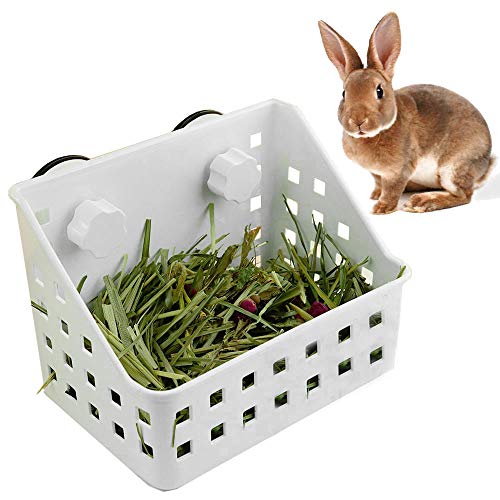
PINVNBY Washable Hay and Food Bowl
Two separate compartments keep dry pellets apart from hay in one footprint. Removable plastic liners lift out for a quick rinse or dishwasher cycle. Owners feeding both hay and pellets daily skip needing two separate dishes in a small cage.
Pros
- Keeps hay and pellets cleanly separated
- Removable liners make washing quick
- Saves cage space compared with two bowls
Cons
- Plastic shows chew marks over time
- Lighter weight than solid ceramic options

Qpets Corner Food Bowl
A triangular shape tucks into a cage corner, freeing up floor space for a small pet to move. Low cost makes it easy to keep spares on hand for multiple cages. Limited-footprint cage owners cite the corner fit as the main reason to buy it.
Pros
- Corner shape saves cage floor space
- Low cost makes buying multiples easy
- Dishwasher safe for quick cleaning
Cons
- Smaller capacity needs more frequent refills
- Less chew resistant than solid stoneware
Bonaweite Double Ceramic Bowl Set
Two attached ceramic bowls hold food and water side by side without separate dishes to place and clean. Guinea pigs and rabbits housed together each get their own compartment, which cuts down on food guarding. Pairs of pets create less mess than staggering two loose bowls, according to owners.
Pros
- Two compartments reduce food guarding between pets
- Attached design cannot be separated and lost
- Dishwasher safe like other ceramic options
Cons
- Takes up more floor space than a single bowl
- Full set is heavy to move for cleaning
Side by side
| # | Model | Material | Best for | Score | Price |
|---|---|---|---|---|---|
| 1 | Kaytee Ceramic Small Animal Bowl | Glazed stoneware ceramic | Best overall | 9.3 | Check price |
| 2 | Niteangel Ceramic Chew-Proof Bowl | Stoneware ceramic | Best value | 9.0 | Check price |
| 3 | Bwogue Stainless Steel Hanging Food Bowl | Stainless steel | Best for wire cages | 8.7 | Check price |
| 4 | Mkono Ceramic Bowl with Wood Stand | Ceramic bowl, wood stand | Best for tip resistance | 8.5 | Check price |
| 5 | PINVNBY Washable Hay and Food Bowl | BPA-free plastic | Best for combined hay and pellets | 8.3 | Check price |
| 6 | Qpets Corner Food Bowl | Melamine ceramic blend | Best budget | 8.1 | Check price |
| 7 | Bonaweite Double Ceramic Bowl Set | Ceramic | Best for multi-pet cages | 8.0 | Check price |
Questions worth asking
Are ceramic bowls safe for guinea pigs?
Yes, glazed stoneware ceramic ranks among the safest, most chew-resistant materials for guinea pig food bowls. Check that the glaze stays intact with no chips, since damaged glaze can expose rough material underneath. Extra weight also helps prevent the tipping that scatters food and pellets.
How often should you wash a small animal food bowl?
Wash daily if the pet eats fresh vegetables or wet food, since residue spoils quickly. Dry pellet-only bowls can go a few days between washes if kept dry between fills. A dishwasher-safe ceramic or steel bowl turns daily washing into a quick task.
Why does my rabbit keep tipping its food bowl?
Light bowls with narrow bases tip easily when a rabbit noses or pushes them during normal foraging. Switching to a heavier ceramic bowl with a wide base, or one that clips to the cage, usually fixes it. Some rabbits also tip bowls out of boredom, which extra chew toys can help reduce.
Can small animal bowls go in the dishwasher?
Ceramic and stainless steel bowls are almost always dishwasher safe, though wooden stands and some plastic liners are not. Check the specific listing before assuming, since coatings or glued parts can degrade under high heat. Hand washing always works as a fallback.
What size food bowl does a hamster need?
A small bowl around 4 to 6 ounces suits most hamsters, since they eat in small, frequent portions. Oversized bowls waste cage floor space a hamster could otherwise use for exercise and burrowing. Refilling a smaller bowl more often beats sizing up unnecessarily.
Do chinchillas need a special food bowl?
Chinchillas chew aggressively, so ceramic or stainless steel holds up far better than plastic. A clip-on bowl also keeps food away from dust bath areas, which chinchillas need kept separate and dry. Capacity around 6 to 10 ounces fits most chinchilla portions.
Is it better to use separate bowls for hay and pellets?
Separating hay and pellets stops pellets from getting buried and wasted under loose hay. Dual-compartment bowls like the PINVNBY tray solve this in one footprint without two dishes. Single-bowl setups work fine too if hay comes from a separate rack instead.
How do you stop mold building up in a wet food bowl?
Remove uneaten wet food within a few hours, since it spoils faster than dry pellets. Wash the bowl fully and let it dry completely before the next use, since trapped moisture feeds mold growth. Ceramic and steel resist mold better than porous or scratched plastic.
Washable bowl vs disposable liners: which is better for small pets?
A washable ceramic or steel bowl costs more upfront but lasts for years of daily cleaning. Disposable liners save washing time but add ongoing waste and rarely resist chewing. Most owners of guinea pigs and rabbits find a washable bowl cheaper over the long run.
Our pick
Owners dealing with pets that chew and push at their dishes should choose the Kaytee Ceramic Small Animal Bowl, since real weight and a chew-proof glaze solve both problems. Buyers on a tighter budget get nearly the same durability from the Niteangel Ceramic Chew-Proof Bowl. Wire cage owners are better served by the Bwogue Stainless Steel Hanging Bowl instead, since clipping it to the bars frees up floor space entirely.
Olivia Hartley
Olivia spent several years working at an animal shelter and a pet-supply retailer before joining the editorial team. She researches pet gear with an emphasis on safety, comfort and the fine print that owners often miss.