Small Animal Carriers Built for Calm Vet Visits and Car Rides
The Kaytee Come Along Carrier ranks highest overall, giving guinea pigs and small rabbits a full top opening and a wipe-clean base. The Living World Carry All suits quick vet visits with a wire top that lifts away for examination. Larger rabbits fit the MidWest Skudo Plastic Pet Carrier, a rigid shell with three-sided ventilation.
Kaytee’s Come Along Carrier is the best all-round option for guinea pigs and small rabbits, thanks to a full top opening and a wipeable base. Living World’s Carry All simplifies vet visits, since its wire top lifts away without pulling the pet out by hand. Larger rabbits need the floor space and rigid shell of the MidWest Skudo Plastic Pet Carrier instead.
Small mammals are prey species, so features that calm them, like solid walls and a low entry, can conflict with the airflow a car ride requires. We compared internal dimensions, door placement, ventilation, floor grip and cleaning access across seven currently sold carriers, then checked those specs against what owners report about escape attempts, chewed mesh and soiled bedding on longer trips.
The top picks, ranked
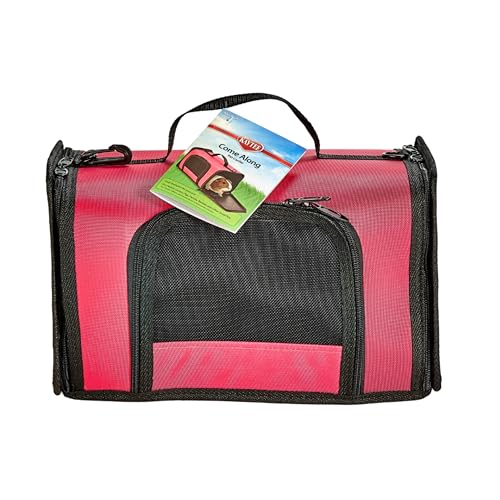
Kaytee Come Along Carrier
A hinged lid opens the entire top of the shell, so a nervous guinea pig or rabbit lifts straight out instead of being dragged through a front door. Vented side panels move air without the wide-open view that spikes stress in prey animals. The moulded plastic base wipes clean in seconds, and two sizes cover most guinea pigs and smaller rabbit breeds.
Pros
- Top opening removes the need to chase a pet through a front door
- Wipes clean without disassembly
- Vented panels balance airflow with enclosure
Cons
- Bare plastic floor needs a towel or fleece liner for grip
- Large size still fits a big rabbit tightly

Living World Carry All Pet Carrier
Two pieces separate at a clip, letting a vet lift the wire top away instead of pulling the animal out by hand. A deep plastic base holds bedding without spilling on longer drives. Hamsters, rats and guinea pigs fit comfortably, though adult rabbits need more floor space than this model offers.
Pros
- Wire top detaches for stress free vet exams
- Deep base contains bedding and litter
- Light enough to carry with one hand
Cons
- Wire mesh can be chewed by determined rodents
- Too small for adult rabbits
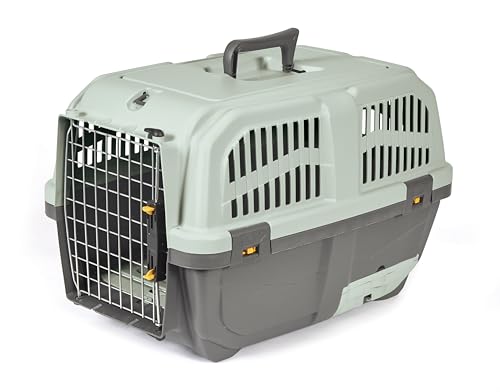
MidWest Homes for Pets Skudo Plastic Pet Carrier
Hard plastic panels and a steel door latch give this kennel more structural strength than the average small pet carrier. Ventilation cut into three sides keeps air moving even with the door closed. Two shell halves separate for scrubbing, which matters when housing a rabbit for an extended trip.
Pros
- Floor space fits an adult rabbit comfortably
- Steel latch resists nudging or pawing open
- Shell splits apart for deep cleaning
Cons
- Front only access makes loading nervous pets harder
- Bulkier to store than soft sided options

Sherpa Original Deluxe Pet Carrier
Fabric construction with a flexible top edge lets this carrier compress enough to slide under an airline seat. Mesh panels on multiple sides supply strong airflow, and a padded shoulder strap eases the walk through a terminal. A rigid liner board underneath helps, since the padded floor alone flexes under a moving animal.
Pros
- Shoulder strap and handles ease long carries
- Mesh panels provide strong ventilation
- Compresses to fit under most aircraft seats
Cons
- Fabric absorbs odours and requires washing
- Mesh is vulnerable to persistent chewers

Petmate Two Door Top Load Kennel
Separate front and top doors mean a reluctant pet loads from above, then walks out the front at the destination. Wire doors latch positively on both openings, and vented side panels keep air circulating in a warm car. Its footprint suits medium rabbits and larger guinea pig pairs rather than the smallest rodents.
Pros
- Two doors cut down on handling at each end
- Positive latches on both openings
- Snaps together without tools
Cons
- Wire doors expose pets to more visual stimulation
- Floor is slippery without an added liner

Petsfit Soft Sided Small Pet Carrier
A padded fabric shell with mesh windows and a removable fleece pad suits calm pets on short rides. An internal clip tether keeps the animal from bolting the moment the top unzips. Chewers and long drives call for a sturdier option, but a twenty minute vet run is comfortable and easy to carry.
Pros
- Lightweight and comfortable over the shoulder
- Fleece pad removes for washing
- Internal tether stops sudden bolts for the door
Cons
- Not chew resistant for rodents
- Soft floor needs a rigid insert for support
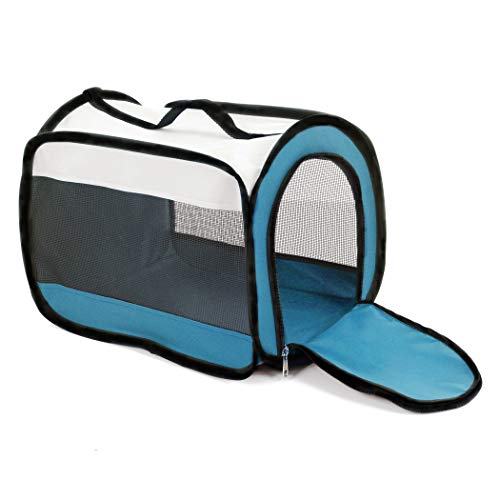
Ware Pet Products Twist-N-Go Carrier
A twist together plastic shell built for hamsters, gerbils and mice rather than rabbits or guinea pigs. Ventilation slots are sized narrow enough to stop the smallest rodents from squeezing through. It rinses clean under a tap and doubles as a holding tub during cage cleaning.
Pros
- Rinses clean and stores flat
- Ventilation slots sized to prevent escapes
- Doubles as a holding tub during cage cleaning
Cons
- Only sized for the smallest pets
- Offers minimal padding or comfort features
What to look for
What size carrier does a small pet actually need? Species names on a carrier box are a rough guide at best, since a listing marked for rabbits often only fits a dwarf breed. Measure your pet nose to tail while relaxed, then add a few inches for turning room. Compare that number against the carrier’s internal dimensions, not the exterior measurements printed on the packaging. A pet that cannot turn around or lie fully stretched will brace against the walls for the whole trip.
Top loading or front loading: which suits a scared rabbit or guinea pig? Frightened rabbits and guinea pigs press into the back corner of a carrier, turning a front door into a slow chase. A hinged top lets you lift the animal with both hands supporting its body, which matters most for rabbits since a struggling one can injure its own spine. Front doors still help once the pet calms down, since it can walk out on its own at the destination. Carriers with both openings combine calm loading with an easy exit.
How much ventilation does a carrier need for a car ride? Small mammals overheat quickly and pant far less effectively than dogs or cats. Airflow on more than one side of the carrier is not optional once the car warms up. Too much open mesh, though, leaves a frightened animal watching the road rush past. Owners report that solid ventilation paired with a light cloth draped over part of the carrier works well, cutting visual stimulation while air still moves through.
What should you pack for accidents on the way to the vet? Nearly every small pet urinates at some point during a stressful drive. A smooth, sealed plastic base with a raised lip cleans up faster than a carrier with fabric seams. Line the floor with a folded towel or fleece for grip, since bare plastic slides under small feet and forces constant bracing. Bringing a spare liner saves you from a soaked carrier once you reach the waiting room.
The lineup, side by side
| # | Model | Material | Best for | Score | Price |
|---|---|---|---|---|---|
| 1 | Kaytee Come Along Carrier | Moulded plastic with vented sides | Best overall | 9.4 | Check price |
| 2 | Living World Carry All Pet Carrier | Plastic base with wire top | Best value | 9.2 | Check price |
| 3 | MidWest Homes for Pets Skudo Plastic Pet Carrier | Hard moulded plastic | Best for rabbits | 9.0 | Check price |
| 4 | Sherpa Original Deluxe Pet Carrier | Fabric with mesh panels | Best for air travel | 8.8 | Check price |
| 5 | Petmate Two Door Top Load Kennel | Plastic shell with wire doors | Best for reluctant pets | 8.6 | Check price |
| 6 | Petsfit Soft Sided Small Pet Carrier | Padded fabric with mesh windows | Best for short vet trips | 8.3 | Check price |
| 7 | Ware Pet Products Twist-N-Go Carrier | Ventilated plastic | Best budget | 8.0 | Check price |
Frequently asked questions
What size carrier does a rabbit need?
A rabbit needs enough room to lie fully stretched out and turn around without touching both walls. Medium breeds typically need at least 24 inches of internal length, and larger breeds need more. An undersized carrier forces a hunched posture, and owners report that rabbits become reluctant to enter the same carrier again.
Can a cat carrier work for a guinea pig or rabbit?
Yes, many owners use a hard sided cat kennel successfully. These usually offer generous floor space and solid ventilation. Add a non slip liner, since moulded plastic floors are slippery under small feet, and a handful of hay, since a familiar scent reduces stress on longer drives.
Should a small pet carrier ride on the seat or the floor of the car?
The footwell behind a front seat is the most stable spot, since it limits sliding and stays out of direct sun. A seatbelt threaded through the carrier’s handle or strap slots secures it if it rides on a seat instead. A hatchback’s boot area is the worst option, since temperature and airflow are hardest to control back there.
How do you stop a pet from chewing its carrier?
Rodents and rabbits chew out of boredom or anxiety, so give them something better to gnaw on. A handful of hay or a chew stick occupies most of a short trip. Persistent chewers do better in a moulded plastic shell with narrow ventilation slots than in a mesh or fabric carrier.
Do small animals need bedding inside a carrier?
A layer of familiar bedding or a fleece liner gives grip so the pet is not sliding, and the scent itself is calming. Keep the layer shallow so the animal is not buried if the carrier tips. Loose sawdust is worth avoiding in a car, since airflow blows it around the cabin.
Are soft sided carriers safe for rabbits and guinea pigs?
Soft sided models are comfortable and well ventilated, which suits short vet trips with calm animals, and they are usually the only style airlines accept in the cabin. Their weaknesses are vulnerability to chewing and a floor that flexes underfoot. A rigid insert board under the fleece pad addresses the flexing problem.
How do you get a nervous pet into a carrier without a fight?
Leave the carrier open in the enclosure for several days beforehand with treats scattered inside, so it stops signaling something unpleasant. On travel day, a top loading design lets you lift the animal in with both hands supporting its chest and hindquarters. That beats chasing it through a narrow front door.
Can two guinea pigs share one carrier?
Bonded pairs generally travel better together, since companionship lowers stress for both animals. Enough floor area for each to lie stretched out without lying on top of the other is essential, so size up rather than squeeze them in. Unbonded guinea pigs, or pairs that have squabbled recently, travel more safely in separate carriers.
What is the difference between a carrier for rabbits and one for hamsters?
Rabbit carriers need real floor space, a rigid shell and strong ventilation, since an adult rabbit can weigh several pounds and needs room to stretch. Hamster and gerbil carriers focus on narrow ventilation slots that prevent escape through gaps a rabbit carrier never needs to guard against. Buying a carrier sized to the species avoids paying for space or security features a smaller pet does not use.
Our pick
The Kaytee Come Along Carrier stands out overall, since its full top opening removes the hardest part of moving a nervous small pet and its base wipes clean in seconds. The Living World Carry All simplifies quick vet visits, as its wire top lifts away for examination without lifting the pet out. Rabbit owners gain more from the MidWest Skudo Plastic Pet Carrier, whose floor space and three-sided ventilation suit a longer journey.
Olivia Hartley
Olivia spent several years working at an animal shelter and a pet-supply retailer before joining the editorial team. She researches pet gear with an emphasis on safety, comfort and the fine print that owners often miss.


