Keeping Indoor Rabbits, Guinea Pigs and Hamsters Entertained
Niteangel’s Natural Wooden Chew Toys Set suits most mixed cages, balancing chew safety across species with real variety. Budget-focused owners do well with the Kaytee Perfect Rainbow Chew Toy. Hamster and gerbil owners get the quietest overnight runs from the Niteangel Silent Runner wheel.
Niteangel’s Natural Wooden Chew Toys Set works best for mixed small animal households. Ten untreated wood pieces cover rabbits, guinea pigs and hamsters, though the set skips a dedicated hideout or wheel for burrowing or running breeds.
Chew strength, burrow instinct and noise tolerance vary sharply by species, so one toy rarely satisfies a whole household. We compared wood density and chew safety, tunnel material, wheel noise level and owner feedback on durability across rabbits, guinea pigs, hamsters, gerbils and ferrets.
The top picks, ranked

Niteangel Natural Wooden Chew Toys Set (10-Piece)
Ten pieces mix apple wood sticks, timothy grass rings and pumice blocks sized for rabbits, guinea pigs and hamsters. Untreated wood wears down naturally as pets gnaw, which helps control incisor length. Varied shapes hold chewing interest longer than a single toy would.
Pros
- Untreated wood stays safe for continuous gnawing
- Shape variety prevents chew boredom across species
- One set works for rabbits, guinea pigs and hamsters alike
Cons
- No hardware to hang or clip pieces to cage bars
- Softer pumice pieces wear down within a few weeks

Living World Rolling Log Small Animal Toy
A solid wood log spins on a metal spindle clipped to wire cage bars. Guinea pigs and rabbits push and gnaw the log at once, pairing chew wear with light physical play. Mounting hardware keeps it fixed instead of rolling loose across the cage floor.
Pros
- Spinning motion adds play value beyond plain chewing
- Metal clip anchors the toy so it stays put
- Replaceable log once the wood wears down
Cons
- Spindle mechanism needs periodic cleaning
- Log diameter suits smaller rabbits better than large breeds
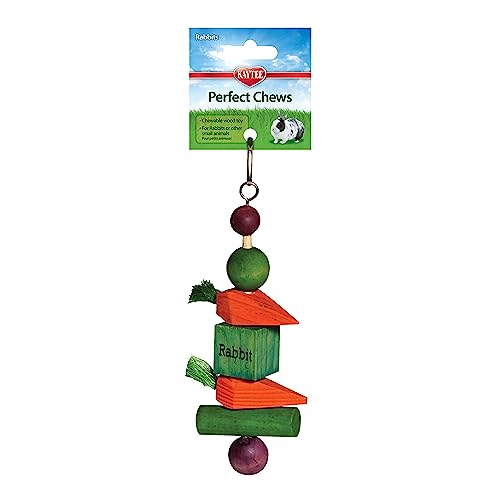
Kaytee Perfect Rainbow Chew Toy
A single wood block comes dyed in food-grade colors and mounted on a short wire hanger. Hamsters, gerbils and small guinea pigs get one consistent chew surface without extra parts to track. Simplicity makes it an easy first toy for a new cage.
Pros
- Simple single-block design costs less than multi-piece sets
- Wire hanger keeps the block off the cage floor
- Compact size fits small hamster and gerbil cages
Cons
- One chew shape wears out interest faster than varied sets
- Dyed coating is cosmetic rather than a nutritional feature
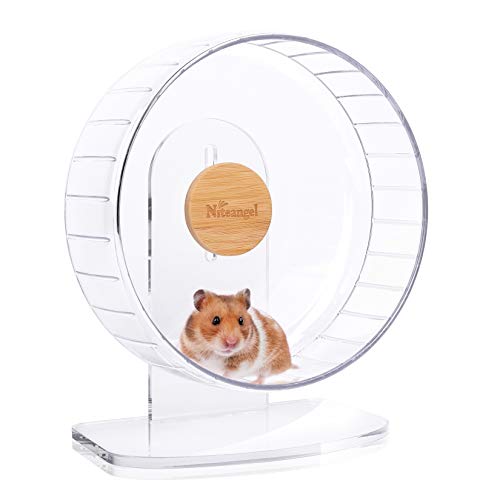
Niteangel Silent Runner Exercise Wheel
A solid-surface running track replaces wire rungs, protecting small feet during nighttime runs. A ball-bearing hub keeps noise low enough for a bedroom cage. Sizes range from small to large to match hamster, gerbil or dwarf hamster leg span.
Pros
- Solid track prevents foot and tail injuries common with wire wheels
- Bearing hub runs quieter than standard wire wheels
- Free-standing base needs no cage mounting
Cons
- Larger sizes take up significant floor space
- Base can tip on uneven cage flooring

Niteangel Natural Seagrass Tunnel
Woven natural seagrass forms a tunnel that doubles as an edible chew surface for rabbits and guinea pigs. Open weave lets pets see out while resting inside, which eases stress in a shared cage. It folds flat for storage between uses.
Pros
- Functions as both hideout and chew toy at once
- Open weave keeps airflow moving through the tunnel
- Folds flat, so storage takes little space
Cons
- Fully edible material needs periodic replacement
- Weave is not rigid enough to hold shape under a large rabbit

Oxbow Enriched Life Foraging Box
A cardboard maze hides hay and treats behind chewable panels, encouraging natural foraging behavior. Guinea pigs and rabbits work through compartments instead of eating from an open bowl. Untreated cardboard means the whole box is safe to chew apart.
Pros
- Encourages slower, more natural foraging behavior
- Fully chewable cardboard skips wire or plastic parts
- Compartments add mental stimulation beyond plain chewing
Cons
- Box gets destroyed after one or two uses
- Does not substitute for a dedicated daily chew toy

Marshall Ferret Trail and Ball Toy
Built specifically for ferrets, this toy pairs a fabric crinkle tunnel with an attached ball chamber ferrets can bat around. Burrowing instinct gets satisfied through the tunnel while the ball adds chase play. Machine-washable fabric handles frequent ferret play sessions.
Pros
- Purpose-built for ferret play instead of adapted rodent toys
- Crinkle fabric sound encourages active investigation
- Machine washable fabric simplifies cleanup
Cons
- Not suitable for rabbits, guinea pigs or hamsters
- Ball chamber plastic can crack under aggressive biting
What to look for
How to choose toys for a small animal cage Species and cage size matter more than toy style at first. A hamster wheel needs floor space a guinea pig hutch may not have. Chew toys matter most for rabbits and guinea pigs, since their teeth grow continuously. Noise level matters for bedroom setups, especially with nocturnal hamsters and gerbils. Rotating two or three toy types works better than relying on one shape.
Chew toys vs tunnels vs exercise wheels Chew toys wear down incisors and satisfy gnawing instinct in rabbits, guinea pigs and hamsters. Tunnels give burrowing species a hideout that lowers stress in shared cages. Exercise wheels suit hamsters and gerbils that cover long distances overnight. Ferrets need neither a wheel nor a pure chew toy, since they play more like small dogs with tunnels and balls. Combining one item from each category covers most enrichment needs.
Which toys fit rabbits, guinea pigs, hamsters and ferrets Rabbits and guinea pigs chew constantly and do best with untreated wood or edible fiber tunnels. Hamsters and gerbils benefit most from solid-surface wheels, since wire rungs can injure small feet during fast runs. Dwarf hamsters need a smaller wheel diameter than Syrian hamsters to avoid arched-spine strain. Ferrets rarely chew wood at all and instead favor fabric tunnels, balls and toys they can carry or bat around.
Is untreated or dyed wood safer for daily chewing Untreated, kiln-dried wood is the safer default for daily chewing. Food-grade dyes used on toys like the Kaytee Perfect Rainbow are generally considered safe in small amounts, but plain wood avoids the question entirely. Painted or varnished wood not labeled pet-safe should be avoided, since finishes can flake off. Foraging boxes and edible tunnels should be replaced once fully chewed rather than left splintered in the cage.
Compared at a glance
| # | Model | Material | Best for | Score | Price |
|---|---|---|---|---|---|
| 1 | Niteangel Natural Wooden Chew Toys Set (10-Piece) | Untreated apple wood and pumice | Best overall | 9.4 | Check price |
| 2 | Living World Rolling Log Small Animal Toy | Natural wood log, metal spindle | Best value | 9.1 | Check price |
| 3 | Kaytee Perfect Rainbow Chew Toy | Kiln-dried wood, food-grade dye | Best budget | 8.8 | Check price |
| 4 | Niteangel Silent Runner Exercise Wheel | Solid plastic, no wire rungs | Best for hamster and gerbil exercise | 8.6 | Check price |
| 5 | Niteangel Natural Seagrass Tunnel | Woven natural seagrass | Best for tunnels and hideouts | 8.4 | Check price |
| 6 | Oxbow Enriched Life Foraging Box | Untreated cardboard | Best for foraging enrichment | 8.2 | Check price |
| 7 | Marshall Ferret Trail and Ball Toy | Crinkle fabric tunnel, plastic ball | Best for ferrets | 8.0 | Check price |
Common questions
What toys are safe for guinea pigs to chew?
Untreated wood, timothy hay-based toys and natural fiber tunnels work well. Avoid soft plastic or painted items without a pet-safe label, since guinea pigs can swallow flaking pieces.
Do hamsters need an exercise wheel indoors?
Yes, hamsters run long distances overnight even in a spacious cage. A solid-surface wheel sized to the hamster’s body length prevents spine strain during those runs.
Are wire exercise wheels bad for hamster feet?
Wire rungs can catch small feet and cause cuts or bumblefoot over time. A solid plastic running surface removes that risk entirely.
Can rabbits and guinea pigs share the same toys?
Most untreated wood chews and natural fiber tunnels work for both species. Rabbits chew harder and faster, so toys wear out sooner in a rabbit-only cage.
How often should small animal chew toys be replaced?
Replace wood chews once they’re gnawed down to small fragments, usually every few weeks with regular use. Cardboard foraging boxes typically last only one or two sessions before they’re destroyed.
What size wheel does a Syrian hamster need?
Syrian hamsters generally need a larger wheel diameter than dwarf hamsters to keep their spine straight while running. Check the wheel’s listed size against the hamster’s adult body length before buying.
Do ferrets play with the same toys as rodents?
Not usually. Ferrets rarely chew wood and instead prefer fabric tunnels and balls they can carry, bat around or hide items inside.
Is seagrass safe for rabbits to chew?
Yes, woven seagrass is a digestible natural fiber safe for rabbits and guinea pigs to gnaw. Replace the tunnel once the weave thins out or starts to fray heavily.
What is the best indoor toy for a mixed rabbit and guinea pig cage?
Niteangel’s Natural Wooden Chew Toys Set covers both species in one bundle, based on the size range listed for each piece, though a shared cage still benefits from a seagrass tunnel for hiding.
Final word
For households mixing rabbits, guinea pigs and hamsters, Niteangel’s Natural Wooden Chew Toys Set covers the most ground in one bundle. Owners who need quiet overnight play should add the Niteangel Silent Runner wheel rather than depending on chew toys alone. Ferret owners should skip rodent-focused toys altogether and pick the Marshall Ferret Trail and Ball Toy, since ferrets rarely gnaw wood the way rodents do.
Olivia Hartley
Olivia spent several years working at an animal shelter and a pet-supply retailer before joining the editorial team. She researches pet gear with an emphasis on safety, comfort and the fine print that owners often miss.