Which Reptile Food Actually Suits Your Indoor Terrarium?
Zoo Med Adult Bearded Dragon Food fits most indoor keepers, since bearded dragons are the most commonly housed terrarium reptile and its pellets need no live prey. Tortoise owners should pick Mazuri Tortoise Diet LS instead, and gecko keepers feeding omnivorous species get a complete formula from Repashy Superfoods Crested Gecko Diet.
Bearded dragons are the most common terrarium reptile kept indoors, which is why Zoo Med’s Adult Bearded Dragon Food anchors this list; its pellet blend needs no live insect colony. That formula only suits omnivorous species, though, not strict herbivores like tortoises or insectivores like leopard geckos. Owners of those species need a different diet type entirely, covered further down.
Pellet, powder and freeze-dried feeder formulas are not interchangeable across species, and packaging rarely spells that limitation out. Ingredient lists, package sizes, feeding methods and owner feedback across bearded dragon, tortoise, gecko and supplement categories informed these picks, matching each product to the reptile it is actually formulated for.
Before you buy
How Indoor Diets Differ From Wild Foraging Varied insects, plants and sun-cured vegetation are not available to reptiles kept indoors the way they would be outdoors. Pellet, powder and freeze-dried products replace that variety with shelf-stable ingredients matched to a species’ natural diet category: omnivore, herbivore, or insectivore. Getting that category wrong is the most common mistake indoor keepers make, since a pellet built for one diet type will not supply the right nutrient balance for another.
Matching Food Type To Species Omnivorous bearded dragons do well on a pelleted blend of insect protein and vegetables, like Zoo Med’s Adult Bearded Dragon Food. Herbivorous tortoises need hay-based or low-starch pellets instead, such as Mazuri Tortoise Diet LS. Crested geckos and other omnivorous gecko species rely on complete powdered diets like Repashy Superfoods, while leopard geckos and other insectivores need whole-insect feeders such as freeze-dried crickets.
Pellet and Powder Diets vs Feeder Insects Convenience and long shelf life make pellets and powders a fit for indoor routines without a live insect culture running in the house. Feeder insects, whether live, frozen, or freeze-dried, better match the natural prey drive of insectivorous species and often trigger a faster feeding response. Freeze-dried crickets split the difference: no live colony to maintain, but lower moisture than live prey, so hydration still needs attention.
When To Add A Calcium or Vitamin Supplement Dietary vitamin D3 becomes essential for indoor reptiles without direct sun exposure, since UVB bulbs alone do not fully replace natural sunlight for every species. A dusting powder like Repashy Calcium Plus gets added onto feeder insects or mixed into powdered diets, not used as a standalone food. Following label frequency matters, since oversupplementing throws off the calcium-to-phosphorus ratio just as much as undersupplementing.
The top picks, ranked
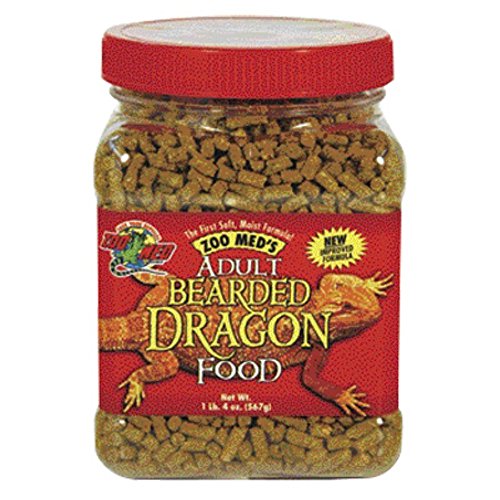
Zoo Med Adult Bearded Dragon Food
Dried insect protein, vegetables and fruit make up this pelleted blend, sized for adult bearded dragons kept indoors without UVB-driven foraging. Misting rehydrates the pellets easily, which helps dragons that hesitate on dry food. Fresh greens and calcium dusting still belong in the routine, since pellets alone are not a complete diet in practice.
Pros
- Balanced protein-to-fiber ratio built for adult dragons
- No live prey needed for daily indoor feeding
- Resealable bag keeps pellets fresh between feedings
Cons
- Not formulated for juvenile dragons needing higher protein
- Some dragons ignore dry pellets until they are rehydrated

Mazuri Tortoise Diet LS
Zoo tortoise collections use this low-starch pellet, and it translates well to indoor keepers wanting consistent, shell-friendly nutrition. Reduced starch and sugar content is meant to limit the growth spurts linked to shell pyramiding in young tortoises. Soaking before serving is required, adding a prep step that fresh-green diets skip.
Pros
- Low starch and sugar content supports steady shell growth
- Bulk 5 lb bag suits multi-tortoise indoor setups
- Long shelf life when stored sealed and dry
Cons
- Requires soaking, so it is not a grab-and-serve food
- Pellet texture appeals less to picky eaters than fresh greens

Repashy Superfoods Crested Gecko Diet
Mixed with water, this powder becomes a nutritionally complete diet for crested and gargoyle geckos, cutting reliance on a live insect colony indoors. Several fruit-forward flavors tend to appeal to picky eaters. Refrigeration matters once mixed, since the leftover paste spoils within a few days.
Pros
- Complete formula reduces day-to-day insect gutloading
- Multiple flavors help with picky or stressed eaters
- Dry powder form stores compactly on a shelf
Cons
- Mixed portions spoil within days without refrigeration
- Not a complete diet for strict insectivores like leopard geckos

Fluker’s Freeze-Dried Crickets
Shelf-stable protein comes from these freeze-dried crickets, sparing indoor insectivore keepers the smell, escapees and upkeep of a live cricket colony. Calcium and vitamin dusting is still needed before feeding, since freeze-drying reduces some nutrient content compared to gutloaded live prey. Non-moving prey also strikes some leopard geckos as less appealing.
Pros
- No live cricket odor, chirping, or escapees indoors
- Shelf-stable jar lasts far longer than refrigerated feeders
- Easy to dust evenly before feeding
Cons
- Lower moisture content than live prey
- Some insectivores ignore prey that is not moving

Zoo Med Natural Tortoise Food
Timothy hay forms the base of this pellet blend, covering basic herbivorous tortoise nutrition at a lower cost per feeding than the Mazuri LS formula. Dried vegetables and fruit mix into that hay base, and soaking before serving still applies. As a starter diet alongside fresh leafy greens it works well; as a sole food source, less so.
Pros
- Larger bag stretches cost across many feedings
- Hay-based fiber mirrors natural grazing content
- Sold in multiple bag sizes for easy restocking
Cons
- Less protein-dense than the Mazuri LS formula for growing tortoises
- Coarser pellets need a longer soak time

Zilla Reptile Munchies Adult Bearded Dragon Food
New keepers get a lower-cost way to test pellet acceptance with this bagged bearded dragon formula, before committing to a larger bag. Basic protein and vegetable content make up the blend, without the added flavors found in premium lines. Established dragons will mean more frequent reordering, though, given the smaller bag size.
Pros
- Smaller bag lowers the cost of a first try
- Widely stocked alongside other terrarium supplies
- Simple pellet shape is easy to portion
Cons
- Smaller bag needs more frequent reordering
- Narrower ingredient variety than premium pellet blends

Repashy Calcium Plus
Dusting onto feeder insects or mixing into powdered diets is how this calcium and vitamin D3 powder is meant to be used, rather than fed alone. Indoor reptiles with limited UVB exposure are the target, per the product label’s D3 formulation. Light, regular dusting means a small jar lasts months.
Pros
- Works alongside pellet, powder, or live feeder diets
- D3 formulation targets indoor reptiles with limited UVB
- Small jar lasts months with light, regular dusting
Cons
- Not a standalone diet on its own
- Using more than label directions can unbalance calcium ratios
Side by side
| # | Model | Life stage | Best for | Score | Price |
|---|---|---|---|---|---|
| 1 | Zoo Med Adult Bearded Dragon Food | Adult, 6+ months | Best overall | 9.4 | Check price |
| 2 | Mazuri Tortoise Diet LS | Herbivore pellet, low starch | Best for tortoises and other herbivorous reptiles | 9.1 | Check price |
| 3 | Repashy Superfoods Crested Gecko Diet | Powder, mixed 1:1 with water | Best for crested geckos and other omnivorous geckos | 8.9 | Check price |
| 4 | Fluker’s Freeze-Dried Crickets | Freeze-dried whole crickets | Best for leopard geckos and other insectivorous reptiles | 8.6 | Check price |
| 5 | Zoo Med Natural Tortoise Food | Herbivore pellet, hay-based | Best value | 8.4 | Check price |
| 6 | Zilla Reptile Munchies Adult Bearded Dragon Food | Adult | Best budget | 8.2 | Check price |
| 7 | Repashy Calcium Plus | Powder supplement | Best supplement to pair with any diet | 8.0 | Check price |
Good to know
Can bearded dragons eat pellet food only indoors?
Adult bearded dragons can use a pelleted diet like Zoo Med’s as a base food. Most keepers still rotate in fresh vegetables and occasional gutloaded insects for variety and moisture.
What do leopard geckos eat indoors without live crickets?
Leopard geckos are strict insectivores, so freeze-dried or frozen feeder insects dusted with calcium powder commonly substitute for a live cricket colony. Some geckos still respond better to moving prey.
How often should I feed my pet tortoise pellets?
Feeding frequency depends on the tortoise’s species and age. Pellet diets like Mazuri Tortoise Diet LS or Zoo Med Natural Tortoise Food typically get soaked and offered alongside fresh greens rather than served daily on their own.
Is Repashy Crested Gecko Diet a complete diet?
According to the product, Repashy Superfoods Crested Gecko Diet is formulated as a complete nutritional source for crested and gargoyle geckos when mixed with water. It is not intended for insectivore-only species, though.
Do indoor reptiles still need calcium supplements without UVB light?
Reptiles housed indoors typically need a dietary calcium and vitamin D3 supplement, such as Repashy Calcium Plus, dusted onto food, since natural sunlight is not reaching them the way it would outdoors.
What is the difference between reptile pellet food and powder diets?
Pellet food is a dry, shelf-stable shape fed as-is or lightly moistened. Powder diets like Repashy’s mix with water into a paste before serving and spoil faster once prepared.
Can I feed freeze-dried crickets instead of live insects?
Freeze-dried crickets work as an occasional or supplemental feeder, since they are shelf-stable and easy to dust with supplements. They carry less moisture than live prey, and some reptiles are slower to notice non-moving food.
How long does mixed Repashy gecko diet last in the fridge?
Once mixed with water, Repashy Superfoods should be refrigerated and used within a few days. The paste spoils faster than the dry powder form.
Can tortoises eat bearded dragon pellets?
No. Bearded dragon formulas like Zoo Med’s are built for omnivores and include insect protein, while tortoises need herbivore-only, hay-based pellets such as Mazuri Tortoise Diet LS.
The verdict
Zoo Med Adult Bearded Dragon Food remains the practical starting point for most indoor keepers, since bearded dragons are the most common terrarium reptile and the pellet format skips live-prey upkeep. Tortoise owners should pick Mazuri Tortoise Diet LS instead, and anyone keeping crested or gargoyle geckos gets a better nutritional fit from Repashy Superfoods Crested Gecko Diet.
Olivia Hartley
Olivia spent several years working at an animal shelter and a pet-supply retailer before joining the editorial team. She researches pet gear with an emphasis on safety, comfort and the fine print that owners often miss.


