Sleeping Bags Rated for the Nights You Actually Camp
The Kelty Cosmic 20 leads this comparison with a 20 degree rating, down insulation and a weight that suits most three season backpacking trips. The Coleman Brazos suits budget-focused campers who mostly car camp, while the Big Agnes Sidewinder SL 20 fits side sleepers who feel cramped in a standard mummy bag.
The Kelty Cosmic 20 stands out because its 20 degree rating and down fill cover most three season camping nights without the bulk of a heavier synthetic bag. Its main limitation is wet weather performance, since down insulation loses warmth faster than synthetic fill once it gets damp.
We compared published temperature ratings, insulation type, weight and shape specs across each bag rather than running our own cold weather tests.
The shortlist, ranked

Kelty Cosmic 20 Degree Down Sleeping Bag
A 20 degree temperature rating covers spring, summer and fall camping across most regions without needing a separate bag for each season. Down insulation compresses smaller and weighs less than synthetic fill at the same warmth level. A mummy-style taper reduces dead air space the body has to heat, improving warmth retention.
Pros
- 20 degree rating covers most three season camping conditions
- Down insulation packs smaller and lighter than synthetic fill
- Mummy shape reduces dead air space for better warmth retention
Cons
- Down insulation loses warmth faster than synthetic fill when wet
- Mummy shape feels restrictive to sleepers who move around at night

Coleman Brazos Cold Weather Sleeping Bag
A rectangular shape and synthetic fill keep this bag affordable while still handling cool weather car camping trips. The looser rectangular cut gives more room to move than a mummy bag, though it sacrifices some thermal efficiency. A cotton-polyester lining feels soft against skin compared to the nylon linings on premium bags.
Pros
- Lower price point than down-filled backpacking bags
- Rectangular shape allows more room to move while sleeping
- Soft lining feels comfortable for car camping use
Cons
- Bulkier and heavier than mummy-style backpacking bags
- Synthetic fill is less warmth-to-weight efficient than down

TETON Sports Celsius Regular Sleeping Bag
A synthetic fill rated down toward freezing temperatures suits cold weather camping at a lower price than comparable down bags. A semi-rectangular shape splits the difference between mummy-style warmth efficiency and rectangular roominess. An interior liner pocket and included compression sack add convenience most budget bags skip.
Pros
- Low 0 degree rating at a price below comparable down bags
- Semi-rectangular shape balances warmth and room to move
- Included compression sack simplifies packing
Cons
- Heavier than down bags rated to a similar temperature
- Bulkier packed size than premium ultralight options

Big Agnes Sidewinder SL 20
An offset zipper and contoured footbox give side sleepers room to bend their knees without pressing against the bag’s inner wall. A 20 degree down fill keeps weight low for backpacking despite the roomier side-sleeper design. Insulated draft tubes along the zipper block cold air that straight-zipper bags often let through.
Pros
- Contoured footbox gives side sleepers room to bend their knees
- Down fill keeps weight low despite the roomier shape
- Draft tube along the zipper blocks cold air leaks
Cons
- Costs more than a standard mummy bag at the same rating
- Side-sleeper shape offers less benefit to back or stomach sleepers

Marmot Trestles 30 Sleeping Bag
A 30 degree rating targets summer and warm shoulder-season nights rather than deep cold, keeping the bag lighter than winter-rated options. Synthetic insulation handles occasional dampness from condensation better than down. A tapered rectangular shape gives more legroom than a true mummy bag while still trimming excess fabric.
Pros
- Lighter weight than bags rated for colder temperatures
- Synthetic fill handles condensation better than down
- Tapered shape adds legroom over a true mummy bag
Cons
- 30 degree rating is too warm-focused for cold weather trips
- Less compressible than down bags at a similar temperature rating

Hyke and Byke Eolus Down Sleeping Bag
High fill power down keeps this bag’s weight and packed size well below synthetic bags and even some other down options at a similar rating. A full-length zipper with anti-snag tape makes entry and exit faster than bags with shorter zippers. A lower price than many ultralight competitors still delivers backpacking-grade compressibility.
Pros
- High fill power down minimizes weight and packed size
- Anti-snag zipper tape speeds up entry and exit
- Lower price than many other ultralight down bags
Cons
- Narrow mummy cut feels tight for larger-framed sleepers
- Down fill still loses warmth faster than synthetic when wet
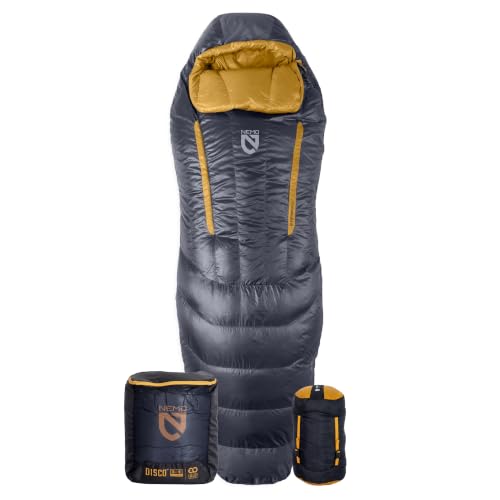
NEMO Disco 15 Sleeping Bag
A spoon-shaped design widens at the knees and elbows, giving restless sleepers room that a standard mummy bag denies. Integrated venting panels let sleepers dump excess heat without fully unzipping on milder nights. A 15 degree rating keeps it usable deeper into cold weather than most roomy sleeping bags manage.
Pros
- Spoon shape gives restless sleepers more room at the knees and elbows
- Integrated venting panels regulate temperature without fully unzipping
- 15 degree rating handles colder nights despite the roomier cut
Cons
- Roomier shape packs down larger than a tight mummy bag
- Heavier than narrower ultralight bags rated to a similar temperature
Side by side
| # | Model | Temperature Rating | Best for | Score | Price |
|---|---|---|---|---|---|
| 1 | Kelty Cosmic 20 Degree Down Sleeping Bag | 20 degrees Fahrenheit | Best Overall | 9.0 | Check price |
| 2 | Coleman Brazos Cold Weather Sleeping Bag | 20 to 40 degrees Fahrenheit depending on size | Best Budget | 8.2 | Check price |
| 3 | TETON Sports Celsius Regular Sleeping Bag | 0 degrees Fahrenheit | Best Value Cold Weather | 8.4 | Check price |
| 4 | Big Agnes Sidewinder SL 20 | 20 degrees Fahrenheit | Best for Side Sleepers | 8.8 | Check price |
| 5 | Marmot Trestles 30 Sleeping Bag | 30 degrees Fahrenheit | Best for Warm Weather | 8.3 | Check price |
| 6 | Hyke and Byke Eolus Down Sleeping Bag | 20 degrees Fahrenheit | Best Ultralight | 8.6 | Check price |
| 7 | NEMO Disco 15 Sleeping Bag | 15 degrees Fahrenheit | Best for Spacious Fit | 8.7 | Check price |
How to pick the right one
What to look for in a sleeping bag Temperature rating sets the baseline for which seasons a bag covers, with lower numbers indicating colder weather capability. Insulation type decides the tradeoff between weight and wet weather performance, since down packs lighter but loses warmth faster than synthetic fill when damp. Shape then determines how much room a sleeper has to move versus how efficiently the bag traps body heat.
Down versus synthetic insulation Down bags like the Kelty Cosmic 20 and Hyke and Byke Eolus pack smaller and weigh less at the same temperature rating, which matters most for backpackers counting every ounce. Synthetic bags like the Coleman Brazos and Marmot Trestles 30 cost less and keep working after getting damp from condensation or rain. Campers driving to a campsite rather than hiking in often do fine with the bulkier synthetic option.
Mummy, rectangular and spoon shapes Mummy bags, including the Kelty Cosmic 20 and Hyke and Byke Eolus, trim excess fabric to reduce weight and trap heat more efficiently. Rectangular bags like the Coleman Brazos trade that efficiency for more room to move. Spoon-shaped and side-sleeper designs, like the NEMO Disco 15 and Big Agnes Sidewinder SL 20, split the difference by widening only where restless sleepers need the extra space.
Matching a sleeping bag to the season Summer and warm shoulder-season trips suit a higher temperature rating like the 30 degree Marmot Trestles, which saves weight by skipping unnecessary insulation. Cold weather backpacking calls for a 20 degree or lower rated bag, as offered by the Kelty Cosmic 20 or NEMO Disco 15. Buyers unsure of conditions often do better choosing a bag rated slightly colder than expected rather than risking a cold night.
Questions worth asking
What temperature rating should a sleeping bag have?
A 20 degree rating, like the Kelty Cosmic 20, covers most three season camping, while colder trips call for a 0 to 15 degree bag like the TETON Celsius or NEMO Disco 15.
Is down or synthetic insulation better for a sleeping bag?
Down insulation, used in the Kelty Cosmic 20, packs lighter and smaller, while synthetic fill, used in the Coleman Brazos, holds up better when wet.
What is a mummy sleeping bag?
A mummy bag, like the Hyke and Byke Eolus, tapers closely to the body to reduce weight and trap heat more efficiently than a rectangular bag.
Are sleeping bags good for side sleepers?
Standard mummy bags can feel restrictive for side sleepers, which is why the Big Agnes Sidewinder SL 20 adds a contoured footbox designed for that position.
What makes a sleeping bag good for restless sleepers?
A wider, spoon-shaped design, like the NEMO Disco 15, gives extra room at the knees and elbows for sleepers who shift position often.
How much does a sleeping bag weigh for backpacking?
Ultralight down bags like the Hyke and Byke Eolus weigh close to 2 pounds, while bulkier synthetic bags like the Coleman Brazos weigh noticeably more.
Can a sleeping bag be used in both summer and winter?
A single bag rarely covers both extremes well. A 30 degree bag like the Marmot Trestles suits summer, while a 0 to 15 degree bag suits winter.
Do sleeping bags need a compression sack?
A compression sack, included with the TETON Sports Celsius, reduces packed size significantly compared to stuffing a bag loosely into a backpack.
What does a draft tube do on a sleeping bag?
A draft tube, found along the zipper on the Big Agnes Sidewinder SL 20, blocks cold air from leaking through the zipper seam.
The verdict
Most three season campers get the best overall balance from the Kelty Cosmic 20, which covers a wide temperature range without excess weight. Side sleepers who feel cramped in a standard mummy bag should choose the Big Agnes Sidewinder SL 20 instead for its contoured footbox. Campers who mostly drive to a campsite rather than hike in should skip premium down entirely and pick the Coleman Brazos.
Sierra Daniels
Sierra's background is in landscape design and nursery retail. She focuses on lawn and garden equipment, outdoor furniture and gear durability, weighing published specs against how materials actually hold up outside.
You might also need

Is a Camping Hammock Actually Comfortable for a Full Night’s Sleep?
Is an Inflatable Hot Tub Actually Durable Enough for Regular Seasonal Use?

Cordless Pole Saws That Actually Reach and Cut
