Is a Camping Hammock Actually Comfortable for a Full Night’s Sleep?
A camping hammock can genuinely deliver a full comfortable night of sleep, but only when it’s hung correctly and insulated underneath, neither of which happens automatically out of the bag. Lying diagonally across the fabric rather than straight down the middle, with a moderate sag angle, flattens your spine instead of curling it. Skip either of those and most people end up with a sore back or a cold back long before morning.
The diagonal lay is the single biggest comfort factor
Lying perfectly straight down the centerline of a hammock forces your hips and shoulders higher than the middle of your back, which curls your spine into a banana shape over several hours and is the main source of the ‘hammock back’ complaint. Shifting your body diagonally, roughly at a slight angle rather than parallel to the ridgeline, lets the fabric spread wider under your torso and flattens that curve out almost completely, which is the trick most first-time hammock campers never learn until someone shows them.
Hang angle matters more than most buyers expect
The common 30 degree sag rule, meaning the suspension lines droop at roughly a 30 degree angle from the tree rather than pulled drum-tight, gives the fabric enough room to form the diagonal pocket a sleeper needs. Too tight a hang pushes your shoulders together and creates pressure points, while too loose a hang creates a deep sag that forces the same spinal curl problem a straight lay causes, just from the opposite direction.
Cold-butt syndrome is a real issue even in mild weather
Even when the air feels comfortably warm, your body weight compresses whatever insulation is directly underneath it, and compressed insulation loses most of its ability to trap warm air. That means heat escapes downward through the thin fabric far faster than most people expect, even on a night that wouldn’t require a blanket on the ground. An underquilt hung beneath the hammock or a sleeping pad inside it solves this, and skipping it is the single most common reason people report waking up cold in a hammock they were otherwise comfortable in.
Bug nets and tarps turn a hammock into actual shelter
A bare hammock is just a suspended bed, not a shelter, so a separate bug net and a rain tarp strung above it are what make an overnight stay practical rather than miserable the moment weather or insects show up. Integrated hammock systems bundle these together, while standalone hammocks require buying and learning to pitch them separately.
Body type and sleep position change the experience
Back sleepers generally adapt to hammock sleeping fastest since the diagonal lay mimics a back-sleeping position closely. Side sleepers can usually adjust with practice by angling further and bending the knees slightly, but committed stomach sleepers tend to struggle the most since a hammock’s natural curve resists that position far more than a flat mattress does.

ENO DoubleNest Hammock
A widely used single-layer camping hammock with enough width to allow the diagonal lay technique comfortably for most adult sleepers.
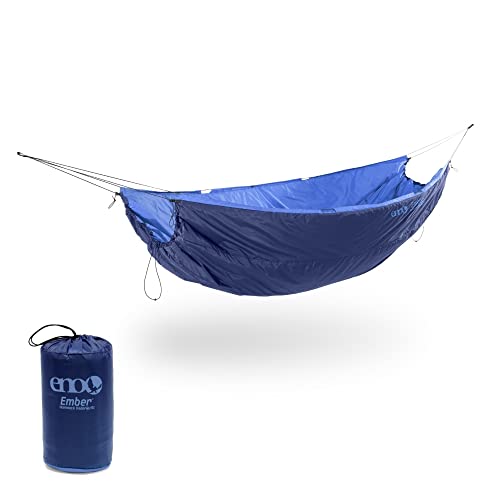
ENO Vulcan UnderQuilt
An underquilt that hangs beneath the hammock body specifically to solve the compressed-insulation heat loss problem rather than relying on a pad alone.
Good to know
Why does my back hurt after sleeping in a hammock?
This almost always means you slept straight down the centerline instead of diagonally, which curls the spine over several hours; shifting to a diagonal lay at a slight angle across the fabric resolves it for most sleepers within a night or two of practice.
How do I know if my hammock is hung too tight?
A too-tight hang feels like your shoulders are being pinched together and the fabric barely sags at all; loosening the suspension until you see a gentle curve, roughly a 30 degree angle from the anchor point, usually fixes the pinch feeling.
Do I need a sleeping pad inside a hammock or an underquilt underneath?
Either works, but an underquilt hung below the hammock avoids the pad sliding around that some sleepers experience inside the fabric, while a pad is usually cheaper and doubles as ground insulation if you also car camp or tent camp.
Can two people sleep comfortably in one camping hammock?
Occasionally for short periods, but most single hammocks aren’t wide enough for two people to both achieve a proper diagonal lay at once, so dedicated double hammocks with a wider fabric span work far better for actual overnight use by two people.
Is a camping hammock warmer or colder than a tent at the same temperature?
Colder by default, because wind moves underneath an elevated hammock and strips heat through compressed insulation, but with a proper underquilt and a wind-blocking tarp a hammock setup can match or exceed a tent’s warmth.
How much weight can a typical camping hammock hold?
Most single camping hammocks are rated between 300 and 400 pounds, though the suspension straps and carabiners are often the actual weight-limiting component rather than the hammock fabric itself, so checking the full system’s rating matters.
Can a camping hammock be used without trees, like on a hammock stand?
Yes, portable hammock stands let you set up on sand, rock, or anywhere without suitable trees, though stands add weight and bulk that defeats some of the packability advantage hammocks have over tents for backpacking.
Why do some hammocks feel like they’re squeezing my shoulders together?
That’s a symptom of either too tight a hang angle or lying straight instead of diagonally, both of which pull the fabric edges up around your shoulders; adjusting either one typically resolves the squeeze.
Does rain get into a hammock without a tarp?
Yes, a bare hammock offers no overhead protection at all, so any rain falls directly on the sleeper; a properly pitched rain tarp strung above the ridgeline, with enough overhang past the hammock’s ends, is necessary for any overnight use where rain is possible.
How long does it take to get used to sleeping in a hammock?
Most people report it taking two to four nights of practice to find their ideal diagonal angle and hang tension, after which many report sleeping as well or better than they do on a ground pad.
Do camping hammocks work for people with back problems?
Many people with mild back issues report hammocks feel better than a flat pad because the slight curve supports natural spinal alignment, but anyone with a significant back condition should test a hammock briefly before committing to it for a multi-night trip.
Is a hammock tent (with an integrated floor and netting) more comfortable than a standalone hammock plus accessories?
Integrated systems are more convenient to pitch since the net and sometimes a rain fly are built in, but comfort itself comes down to the same hang angle and insulation factors regardless of whether the components are bundled or separate.
What temperature is too cold for hammock camping even with an underquilt?
There’s no fixed cutoff since it depends on the underquilt’s temperature rating and the sleeper’s cold tolerance, but most three-season underquilts are rated down to around freezing, and winter-specific hammock camping requires a quilt rated well below that plus a wind-blocking tarp setup.
Does the type of fabric a hammock is made from affect how comfortable the diagonal lay feels?
Yes, a more stretchable fabric like a single-layer nylon tends to cradle the body and form the diagonal pocket more easily than a stiffer canvas-style fabric, which can make achieving a comfortable diagonal lay take a bit more deliberate adjustment.
Final word
A camping hammock isn’t automatically comfortable or automatically uncomfortable, it’s comfortable once you learn two specific things most people never get taught: sleep diagonally, and insulate underneath rather than just inside. Skip either one and the complaints people repeat about hammock camping, the curled back and the cold night, show up right on schedule. Get both right and a full night of real sleep is well within reach for most sleepers, back sleepers especially.
Sierra Daniels
Sierra's background is in landscape design and nursery retail. She focuses on lawn and garden equipment, outdoor furniture and gear durability, weighing published specs against how materials actually hold up outside.