Is an Inflatable Hot Tub Actually Durable Enough for Regular Seasonal Use?
A quality inflatable hot tub can realistically last three to five years of regular seasonal use, and often longer with careful setup and storage, because the actual pressure-bearing wall is reinforced PVC or similar laminate rather than a simple pool-toy-style vinyl. The bigger durability risk is usually puncture, UV breakdown, and improper winter storage rather than the inflatable structure failing under normal water pressure and heat.
What the inflatable wall is actually made of
Most reputable inflatable hot tubs use multiple layers of laminated PVC reinforced with a fabric mesh inside, similar in concept to a heavy-duty inflatable boat rather than a thin pool float. This construction holds water pressure and heat far better than the name suggests, and failures are more often tied to punctures or seams than to the material simply wearing thin from pressure alone.
Why heat exposure is less of a problem than people assume
Inflatable hot tubs are specifically designed to hold heated water, typically up to around 104°F, and the PVC laminate is rated for that range without degrading quickly. Sustained misuse, like running water significantly hotter than rated or leaving the heater on unnecessarily long, can accelerate wear, but normal spa-temperature use within the rated range is what the product is built for.
What actually causes most early failures
Punctures from pets, sharp jewelry, pointed patio furniture legs, or setting the tub on a rough, ungraded surface are the most common real-world failure points, not gradual material breakdown from normal heating cycles. A smooth, debris-free base pad under the tub prevents a large share of these issues before they start.
UV exposure matters more for outdoor placement
Prolonged direct sun exposure gradually degrades PVC over years, similar to how it affects other outdoor vinyl products, so a tub left uncovered in full sun through multiple seasons will show more wear than one that is covered between uses or set up in partial shade.
Why winter storage is the biggest seasonal durability factor
Many owners drain and store their inflatable hot tub for winter rather than running it through freezing conditions, and improper storage, specifically folding it while still damp or storing it somewhere it can freeze, is a common source of cracking and mildew that shortens the unit’s overall lifespan more than actual usage does.
How this compares to a hard-shell hot tub’s durability
A hard-shell acrylic spa will generally outlast an inflatable tub by a wide margin, often a decade or more, but costs several times as much and requires permanent installation. For seasonal or temporary use, an inflatable tub’s three-to-five-year realistic lifespan is a reasonable tradeoff for the dramatically lower cost and ability to pack it away entirely when not needed.
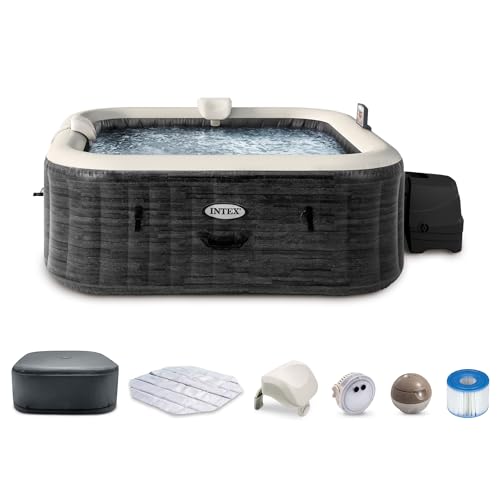
Intex PureSpa Plus Inflatable Hot Tub
A widely used inflatable spa with a laminated PVC wall and built-in heater, commonly set up seasonally on patios and decks.

Coleman SaluSpa Inflatable Hot Tub
A similar laminated PVC inflatable spa line often chosen for its simpler control panel and comparable seasonal durability to higher-end inflatable models.
Frequently asked questions
How many years can an inflatable hot tub realistically last?
With regular seasonal use and reasonable care, three to five years is a realistic expectation, with some well-maintained units lasting longer and neglected ones failing sooner due to puncture or storage issues.
What causes most inflatable hot tub punctures?
Sharp objects like pet claws, jewelry, or rough ground surfaces under the tub are the most common causes, far more often than the material simply wearing out from normal water pressure or heat.
Does an inflatable hot tub lose air pressure on its own over time?
A small amount of natural pressure loss is normal as temperatures fluctuate, which is why most models include a top-off feature, but significant or rapid air loss usually points to a slow leak rather than normal wear.
Can you repair a puncture in an inflatable hot tub yourself?
Yes, most inflatable hot tubs come with or support a PVC patch kit similar to those used for inflatable pools, which can effectively seal small punctures if caught and patched promptly.
Does running an inflatable hot tub at high heat shorten its lifespan?
Running within the manufacturer’s rated temperature range is fine for the materials, but consistently pushing toward the upper limit or running the heater longer than needed can add unnecessary wear over time.
Is it safe to leave an inflatable hot tub set up outdoors year-round?
It depends on climate, since freezing temperatures and prolonged UV exposure both accelerate wear, so most owners in colder climates drain and store the tub for winter rather than leaving it set up continuously.
Does direct sunlight damage an inflatable hot tub over time?
Yes, sustained UV exposure gradually degrades PVC material over multiple seasons, so placing the tub in partial shade or covering it between uses helps extend its usable life.
How should an inflatable hot tub be stored for winter?
It should be fully drained, thoroughly dried to prevent mildew, and folded loosely for storage in a space that will not freeze, since storing it damp or in freezing conditions is a common cause of cracking.
Is an inflatable hot tub as durable as a hard-shell spa?
No, a hard-shell acrylic spa generally lasts significantly longer, often a decade or more, but at a much higher cost and with permanent installation, so the comparison depends on whether portability and lower cost matter more than maximum lifespan.
Does the base surface under an inflatable hot tub affect its durability?
Yes significantly, a smooth, level, debris-free surface or dedicated floor pad reduces puncture risk substantially compared to placing the tub directly on rough concrete, gravel, or uneven ground.
Can pets damage an inflatable hot tub?
Yes, claws are one of the more common causes of punctures, so many owners either keep pets away from the setup area or use a protective cover when the tub is not actively in use.
Does water chemistry affect how long an inflatable hot tub lasts?
Properly balanced water protects the inner liner from chemical degradation, while neglected or poorly balanced water, especially overly high chlorine levels, can contribute to premature material breakdown over time.
Is it normal for an inflatable hot tub to feel slightly less firm after a season of use?
A minor decrease in wall firmness over a season is common and can usually be corrected by topping off air pressure, which most inflatable models are specifically designed to allow during use.
Do more expensive inflatable hot tubs actually last longer than budget ones?
Generally yes, higher-end models tend to use thicker, more reinforced PVC layers and better seam construction, which translates to fewer puncture and seam-failure issues over comparable seasonal use.
Can extreme cold outside the rated storage temperature crack the material even in storage?
Yes, PVC becomes noticeably more brittle at low temperatures, so storing a folded tub in an unheated garage or shed through a hard freeze can contribute to creasing damage even without active use.
Does covering an inflatable hot tub when not in use extend its lifespan?
Yes, a fitted cover reduces UV exposure, debris accumulation, and incidental contact that could lead to punctures, making it one of the simpler low-cost steps toward longer seasonal durability.
Is it normal for seams to be the first part of an inflatable hot tub to show wear?
Yes, seams experience more repeated stress than flat wall sections during inflation and use, which is why many owners inspect seam lines specifically during routine checks rather than just the broad surface area.
The bottom line
An inflatable hot tub is genuinely more durable than its casual appearance suggests, and most early failures trace back to puncture risk or poor winter storage rather than the inflatable concept itself being flawed. Treated with reasonable care, a few seasons of reliable use is a realistic and fair expectation.
Sierra Daniels
Sierra's background is in landscape design and nursery retail. She focuses on lawn and garden equipment, outdoor furniture and gear durability, weighing published specs against how materials actually hold up outside.


