Shotgun Microphones That Cut Background Noise on Camera
The Rode VideoMic Pro+ is the best overall shotgun microphone, combining a tight supercardioid pattern with onboard battery power and a shock mount. The Deity D3 Pro suits run and gun shooters who need digital gain control, and the Comica CVM-VM10 II is the budget pick for casual recording.
The Rode VideoMic Pro+ is the best overall shotgun microphone, because its supercardioid capsule rejects side noise while its internal rechargeable battery removes the need for a separate power cable. It costs more than entry level shotgun mics, so anyone recording occasional video can get by with a cheaper option like the Comica CVM-VM10 II.
We compared pickup pattern, self noise in decibels, power source, shock mount design and output connector using published specification sheets and owner reports from retail listings.
The best picks, ranked

Rode VideoMic Pro+
The VideoMic Pro+ uses a supercardioid capsule that rejects sound from the sides and rear, keeping dialogue forward in the mix. An internal rechargeable battery powers it for about 100 hours, and the shock mount isolates handling noise from the camera body.
Pros
- Internal battery removes a cable dependency
- Automatic power on when camera wakes
- Shock mount built into the body
Cons
- Pricier than basic on-camera shotgun mics
- 3.5mm output needs an adapter for XLR cameras
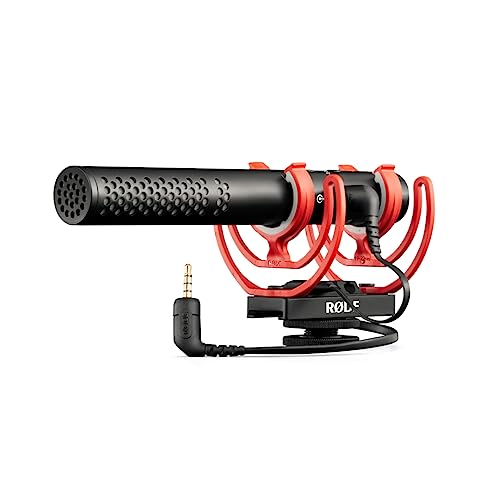
Rode VideoMic NTG
The VideoMic NTG switches between XLR and USB output, useful for anyone moving between a camera rig and a laptop for podcasts or webinars. Digital signal processing adds a built in high pass filter and compressor.
Pros
- Works as both a camera mic and a USB mic
- Onboard DSP cleans up low rumble
- Multiple power options including phantom power
Cons
- Larger body than basic shotgun mics
- Higher cost than single purpose mics

Sennheiser MKE 600
The MKE 600 keeps self noise low enough to pick up quiet dialogue without adding a hiss, a common complaint with cheaper shotgun mics. It runs on either a AA battery or 48V phantom power through its XLR connector.
Pros
- Among the lowest self noise in this comparison
- XLR output works with professional mixers
- Metal body holds up to regular field use
Cons
- No internal rechargeable battery option
- Requires a 3.5mm adapter for most consumer cameras
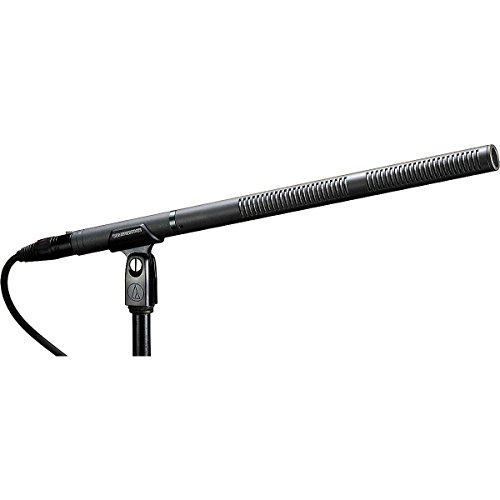
Audio-Technica AT8035
The AT8035 is a line and gradient shotgun mic built for studio booms and broadcast setups rather than casual on-camera mounting. It needs 48V phantom power, which rules out battery operated cameras without an adapter.
Pros
- Tight pattern rejects off axis room noise well
- Durable build for repeated boom pole use
- Consistent frequency response for voice
Cons
- Needs phantom power, not battery powered
- Not designed for mounting directly on small cameras

Deity D3 Pro
The D3 Pro adds a digital screen for gain and filter settings, letting shooters adjust levels without guessing at a tiny dial. It mounts directly to a camera hot shoe and runs on a single AA battery.
Pros
- Digital display makes gain settings easy to read
- Switchable output works with phones and cameras
- Compact size for a full shotgun capsule
Cons
- AA battery runs shorter than rechargeable options
- Digital screen adds a small learning curve

Shure VP83F
The VP83F records directly to a microSD card as a backup to whatever the camera captures, useful when a cable comes loose mid shoot. Onboard controls include a high pass filter and three gain stages.
Pros
- Built in recorder backs up audio independently
- Three step gain switch covers varied environments
- Compact and lightweight for a camera mount mic
Cons
- microSD card sold separately
- AAA batteries drain faster when recording to card

Comica CVM-VM10 II
The CVM-VM10 II gives new video creators a basic supercardioid shotgun mic without the cost of professional models. It runs on a single AAA battery and includes a furry windscreen for outdoor use.
Pros
- Lowest cost entry into shotgun mics
- Includes a windscreen for outdoor recording
- Switchable output fits cameras and phones
Cons
- Higher self noise than pricier models
- Build quality feels less rugged for daily field work
How they compare
| # | Model | Pickup Pattern | Best for | Score | Price |
|---|---|---|---|---|---|
| 1 | Rode VideoMic Pro+ | Supercardioid | Best Overall | 9.5 | Check price |
| 2 | Rode VideoMic NTG | Line and gradient | Best for Hybrid Shooters | 9.2 | Check price |
| 3 | Sennheiser MKE 600 | Supercardioid/lobar | Best for Low Self Noise | 9.0 | Check price |
| 4 | Audio-Technica AT8035 | Line and gradient | Best for Studio and Broadcast Use | 8.8 | Check price |
| 5 | Deity D3 Pro | Supercardioid | Best for Run and Gun Shooting | 8.7 | Check price |
| 6 | Shure VP83F | Supercardioid | Best with Built-In Recorder | 8.5 | Check price |
| 7 | Comica CVM-VM10 II | Supercardioid | Best Budget Pick | 8.2 | Check price |
How to pick the right one
What a Shotgun Microphone Actually Fixes A shotgun mic narrows the recording angle so dialogue in front of the lens stays louder than background chatter, traffic or air conditioning hum. The tighter the pickup pattern, the more off axis sound gets rejected, which matters more in noisy rooms than quiet studios. Self noise, measured in decibels, is the microphone’s own electronic hiss. Lower numbers mean cleaner audio when boosting gain for a quiet speaker.
Battery, USB or Phantom Power: Matching the Mic to the Camera Entry and mid level mics like the VideoMic Pro+ and Deity D3 Pro run on an internal battery or a single AA, which works with any camera hot shoe. Studio mics like the Audio-Technica AT8035 require 48V phantom power from a mixer or audio interface, ruling out direct camera mounting without extra gear. The Rode VideoMic NTG splits the difference with USB, AA and phantom power options in one body.
On-Camera Shooting Versus Studio Boom Use Mics built for on-camera mounting, such as the Deity D3 Pro or Comica CVM-VM10 II, prioritize light weight and simple battery power over raw audio specs. Boom and studio mics like the Audio-Technica AT8035 trade portability for tighter rejection and lower self noise, since they sit farther from the subject on a pole. Shooters who move between a camera rig and a desk setup benefit from a hybrid design like the VideoMic NTG.
When a Built-In Recorder Is Worth the Extra Step The Shure VP83F records a backup file to its own microSD card, which protects a shoot if a cable disconnects or a camera’s audio input clips. That backup adds a sync step in editing, since two separate audio files need to line up with the video. Creators who shoot solo without a second audio operator benefit most from this safety net.
Frequently asked questions
What pickup pattern should a shotgun microphone use for interviews?
Supercardioid patterns work well for most interviews, narrowing enough to reject side noise while staying forgiving if a subject moves slightly off axis.
Does a shotgun mic need phantom power?
Only mics built for XLR studio use, such as the Audio-Technica AT8035, require 48V phantom power. Most on-camera shotgun mics run on AA batteries or an internal rechargeable cell.
Can a shotgun mic plug into a phone?
Models with a switchable TRS/TRRS output, like the Deity D3 Pro or Comica CVM-VM10 II, work with phones once switched to the TRRS setting.
How much self noise is too much for a shotgun mic?
Self noise above about 18 dB SPL becomes noticeable when boosting gain for quiet speakers. Mics rated under 15 dB SPL stay cleaner in low volume scenes.
Is a more expensive shotgun mic always quieter?
Generally yes, since lower self noise usually comes from better internal electronics, but a mid priced mic like the Sennheiser MKE 600 beats some pricier mics on this spec.
Do shotgun mics work well outdoors?
Wind noise affects every shotgun mic without a windscreen. A furry cover, included with mics like the Comica CVM-VM10 II, cuts most wind related rumble.
What is the difference between a shotgun mic and a lavalier mic?
A shotgun mic picks up sound from a distance in a narrow cone, mounted on or near the camera. A lavalier clips directly to clothing close to the speaker’s mouth for a more isolated signal.
Can a shotgun mic record audio without being connected to a camera?
Only models with onboard recording, such as the Shure VP83F, can capture audio to their own storage independent of a camera connection.
How long does a shotgun mic battery last during a shoot?
Internal rechargeable batteries like the VideoMic Pro+ last around 100 hours. Single AA or AAA powered mics typically run 20 to 70 hours depending on the model.
Final word
The Rode VideoMic Pro+ is the strongest overall pick, since its internal battery, shock mount and supercardioid capsule solve the most common on-camera audio problems without extra cables. Shooters who need phantom power for a studio boom setup should choose the Audio-Technica AT8035 instead. Anyone recording occasional video on a tight budget can start with the Comica CVM-VM10 II and upgrade later.
Marcus Chen
Marcus covered consumer electronics for enthusiast tech publications for six years before joining ChoiceCrest. He specializes in translating manufacturer spec sheets into plain-language buying advice, with a focus on audio, computing accessories and smart-home gear.