Screen Protectors That Actually Stop Cracks
Spigen GlasTR EZ Fit wins overall thanks to its clamp on alignment tray and durable tempered glass. amFilm OneTouch offers better value with two or three protectors per pack. Whitestone Dome Glass suits curved edge phones, using UV cured liquid adhesive for full coverage where flat glass would gap.
Spigen GlasTR EZ Fit tops this list because its included tray drops the glass into place without trial and error. amFilm OneTouch costs less per protector when bought as a pack of two or three. Whitestone Dome Glass is the only option here built specifically for phones with strongly curved edges.
Nearly every listing advertises 9H hardness, a pencil test rating that says little about drop protection or long term wear. Real differences show up in glass thickness, coating durability, included alignment tools and how owners describe edge lifting after months of use. We compared those factors along with case compatibility and curved versus flat coverage to rank this group.
The top picks, ranked
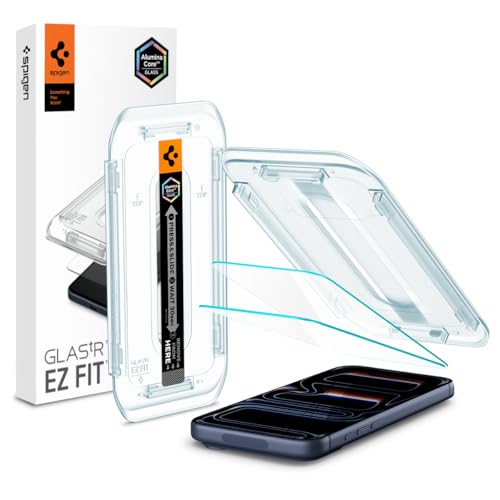
Spigen GlasTR EZ Fit Screen Protector
A rigid alignment tray clamps around the phone and lowers the glass into exact position, removing the guesswork of a manual application. Tempered glass measuring 0.3 mm carries an oleophobic coating that wipes clean of fingerprints. Owners report first time success rates well above hand aligned competitors, even without prior experience.
Pros
- Alignment tray removes crooked application error
- Oleophobic coating resists fingerprint smudging
- Two protectors included for a spare
Cons
- Flat glass leaves a slight gap on curved edge phones
- Tray only matches one specific phone model

amFilm OneTouch Glass Screen Protector
Two or three tempered glass protectors ship in each amFilm pack, so a cracked panel gets replaced without a new order. An install frame handles alignment, and touch response stays crisp under the 0.33 mm glass. Clarity holds up well for the price, according to the listing and repeat owner feedback.
Pros
- Multiple protectors per pack simplify replacement
- Install frame delivers consistent alignment
- Touch sensitivity and clarity remain strong
Cons
- Oleophobic coating wears faster than premium picks
- Edges chip slightly more easily than thicker glass
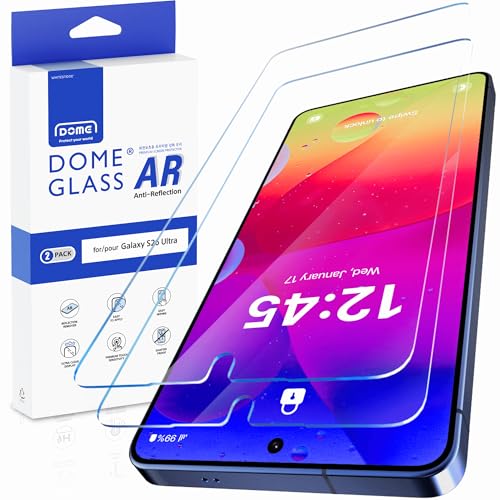
Whitestone Dome Glass Screen Protector
A UV lamp cures liquid optical adhesive beneath this glass, letting it bond across a curved edge instead of hovering above it. Coverage reaches edge to edge with no rainbow halo where flat protectors typically lift. Fitting takes longer than a tray based protector, and the process cannot be undone once cured.
Pros
- Bonds fully across curved edges without lifting
- Optical clarity ranks highest in this group
- No halo effect visible around the perimeter
Cons
- Installation is involved and cannot be redone easily
- Excess adhesive can seep near speaker or port openings

ZAGG InvisibleShield Glass Elite
ZAGG covers Glass Elite with a lifetime replacement program, which matters most for anyone who cracks protectors often. Reinforced tempered glass resists scratching, and an EZ Apply frame handles alignment during installation. Owners cite the replacement process itself as the main reason they stick with this brand.
Pros
- Lifetime replacement warranty covers accidental breakage
- Reinforced glass holds up to daily scratching
- Alignment frame comes included in the box
Cons
- Replacement claims require shipping and waiting
- Thicker glass adds noticeable bulk under some cases
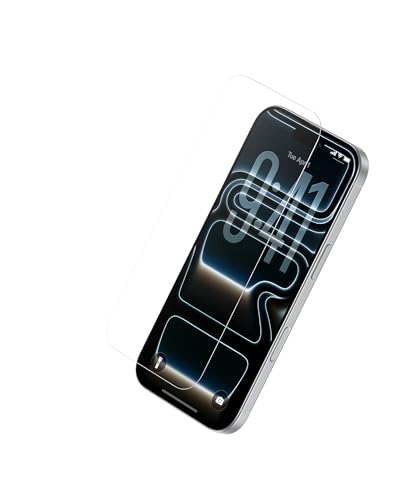
Belkin ScreenForce UltraGlass 2 Screen Protector
Belkin treats this glass chemically to resist the fine scratches that keys and pocket grit cause over time. An antimicrobial surface treatment is a genuine addition rather than a marketing label. Slim profile glass keeps case compatibility high, based on specifications listed by the manufacturer.
Pros
- Resists fine everyday scratches from keys and grit
- Slim profile fits most cases without interference
- Alignment tray included for accurate placement
Cons
- Pack includes only a single protector
- Offers less impact cushioning than thicker glass options
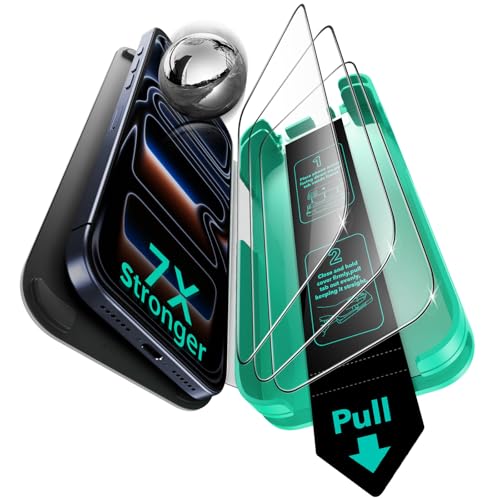
ESR Armorite Screen Protector
Slightly recessed edges let Armorite sit inside the lip of nearly any case instead of fighting against it. A reusable alignment frame ships with the three pack, and touch sensitivity stays high through the glass. Owners report switching to this option after a previous protector kept lifting under case pressure.
Pros
- Recessed edges avoid lifting under case lips
- Three protectors per pack share one reusable frame
- Touch sensitivity and clarity stay consistent
Cons
- Recessed border leaves a narrow strip uncovered
- Coating performs adequately rather than exceptionally

Supershieldz Tempered Glass Screen Protector
No frame, no extras, just plain tempered glass sold in multi packs at a low per unit cost. Application demands more patience without an alignment tool, but the glass stays clear and responsive. It suits buyers who expect to replace protectors often and want an easy reorder.
Pros
- Three protectors per pack suit frequent replacement
- Clear glass keeps touch response accurate
- Fits an unusually wide range of phone models
Cons
- No alignment frame, so careful application matters
- Oleophobic coating wears off relatively quickly
The lineup, side by side
| # | Model | Material | Best for | Score | Price |
|---|---|---|---|---|---|
| 1 | Spigen GlasTR EZ Fit Screen Protector | Tempered glass | Best overall | 9.4 | Check price |
| 2 | amFilm OneTouch Glass Screen Protector | Tempered glass | Best value | 9.2 | Check price |
| 3 | Whitestone Dome Glass Screen Protector | Tempered glass with liquid adhesive | Best for curved displays | 9.0 | Check price |
| 4 | ZAGG InvisibleShield Glass Elite | Reinforced tempered glass | Best warranty coverage | 8.8 | Check price |
| 5 | Belkin ScreenForce UltraGlass 2 Screen Protector | Chemically treated tempered glass | Best for scratch resistance | 8.6 | Check price |
| 6 | ESR Armorite Screen Protector | Tempered glass | Best for case compatibility | 8.3 | Check price |
| 7 | Supershieldz Tempered Glass Screen Protector | Tempered glass | Best budget | 8.0 | Check price |
What matters most
What actually matters more than 9H hardness ratings Nearly every glass protector claims 9H hardness on the box. That number comes from a pencil test and says nothing about drop resistance. It only confirms the surface resists keys and coins, not sand or grit containing quartz. Thickness, edge finish and coating quality predict real world durability far better. Compare those specs before hardness claims when choosing between listings.
Flat glass or curved coverage: which fits your phone Curved edge phones cannot be fully covered by flat tempered glass. Flat panels either stop short of the curve or lift and create a visible rainbow halo. Case friendly protectors accept a narrow uncovered border in exchange for reliable adhesion. UV cured liquid adhesive, like Whitestone uses, bonds fully across the curve instead. That approach demands a careful, irreversible installation process. Decide which compromise fits your phone before ordering.
Why the oleophobic coating matters for daily use A thin oil repelling layer sits on top of every glass protector. It determines how smoothly your finger glides and how easily fingerprints wipe away. This coating wears out before the glass does, often within months on cheaper protectors. Grabby texture or smearing signals the coating has failed, not the glass underneath. Replacement is the only real fix once that happens.
Getting a bubble free application on the first try Dust trapped underneath the glass causes almost every permanent bubble. Fit the protector in a bathroom shortly after a hot shower, since airborne dust settles out of the air. Clean the screen first with the alcohol wipe, then the microfibre cloth. Lift remaining specks with dust removal stickers before placing the glass. An alignment frame, if included, keeps positioning accurate without guesswork. Let the adhesive pull the glass down rather than pressing hard from one side.
Good to know
Do screen protectors actually stop cracked screens?
They stop scratches reliably and absorb minor impacts, but thin tempered glass will not save a display from a hard drop onto a corner. A case handles drop protection. A protector handles scratch protection. Use both together for full coverage.
Which is better, glass or film screen protectors?
Glass feels closer to the original display and resists scratches better than film. It also shatters into a contained web rather than tearing apart. Film wraps around curved edges more easily but scratches faster and feels less smooth. Most phone owners choose tempered glass over film.
Can screen protectors interfere with fingerprint unlock sensors?
Most current protectors are designed to work with under display fingerprint sensors. Overly thick glass or a poorly bonded protector can reduce reliability, though. Check that the listing states compatibility with your phone’s specific sensor. Re register your fingerprint after installation just in case.
How do you remove bubbles under a screen protector?
Bubbles from trapped air near an edge often push out with a microfibre wrapped credit card, within the first few minutes. Bubbles surrounding a visible speck come from dust and will not push out. In that case, lift the protector, remove the dust with tape, then reapply.
Why is my screen protector lifting at the edges?
Adhesive that does not reach the perimeter is the most common cause. A case pressing against the edge, or skin oil working underneath, can also cause lifting. Slim recessed edge designs, like the ESR Armorite, generally resolve case related lifting.
Is a screen protector worth it if I already have a case?
Yes, since a case and a protector guard against different damage types. Cases absorb drop impact at the edges and back. Protectors take the scratches and light impacts that a case cannot reach on the display face. Skipping either leaves a gap in protection.
Do privacy screen protectors make the screen dimmer?
Yes, noticeably dimmer in most cases. The louvre layer that narrows viewing angle also blocks some light output. Screens look dimmer viewed head on, so brightness often needs raising afterward. Weigh that trade off against the privacy benefit before buying.
How often should you replace a screen protector?
Replace it once the oleophobic coating stops repelling fingerprints or once deep scratches appear. A cracked protector should be replaced immediately regardless of age. Annual replacement suits most daily users, and multi packs make that routine cheaper.
Best screen protector for curved edge phones?
Whitestone Dome Glass, using UV cured liquid adhesive, bonds fully across curved edges without gapping. Flat tempered glass options either stop short of the curve or lift and create a visible halo. Curved phone owners should budget extra time for the liquid adhesive installation process.
Can you reuse a screen protector after removing it?
The adhesive can technically be rinsed and dried for reuse. In practice, a reapplied protector usually traps dust and loses grip at the edges. Treat reuse as a temporary fix only, while a proper replacement is on the way.
Our pick
Spigen GlasTR EZ Fit suits most phones best, since its alignment tray removes the step people get wrong most often. Choose amFilm OneTouch when spare protectors in a drawer matter more than premium coating life. Reach for Whitestone Dome Glass only if curved edges make flat glass gap or lift, and pair any pick here with a case for drop protection.
Marcus Chen
Marcus covered consumer electronics for enthusiast tech publications for six years before joining ChoiceCrest. He specializes in translating manufacturer spec sheets into plain-language buying advice, with a focus on audio, computing accessories and smart-home gear.