Hydration Vests Compared for Distance Runners
Salomon Active Skin 8 wins overall for stretch mesh that hugs the ribcage instead of bouncing. The Nathan Pinnacle 12L suits long days needing mandatory kit, while the AONIJIE Hydration Vest 5L costs far less for anyone testing the idea first.
Fit decides whether a hydration vest disappears or rubs raw, not the litre count on the label. Salomon’s Active Skin 8 controls bounce best of the seven here, the Nathan Pinnacle 12L carries mandatory kit for four hour plus days, and the AONIJIE 5L offers a low cost way to try the format. Vest running rewards a snug chest fit over generous storage.
A number on a hydration vest describes volume, not how it sits on your body, and fit is what prevents chafing at mile ten. We compared adjustment systems, sizing charts, flask and bladder compatibility and pocket layout across seven vests sold on Amazon, then weighed the chafing and bounce complaints owners repeat most often.
Before you buy
Does fit matter more than capacity in a hydration vest? Runners often shop by litres first, then discover a well fitting 6 litre vest beats a poorly fitting 12 litre one. A vest should sit high on the chest with the load close to the sternum, tight enough that jumping on the spot produces no movement. Check the brand’s chest measurement chart instead of assuming your usual shirt size.
Soft flasks vs a bladder, which should you pick? Front soft flasks show remaining water at a glance and refill quickly at an aid station, which is why most race vests use them. A bladder like the one in the CamelBak Circuit carries more, spreads weight across the back and clears the front, but you cannot judge what is left without stopping. Vests such as the Nathan Pinnacle 12L accept both for maximum flexibility on long days.
Where do hydration vests usually chafe? Underarm seams, sternum straps and the point where the back panel meets the shoulder blades cause most complaints. A technical shirt worn under the vest removes most of the risk, and anti chafe balm handles what remains. Consistent rubbing in one spot points to a fit problem rather than something to tolerate.
How much vest capacity matches your typical run? Runs under an hour rarely need more than a minimal vest like the Nathan QuickStart 2.0 or a single handheld flask. Two to four hours calls for the 5 to 8 litre range once water, food and a spare layer are counted. Beyond that, or wherever an event lists mandatory kit, 10 litres or more stops being optional.
The best picks, ranked

Salomon Active Skin 8
Sensifit stretch mesh wraps the torso so the load sits against you instead of swinging with each stride. Two soft flasks come included and sit in front pockets reachable without breaking stride. Fit runs snug, and owners commonly size up from their usual chest measurement.
Pros
- Very little bounce even when full
- Front flasks easy to reach and refill
- Breathable mesh dries fast
Cons
- Sizing runs small for broader chests
- Less adjustment range than strap heavy vests

Nathan Pinnacle 12L
Twelve litres covers mandatory kit lists on long trail events, and Nathan’s propulsion harness keeps that load from shifting. Two flasks ship included, and the vest also accepts a bladder for extra volume. Runners doing an easy hour on roads will find all that capacity unnecessary.
Pros
- Carries mandatory kit for long events
- Wide adjustment range across body shapes
- Takes flasks and a bladder together
Cons
- More vest than short road runs need
- Full loads shift slightly on steep descents

CamelBak Circuit Run Vest
CamelBak’s Crux reservoir ships included here and delivers more water per sip than many rival bladders, with a magnetic tube trap that stops the hose swinging. The harness itself stays simple and light. Front storage is modest, so reaching a phone or gel takes more effort than on flask based vests.
Pros
- Reservoir included rather than sold separately
- Magnetic hose clip keeps the tube still
- Light and quick to adjust
Cons
- Smaller front pockets than flask vests
- Refilling the bladder mid run takes longer

Osprey Duro 6
Osprey applies pack design thinking to running, with a stretch mesh harness and a scratch free phone pocket among its pocket layout. Included flasks sit high enough to avoid pressing on the diaphragm. Weight runs slightly above minimalist race vests, which the extra storage justifies for most runners.
Pros
- Excellent pocket organization
- Flasks positioned away from the diaphragm
- Comfortable stretch harness
Cons
- Heavier than minimalist race vests
- Rear pocket access is awkward while moving
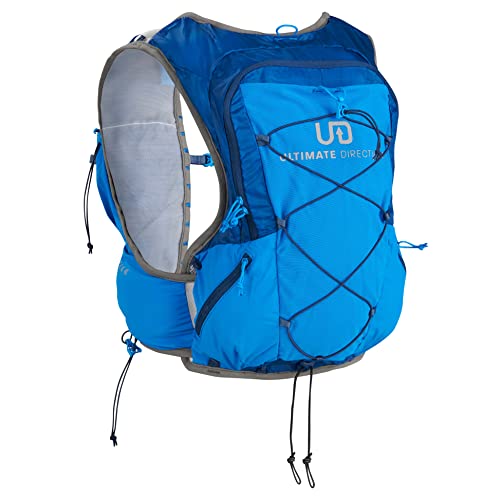
Ultimate Direction Ultra Vest 6.0
Comfort Cinch pulls the vest in from both sides at once, letting a single size fit a wider range of torsos than most competitors. Runners who fall between standard sizes often land here as the recommendation. Expect a few runs before the strap layout feels dialed in.
Pros
- Wide adjustment range for awkward sizes
- Cinch system tightens evenly on both sides
- Solid capacity without feeling bulky
Cons
- Setup takes time to dial in
- More hardware means more possible rub points

AONIJIE Hydration Vest 5L
A sensible entry point for anyone unsure whether a vest suits their running style. Front flask pockets and adjustable sternum straps mirror what premium brands offer, and owners report it holds up over weekly training runs. Materials are less refined, so ultra distances expose the seams and mesh faster.
Pros
- Low cost way to try a vest
- Standard front flask pocket layout
- Light enough for shorter training runs
Cons
- Mesh and seams wear faster long term
- Flask inclusion varies between listings

Nathan QuickStart 2.0 4L
This stripped back vest suits runners who want water and a phone and nothing more. A 1.5 litre bladder ships included, plus just enough pocket space for keys and a gel. Fewer components mean a faster fit and fewer places to chafe.
Pros
- Simple and fast to put on
- Bladder included at a modest spec level
- Few components means few chafe points
Cons
- Not enough capacity for long trail days
- Basic harness with limited adjustment
The lineup, side by side
| # | Model | Capacity | Best for | Score | Price |
|---|---|---|---|---|---|
| 1 | Salomon Active Skin 8 | 8 litres | Best overall | 9.4 | Check price |
| 2 | Nathan Pinnacle 12L | 12 litres | Best for long distances | 9.2 | Check price |
| 3 | CamelBak Circuit Run Vest | About 5 litres with reservoir | Best value | 9.0 | Check price |
| 4 | Osprey Duro 6 | 6 litres | Best pocket layout | 8.8 | Check price |
| 5 | Ultimate Direction Ultra Vest 6.0 | About 10.4 litres | Best adjustability | 8.6 | Check price |
| 6 | AONIJIE Hydration Vest 5L | 5 litres | Best budget | 8.3 | Check price |
| 7 | Nathan QuickStart 2.0 4L | 4 litres | Best for short runs | 8.0 | Check price |
Common questions
How much water should I carry on a run?
Around 500ml per hour is a common guide in mild conditions, though sweat rates vary widely between runners. Two front flasks cover most two to three hour outings, and a bladder makes more sense beyond that or where refill points are scarce.
How do I stop a hydration vest from bouncing?
Tighten the sternum straps and any side cinches so the vest sits snug against the ribs, and balance weight rather than loading one side. Bounce that persists once properly tightened usually means the size is wrong, since an oversized vest cannot cinch down far enough.
Can you wash a hydration vest?
Yes. Rinse it in cool water after salty runs, hand wash with mild soap periodically, and air dry away from direct sun. Skip the tumble dryer, which damages elastic and laminated panels, and empty bladders to dry open after every use.
Are hydration vests better than a running belt?
For anything over an hour, most runners find vests more comfortable since weight sits on the shoulders and chest instead of bouncing at the waist. Belts run cooler and go on faster for short outings, so many runners keep both.
Do I need a hydration vest for road running?
Not usually on shorter routes that pass shops or fountains. Vests earn their place on trails, in heat, across long training blocks and anywhere refills are unpredictable. A minimal 4 litre vest is a reasonable middle ground for road marathoners.
How should a hydration vest fit around the chest?
Snug without restriction. You should manage a full deep breath without the sternum straps digging in, and no gap should let the vest slide as you run. Women often prefer models with adjustable strap positions to avoid pressure across the chest.
Can I fit a phone in the front pocket?
Most vests here size a front pocket for a modern phone, and the Osprey Duro 6 adds a scratch free pocket built for it. Larger phones can press awkwardly when you bend, so oversized models often suit a side or rear pocket better.
How long do soft flasks typically last?
Owners commonly report a year or more of regular use before the bite valve or seams begin leaking. Rinsing after sports drinks, avoiding boiling water and drying flasks fully extends that considerably, and replacements are widely sold separately.
Which hydration vest suits a first time buyer?
The AONIJIE Hydration Vest 5L keeps the outlay low while copying the front flask layout premium brands use, making it a reasonable way to test whether vest running suits your style before spending more.
Our take
The Salomon Active Skin 8 suits most runners best, since its stretch mesh body controls bounce better than strap heavy designs and the included flasks stay easy to reach. Long distance runners with mandatory kit lists get more from the Nathan Pinnacle 12L, while the AONIJIE 5L offers a low risk way to find out whether vest running fits your style.
Derek Holt
Derek has a background coaching recreational and amateur athletes and has worked the sales floor at specialty fitness retailers. He focuses on equipment durability, ergonomics and realistic use cases rather than marketing claims.


