Vibration Plates Compared by Motor, Frequency and Size
LifePro Waver leads this roundup for its wide frequency range and slim under bed storage. Bluefin Fitness Vibration Platform offers dual motors at a lower cost, and Power Plate Personal brings commercial grade tri planar vibration for buyers who use a plate several times a week.
LifePro Waver tops this list because its frequency range covers both circulation work and standing exercise, and it slides under a bed when not in use. Bluefin Fitness Vibration Platform pairs two motors for a more complex movement pattern at a lower price. Power Plate Personal carries tri planar vibration and commercial grade construction for buyers ready to pay for it.
Marketing claims for vibration plates often outpace the research, so separating genuine benefit from hype takes some digging. Whole body vibration has decent evidence for circulation, balance and bone density in older adults, but weak support for the weight loss claims used to sell many plates. We compared motor type and vibration pattern, published frequency and speed ranges, platform dimensions and weight capacity, noise under load, and what owners report about durability after months of regular use.
The best picks, ranked

LifePro Waver Vibration Plate Machine
LifePro built the Waver thin enough to store under a bed, which matters more than most specs once the first month passes. Its speed range spans low settings for circulation work and higher ones for standing exercises. Noise stays lower than most plates in this price range, based on owner feedback.
Pros
- Slim enough to store instead of leaving out
- Quieter than rival plates at a similar price
- Remote and resistance bands included in the box
Cons
- Platform is narrow for a wide exercise stance
- Weight capacity suits average users, not larger ones
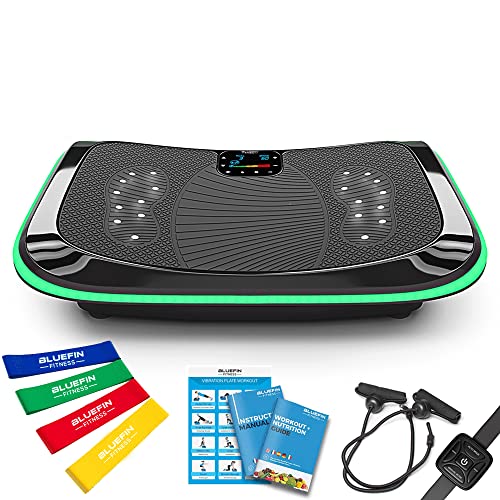
Bluefin Fitness Vibration Platform
Bluefin runs two motors instead of one, producing a more varied movement pattern than single motor plates nearby in price. The platform surface is larger, so a wider stance fits comfortably. Extra size means more floor space and a heavier unit to move, according to the listing.
Pros
- Dual motors create a more varied vibration pattern
- Larger platform allows a proper standing stance
- Strong feature set relative to its price
Cons
- Heavier and harder to store than compact plates
- Louder at the top of its speed range
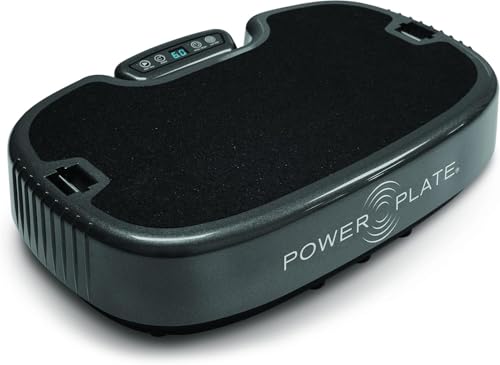
Power Plate Personal Vibration Plate
Power Plate built its name in clinics and gyms, and the Personal model scales that engineering to a home sized unit. Vibration moves through three planes rather than a single oscillation, based on the manufacturer’s specifications. Build quality sits well above the consumer plates in this list, though the price climbs accordingly.
Pros
- Tri planar movement instead of simple oscillation
- Build quality well above consumer grade plates
- Backed by a brand used in clinical settings
Cons
- Costs several times more than mainstream plates
- Platform footprint is smaller than the price implies

Confidence Fitness Slim Full Body Vibration Platform
Confidence Fitness is often the first plate people buy to test whether whole body vibration suits them. Speeds adjust across several levels, and resistance bands come included in the box. Build quality is basic and the motor runs louder than pricier plates, owners report.
Pros
- Low cost way to try whole body vibration
- Adjustable speeds despite the entry level price
- Light enough to move around a room easily
Cons
- Runs noticeably louder than higher priced plates
- Weight capacity trails most rivals in this list

Hurtle Vibration Fitness Machine
Hurtle keeps its footprint small enough for a bedroom corner or home office, a real constraint for apartment buyers. Preset programmes and a remote let users adjust settings without bending down. Its platform size suits seated use and standing balance work better than loaded exercise.
Pros
- Fits rooms where larger plates will not
- Remote control means no bending to adjust settings
- Preset programmes simplify getting started
Cons
- Small platform limits wider standing exercises
- Motor is modest for heavier users

LifePro Rumblex 4D Vibration Plate
Rumblex blends oscillation, linear and pulsation movement instead of sticking to one type. That range suits recovery work and balance training better than the simpler Waver design. Extra modes come with a larger, heavier and pricier unit, so the added flexibility has a real trade off.
Pros
- Combines multiple vibration types in one machine
- Larger platform than the compact models here
- Remote makes switching modes easy mid session
Cons
- Bulkier footprint makes storage harder
- Extra modes suit some users more than others

MERACH Vibration Plate Exercise Machine
MERACH bundles resistance bands with app guided routines, useful for anyone unsure what to do beyond standing on a plate. Hardware performs adequately rather than standing out, and the guidance package is the real selling point. App quality shifts with updates, according to user reviews, so treat it as a bonus.
Pros
- Guided routines help beginners use it correctly
- Bands included support upper body exercises
- Reasonable price given the accessory package
Cons
- Hardware is unremarkable next to specialist brands
- App quality varies across software updates
Compared at a glance
| # | Model | Vibration type | Best for | Score | Price |
|---|---|---|---|---|---|
| 1 | LifePro Waver Vibration Plate Machine | Oscillating | Best overall | 9.4 | Check price |
| 2 | Bluefin Fitness Vibration Platform | Oscillating with dual motors | Best value | 9.2 | Check price |
| 3 | Power Plate Personal Vibration Plate | Tri planar | Best premium | 9.0 | Check price |
| 4 | Confidence Fitness Slim Full Body Vibration Platform | Oscillating | Best budget | 8.8 | Check price |
| 5 | Hurtle Vibration Fitness Machine | Oscillating | Best compact | 8.6 | Check price |
| 6 | LifePro Rumblex 4D Vibration Plate | Oscillation, linear and pulsation | Best for multiple vibration modes | 8.3 | Check price |
| 7 | MERACH Vibration Plate Exercise Machine | Oscillating | Best for guided routines | 8.0 | Check price |
How to choose
What does the research say about vibration plates? Research backs whole body vibration for circulation, for balance in older adults, and as one factor among several in bone density studies for postmenopausal women. Evidence for fat loss and cellulite reduction stays weak, despite marketing claims. Treat a plate as a supplement to exercise, useful for warm ups and recovery, rather than a replacement for training. Pacemaker users, anyone with a recent joint replacement, retinal issues, deep vein thrombosis or pregnancy should check with a doctor first, since vibration is contraindicated for several conditions.
Oscillating vs linear vs tri planar: what is the difference? Oscillating plates pivot around a central point like a seesaw, alternating movement through each leg. This design dominates home machines because it feels gentler at low speeds. Linear plates move straight up and down instead, usually at higher frequencies similar to clinical machines. Tri planar plates combine both directions plus a third axis of movement. For general home use, an oscillating plate at moderate frequency covers most needs, while linear machines carry most of the bone density research.
How do frequency, amplitude and speed settings compare? Consumer plates often list arbitrary speed numbers instead of a frequency in hertz, which makes cross brand comparison difficult. Where a hertz range is published, five to fifteen hertz suits circulation and recovery work. Higher frequencies target strength and bone loading protocols instead. Amplitude, or how far the platform actually travels, matters just as much as frequency but rarely appears on a spec sheet. A small motor running a light platform quickly is not the same as a powerful motor moving a loaded one, so treat very high speed claims on cheap machines with some skepticism.
What features matter most before you buy? Weight capacity trips up more budget buyers than any other spec, since a plate near its limit loses amplitude and wears its motor faster. Platform size decides whether a wider stance fits, which most standing exercises need. Noise travels through floors more than through air, so apartment dwellers should budget for a rubber mat underneath. Storage decides long term use more than any feature list: a plate that slides under a bed gets used for years, while one dragged from behind a sofa stops after a month.
Questions worth asking
Do vibration platform machines actually work?
For circulation, warm ups and balance training, research offers reasonable support. Older adults also see bone density benefits from higher frequency protocols in some studies. Claims about major fat loss or replacing regular exercise lack strong evidence, so treat a plate as an addition to activity rather than a shortcut.
How long should you use a vibration plate each day?
Most manufacturers suggest starting with five to ten minutes per session. Build toward fifteen to twenty minutes as your body adjusts. Longer sessions are not automatically better, and users report headaches or fatigue from overdoing it early on.
Who should avoid using a vibration platform?
Pregnancy, pacemakers or other implanted devices, recent joint replacement, acute disc problems, deep vein thrombosis, retinal detachment and severe migraine are common contraindications. This is general information, not medical advice. Anyone with a health condition or implant should check with a doctor before starting.
Can you lose weight using a vibration plate?
Energy expenditure from standing on a vibrating platform stays modest on its own. Studies showing real benefit usually combine vibration with exercise and diet changes. Expect it to complement a routine rather than replace one.
What is the difference between oscillating and linear vibration plates?
Oscillating plates pivot around a central axis, alternating side to side like a seesaw, and most home machines use this design. Linear plates move the entire platform straight up and down, typically at higher frequencies. Clinical and commercial machines lean toward linear vibration, while oscillating suits beginners better.
Are vibration plates loud enough to bother neighbors?
Vibration transmits through floors more effectively than airborne sound does, so yes, it can be an issue. Budget plates with unbalanced motors cause the most complaints. A thick rubber gym mat underneath reduces transmission substantially, and daytime use avoids most disputes in apartments.
What weight capacity should you look for in a vibration plate?
Pick a rating comfortably above your body weight rather than close to the limit, since operating near capacity reduces platform movement and strains the motor. Budget machines often cap around two hundred fifty pounds, while sturdier models handle more. Size for the heaviest household user if more than one person will use it.
Should you stand with bent or straight knees on a vibration plate?
A slight knee bend is the standard recommendation, since locked knees send vibration straight up through the joints toward the spine and head. Bent knees absorb movement in the muscles instead, reducing discomfort. Sitting with feet on the platform works if standing feels uncomfortable at first.
Which vibration plate works best in a small apartment?
Compact models like the Hurtle Vibration Fitness Machine or LifePro Waver suit tight spaces because of their small footprint and easy storage. A rubber mat underneath cuts down on vibration reaching neighbors below. Larger dual motor plates like the Bluefin need more floor space and are harder to tuck away.
The verdict
LifePro Waver suits most home buyers, since a quiet plate that stores under a bed gets used far more often than one left in the way. Buyers wanting a larger platform and more varied movement for similar money should look at the Bluefin Fitness Vibration Platform. Power Plate Personal earns its higher price only for those committed to using it several times a week.
Derek Holt
Derek has a background coaching recreational and amateur athletes and has worked the sales floor at specialty fitness retailers. He focuses on equipment durability, ergonomics and realistic use cases rather than marketing claims.


