Rodent Traps That Actually Stop Repeat Infestations
The Victor M250S Electronic Mouse Trap gives fast, no-touch results indoors and flashes a light on every catch. The Victor M156 Easy Set remains the reliable classic snap trap for volume. For rats rather than mice, the Tomcat Rat Snap Trap is sized correctly.
For a clean indoor kill, the Victor M250S Electronic Mouse Trap is hard to beat. Budget-conscious buyers stock up on the Victor M156 Easy Set instead. Rats need a different tool entirely, which is where the Tomcat Rat Snap Trap comes in.
Trap selection goes wrong when people buy for their own convenience rather than the rodent’s size and behavior. Mouse traps cannot kill rats, and glue boards catch nothing placed away from a wall. We compared trigger mechanisms, kill method, reusability and disposal design, then weighed what pest control practitioners report about bait choice and trap shyness.
The shortlist, ranked

Victor M250S Electronic Mouse Trap
A high voltage shock inside an enclosed tunnel kills quickly and hides the result from view. A green indicator light blinks after a catch, so you check the light rather than the trap. Tipping the chamber into a bin means zero contact with the rodent.
Pros
- No contact disposal from setting to emptying
- Indicator light removes the need to inspect traps
- Enclosed chamber keeps the catch hidden from view
Cons
- Requires batteries and periodic replacement
- Sized for mice only, not rats
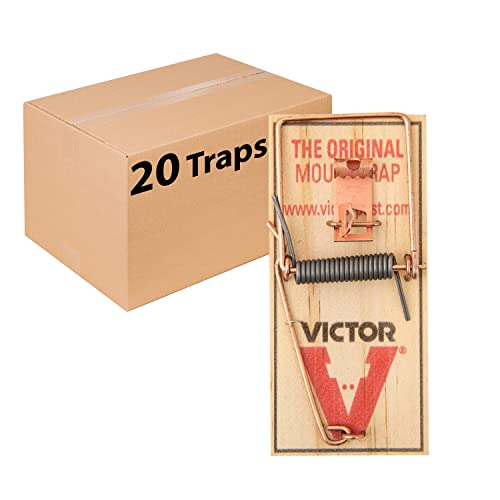
Victor M156 Easy Set Mouse Trap
This wooden snap trap uses an expanded plastic pedal that triggers on light pressure. A larger bait area forces a mouse to step fully onto the trigger, which improves the catch rate over bare metal pedals. Professionals set a dozen at once during an active infestation, and the low cost makes that practical.
Pros
- Low cost allows setting many traps at once
- Large pedal triggers reliably on light weight
- No batteries or moving parts to fail
Cons
- Requires handling to reset and dispose
- Exposed bar is a pinch risk around children and pets
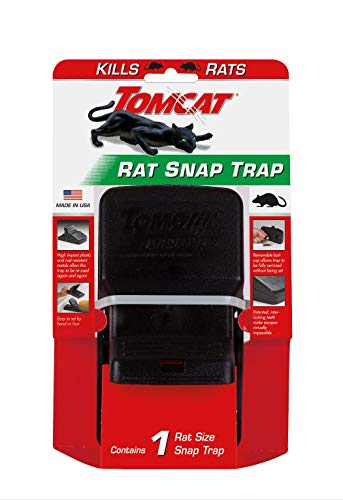
Tomcat Rat Snap Trap
A stronger spring and a larger jaw span handle Norway and roof rats, sizes mouse traps simply cannot manage. Interlocking teeth grip rather than pinch, cutting down on escapes. A bait cup holds soft bait like peanut butter without smearing across the trigger.
Pros
- Jaw span and spring force sized correctly for rats
- Set with a foot, keeping hands clear
- Bait cup holds peanut butter without mess
Cons
- Too large to trigger reliably on mice
- Powerful spring demands care when setting

d-CON Ultra Set Covered Mouse Trap
A fully enclosed plastic housing hides the catch and keeps fingers away from the mechanism. Setting requires only pressing a lever, and disposal is a squeeze and drop into the bin. The housing also limits access for curious pets, though placement out of reach still matters.
Pros
- Catch stays completely out of sight
- Single lever setting avoids finger pinches
- Enclosure reduces accidental pet contact
Cons
- Bulkier than open snap traps in tight gaps
- Costs more per trap than wooden snaps

Tomcat Press ‘N Set Mouse Trap
One thumb press sets this plastic snap trap, skipping the fiddly bar and lever of wooden designs. Interlocking teeth improve grip on the catch. Multipacks make covering several rooms at once straightforward and cheap.
Pros
- Simplest setting action of any snap trap here
- Plastic body washes clean for reuse
- Multipacks make covering a whole house cheap
Cons
- Catch remains visible until disposed
- Lighter body can be dragged by a partially caught rodent

Intruder The Better Mousetrap
A hinged clamshell opens with a squeeze, drops the catch and resets in one motion. That speed matters during an active infestation, when traps fill nightly. Bait sits in a recessed rear cup, so a mouse must commit fully before triggering.
Pros
- Reset and dispose in a single squeeze
- Rear bait cup forces a full entry before triggering
- No exposed metal bar to pinch fingers
Cons
- Hinge weakens after many cycles
- Sized for mice only

Catchmaster Mouse and Insect Glue Traps
Flat adhesive boards reveal where rodents travel, which is how professionals decide where to place snap traps. Insects get caught alongside rodents, giving a broader picture of what is active in a space. Because they hold rather than kill, daily checking is required and they are not suitable everywhere.
Pros
- Reveals travel routes so other traps go in the right place
- Catches insects alongside rodents
- Flat profile slides into narrow gaps
Cons
- Rodents are caught alive and need dispatching
- Unsuitable where pets or children can reach them
Compared at a glance
| # | Model | Power | Best for | Score | Price |
|---|---|---|---|---|---|
| 1 | Victor M250S Electronic Mouse Trap | 4 AA batteries | Best overall | 9.4 | Check price |
| 2 | Victor M156 Easy Set Mouse Trap | Wooden snap trap | Best value | 9.2 | Check price |
| 3 | Tomcat Rat Snap Trap | Plastic snap trap | Best for rats | 9.0 | Check price |
| 4 | d-CON Ultra Set Covered Mouse Trap | Covered mechanical snap trap | Best for no touch disposal | 8.8 | Check price |
| 5 | Tomcat Press ‘N Set Mouse Trap | Plastic snap trap | Best budget | 8.6 | Check price |
| 6 | Intruder The Better Mousetrap | Clamshell snap trap | Best for repeat catches | 8.3 | Check price |
| 7 | Catchmaster Mouse and Insect Glue Traps | Adhesive board | Best for monitoring activity | 8.0 | Check price |
How to choose
What kind of rodent are you dealing with? Mice and rats need different equipment, and getting it wrong wastes weeks. Mouse droppings are rice grain sized and pointed at the ends, while rat droppings are closer to an olive pit. Gnaw marks on wood scale up with the animal too. A mouse trap lacks the jaw span and spring force to kill a rat, so a rat will simply trigger it and escape injured.
Where should traps go? Rodents run along walls rather than crossing open floor. Set traps flush against a wall with the trigger end facing the wall, roughly every six to ten feet along an active run. Behind appliances, under sinks and along the back of cabinets are the usual routes. Glue boards like the Catchmaster sheets work well first, mapping which runs are actually in use.
Baiting, trap shyness and how many to set Peanut butter, chocolate and nesting material such as cotton all work; use a pea sized amount so the rodent has to work at it. Set far more traps than you think you need, since one mouse usually means several. Rats are neophobic and often avoid new objects for days, so leave rat traps unset and baited at first, then arm them once bait is being taken.
Best for homes with pets and children Open snap traps carry the biggest risk, since a curious nose or hand can trigger the bar. Covered traps such as the d-CON Ultra Set and enclosed electronic units like the Victor M250S cut that risk considerably, though placement still matters. Avoid glue boards entirely in homes with pets. Bait stations behind appliances and inside cabinets keep everything out of reach.
Common questions
What is the best bait for a mouse trap?
Peanut butter works because it is aromatic and hard to remove without triggering the trap. Chocolate and hazelnut spread also perform well. Use a pea sized amount, since a large smear lets a mouse feed from the edge without setting it off.
Do electronic rodent traps work better than snap traps?
They kill just as reliably indoors and remove the handling problem, which is their real advantage. The Victor M250S signals catches with a light. Snap traps still win on cost when you need to set ten at once.
How many traps should I set for a mouse problem?
Six to twelve traps suit a typical house, concentrated where droppings appear. Under baiting the area is the most common mistake. Space them roughly six to ten feet apart along walls and active runs.
Can mouse traps catch rats?
No. Mouse traps lack the jaw span and spring force to kill a rat, and a triggered mouse trap usually injures rather than kills. Use a rat sized trap such as the Tomcat Rat Snap Trap instead.
Are glue traps a good option for rodents?
They work best as monitoring tools that show where rodents travel; Catchmaster boards do this well. As a primary control method they catch animals alive, require daily checking and are unsuitable around pets or children.
Where should rodent traps be placed?
Flush against walls with the trigger facing the wall, since rodents travel along edges. Behind appliances, under sinks and inside cabinets are common routes. Open floor placement rarely produces catches.
Victor M156 vs Tomcat Press ‘N Set: which snap trap is better?
The Victor M156 uses a wooden base with a large plastic pedal and costs less per trap. Tomcat’s Press ‘N Set is plastic, sets with one thumb press and washes clean. Both target mice, so choose by handling preference.
How do you keep rodents from coming back?
Seal entry gaps larger than a quarter inch with steel wool and sealant, since mice fit through remarkably small openings. Remove food sources, including pet food left out overnight. Trim vegetation touching the building to cut off access routes.
Is it safe to set traps around pets?
Open snap traps pose a pinch risk to curious paws and noses. Covered traps and enclosed electronic units reduce that risk substantially, though correct placement out of a pet’s reach still matters most.
How long does it take to catch a rat?
Rats are wary of new objects and often avoid a freshly placed trap for several days. Leaving the trap unset and baited at first, then arming it once bait disappears, usually speeds up the first catch.
Our take
The Victor M250S Electronic Mouse Trap is the best indoor choice, killing quickly, signaling catches and never requiring you to touch a rodent. Covering a whole house cheaply during an active infestation means buying Victor M156 Easy Set Mouse Traps in quantity. Anyone dealing with rats rather than mice needs the Tomcat Rat Snap Trap, since mouse sized traps will not do the job.
Jake Monroe
Jake worked as a residential contractor for over a decade before shifting to full-time writing. He evaluates power tools, hand tools and workshop gear through the lens of someone who has actually used them on job sites, not just read the box.