Which Pipe Thread Sealant Actually Stops Leaks?
Oatey Great White Pipe Thread Sealant leads for its NSF rating across gas, water and oil lines. Rectorseal No. 5 suits gas and LP connections under UL classification, and LA-CO Slic-Tite Paste with Teflon protects stainless fittings from galling without seizing.
Oatey Great White takes the top spot, since its NSF/ANSI 14 and 61 rating covers gas, water and oil from one can. Rectorseal No. 5 handles natural gas and LP lines under UL classification up to 550 psi, and LA-CO Slic-Tite Paste stops galling on stainless steel that plain PTFE tape cannot prevent.
Mixing tape and paste on the wrong fitting can crack a joint or fail a gas inspection outright. Some compounds handle high heat, others target potable water, and tape thickness changes how many wraps a joint needs. We compared sealant formulation, stated temperature and pressure ratings, gas and water certifications and material compatibility, then weighed owner reports of dried out paste, torn tape and leaks at threaded unions.
The shortlist, ranked
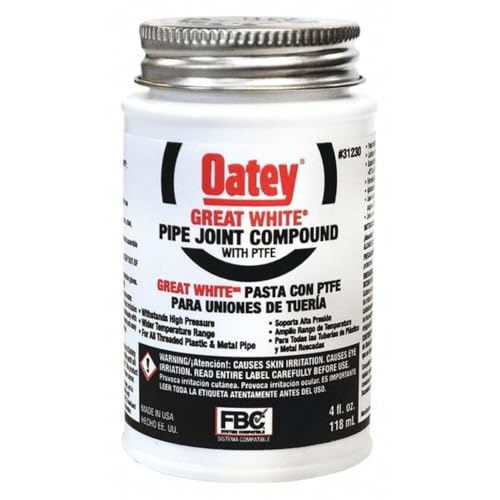
Oatey Great White Pipe Thread Sealant
This paste carries an NSF/ANSI 14 and 61 rating, working on potable water, gas, oil and compressed air lines without a product swap. A brush built into the cap spreads an even coat across threads in one pass. Owners report it stays workable in the can far longer than lanolin based pastes.
Pros
- NSF rated for potable water and gas
- Brush-in-cap applies an even coat
- Stays workable for years unopened
Cons
- Paste can dry out if the cap seal fails
- Not rated for oxygen lines

Rectorseal No. 5 Pipe Thread Sealant
UL classifies this pipe joint compound for natural gas and LP up to 550 psi, a claim most general purpose pastes cannot make. It also seals water, oil and vacuum lines on metal and PVC threads alike. A nonhardening formula lets fittings be broken apart and reused later without damage.
Pros
- UL classified for natural gas and LP
- Nonhardening for easy disassembly
- Works on metal and plastic threads
Cons
- Lower max temperature than PTFE paste options
- Brush wears down with heavy use

Gasoila Blue Monster PTFE Thread Seal Tape
Colored blue instead of white, this tape makes it easy to spot which joints already have tape applied during a repipe. High density PTFE at 4 mil thick seals in fewer wraps than standard tape. Rated up to 500°F, it covers gas, water and steam threads in one roll.
Pros
- Blue color speeds up visual inspection
- High density seals in 3 to 4 wraps
- Rated for gas, water, and steam
Cons
- Not a paste, so it won’t fill worn threads
- Needs a clean, dry thread to grip

Permatex High Temp Thread Sealant
This PTFE based paste holds up to 400°F continuous duty, aimed at exhaust, hydraulic and steam fittings rather than everyday plumbing. It resists most fuels, oils and coolants without breaking down over time. A locking action forms as it cures, so light vibration will not back a fitting loose.
Pros
- Handles sustained high heat well
- Resists common automotive fluids
- Locking action reduces vibration loosening
Cons
- Smaller tube than plumbing-focused pastes
- Not NSF rated for potable water

LA-CO Slic-Tite Paste with Teflon
Stainless threads gall and seize more readily than steel or brass, and this NSF certified paste is formulated specifically to stop that. PTFE particles suspended in the paste lubricate threads while sealing them at once. It applies with a brush cap and stays workable across a wide temperature range.
Pros
- Reduces galling on stainless threads
- NSF certified for potable water
- Wide temperature range for mixed systems
Cons
- Costs more per ounce than basic tape
- Brush cap can clog if not wiped clean
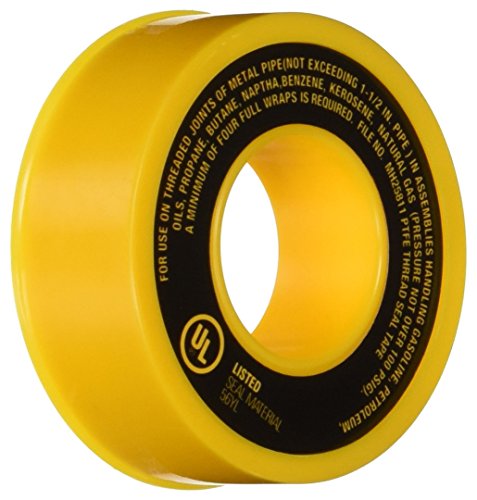
Harvey’s Pipe Thread Sealant with PTFE
This general purpose paste covers water, gas and oil lines at a lower cost per can than premium formulas. PTFE particles fill minor thread imperfections that tape alone would miss entirely. It suits basic residential repairs more than industrial or high pressure work.
Pros
- Lower cost than premium pastes
- PTFE fills small thread gaps
- Suitable for common household repairs
Cons
- Lower temperature ceiling than Oatey or Rectorseal
- Not UL classified for gas
Gorilla PTFE Thread Seal Tape
This white PTFE tape comes on a 260 inch roll, enough for dozens of small fittings around a house. At 3.5 mil thick, it wraps easily by hand without tearing mid application. It suits water and gas threads on standard sized fittings up to half an inch.
Pros
- Long roll covers many small jobs
- Tears cleanly without fraying
- Wraps easily by hand
Cons
- Thinner than high-density tape, needing more wraps
- No paste option for worn threads
The lineup, side by side
| # | Model | Formulation | Best for | Score | Price |
|---|---|---|---|---|---|
| 1 | Oatey Great White Pipe Thread Sealant | PTFE paste | Best overall | 9.4 | Check price |
| 2 | Rectorseal No. 5 Pipe Thread Sealant | Nonhardening pipe dope | Best for gas lines | 9.1 | Check price |
| 3 | Gasoila Blue Monster PTFE Thread Seal Tape | 1/2 in x 260 in roll | Best tape for locating leaks | 8.9 | Check price |
| 4 | Permatex High Temp Thread Sealant | PTFE paste with locking action | Best for high-heat systems | 8.6 | Check price |
| 5 | LA-CO Slic-Tite Paste with Teflon | PTFE paste, anti-seize | Best for stainless steel fittings | 8.4 | Check price |
| 6 | Harvey’s Pipe Thread Sealant with PTFE | PTFE paste | Best budget pick | 8.2 | Check price |
| 7 | Gorilla PTFE Thread Seal Tape | 1/2 in x 260 in roll | Best for small DIY jobs | 8.0 | Check price |
How to choose
How tape and paste each seal a joint PTFE tape and pipe dope paste both fill the microscopic gaps between mating threads, but they work differently. Tape wraps around male threads and compresses as a joint tightens, while paste coats every thread and squeezes into gaps as fittings mesh together. Paste tends to seal worn or damaged threads better, since it fills larger gaps than tape can bridge.
Matching a sealant to gas, water or high-heat lines Gas lines need a sealant with a UL or CSA classification and a stated pressure rating, since a plain hardware store paste may not meet code. Potable water lines call for an NSF/ANSI 61 certified product to avoid contaminating drinking water. Systems that see sustained heat, like exhaust or steam lines, need a paste rated well above 300°F.
Sealing stainless, brass and plastic threads without damage Stainless steel threads gall and seize under friction more than brass or steel, so an anti-galling paste like Slic-Tite lowers the chance of a stuck fitting. Brass fittings tolerate tape or paste equally well in most residential work. PVC and CPVC threads should skip oil based pastes that can soften plastic, sticking instead to tape or a PTFE rated paste.
When to skip sealant or add extra wraps Compression fittings and flare fittings rely on metal to metal contact and do not need thread sealant, since sealant can actually prevent a proper seal on these connections. Old or worn threads sometimes need three to four wraps of tape instead of the usual two to three. Oxygen and medical gas lines require sealants rated specifically for oxygen service, since standard PTFE products can react with pure oxygen under pressure.
Questions worth asking
Is PTFE tape or pipe dope better for plumbing?
Both work on standard water and gas threads. Paste seals worn or damaged threads more reliably, while tape applies faster and stays less messy for quick repairs.
How many wraps of thread tape do you need?
Most fittings need two to three wraps in the direction of the threads. Worn or damaged threads may need three to four wraps for a tight seal.
Can you use regular thread sealant on gas lines?
No. Gas lines need a sealant with a UL or CSA classification and a stated pressure rating, like Rectorseal No. 5, rather than a general purpose paste.
What is the best thread sealant for stainless steel fittings?
LA-CO Slic-Tite Paste with Teflon is formulated to reduce galling on stainless threads, a problem plain tape does not address at all.
Does thread sealant tape expire on the shelf?
PTFE tape has no strict expiration, but it can lose grip if it picks up dirt or oil in storage. Paste can dry out once the can seal has been broken.
Blue Monster tape vs white PTFE tape, what is the difference?
Blue Monster is a higher density PTFE tape colored blue for visual identification during a repipe. Standard white tape like Gorilla’s runs thinner and needs more wraps for the same seal.
Is pipe thread sealant safe for drinking water lines?
Only sealants carrying an NSF/ANSI 61 certification, such as Oatey Great White or LA-CO Slic-Tite, are rated safe for potable water contact.
What temperature can pipe thread sealant handle?
Ratings vary by product. Oatey Great White and LA-CO Slic-Tite both handle -50°F to 500°F, while Permatex High Temp Thread Sealant is rated for 400°F continuous duty.
Do I need thread sealant on compression fittings?
No. Compression and flare fittings seal through metal to metal contact, and adding paste or tape to those threads can actually prevent the fitting from seating correctly.
How much does thread sealant choice matter for a DIY repair?
For a single household repair on standard water or gas threads, most PTFE pastes and tapes perform similarly. The choice matters far more on gas lines requiring code compliance or stainless fittings prone to galling.
Our pick
Oatey Great White Pipe Thread Sealant covers the widest range of uses with its NSF certification across gas, water and oil. Choose Rectorseal No. 5 for a gas specific UL classification, or LA-CO Slic-Tite when stainless threads are prone to galling.
Jake Monroe
Jake worked as a residential contractor for over a decade before shifting to full-time writing. He evaluates power tools, hand tools and workshop gear through the lens of someone who has actually used them on job sites, not just read the box.


