Which Reptile Hide Fits Your Terrarium and Species Best?
Zoo Med’s Repti Shelter suits most indoor tanks, with smooth resin across four sizes from geckos to bearded dragons. The Zoo Med Habba Hut fits snakes best, since its low dome presses against a coiled body. Fluker’s Cork Bark Round wins for chameleons and other humidity-dependent species.
Zoo Med’s Repti Shelter stands out as the strongest all-around indoor hide, spanning four sizes from geckos to bearded dragons in smooth, easy-clean resin. Its shell holds no extra humidity on its own, so tropical species still need moss or cork placed nearby.
Species differ sharply in humidity needs, body shape, and preferred snugness, which makes picking one hide confusing fast. We compared material, size range, and entrance design across seven current Amazon listings, then checked owner feedback for shedding problems and mold reports.
The shortlist, ranked

Zoo Med Repti Shelter
Molded resin shapes this hide like natural rock, with a smooth interior that will not snag shedding skin. Four sizes span Small through X-Large, covering geckos through medium bearded dragons. A wide, low entrance lets lizards and snakes enter without fully exposing themselves.
Pros
- Smooth interior protects skin during shedding
- Four size options fit growing reptiles
- Wide base resists tipping when a reptile climbs on top
Cons
- Non-porous resin holds humidity for a shorter time than cork bark
- Rock-textured exterior can scratch glass if pushed against a tank wall

Zoo Med Habba Hut
A light, semi-porous fiber composite forms this hollow-log hide. Snakes favor its low, tight dome, which presses down on their backs as they curl inside. Four sizes cover hatchling through adult ball python and corn snake dimensions.
Pros
- Low dome shape gives snakes contact on all sides
- Lightweight material resists cracking under a pushing snake
- Sizes match hatchling through adult pythons
Cons
- Fiber wears faster than resin under constant humidity
- Single oval entrance limits reptiles that prefer two exits

Exo Terra Reptile Den
Shaped like a hollow tree stump, this hide has a single arched entrance and a narrow footprint. Crested geckos and other arboreal-leaning lizards suit its size best in vertically arranged tanks. Resin construction resists mold better than natural wood hides over time.
Pros
- Compact footprint fits vertically oriented terrariums
- Resin resists mold better than real wood or cork
- Arched entrance suits arboreal geckos climbing in and out
Cons
- Interior floor space suits little more than a gecko
- Holds no moisture on its own without added substrate
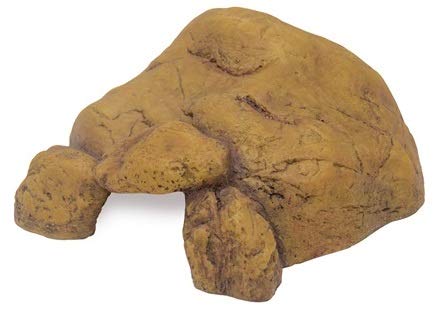
Exo Terra Reptile Cave
Eroded stone texture and a terracotta-toned resin shell define this cave. Its rounded entrance suits geckos and small to medium lizards without sharp edges. Exo Terra’s matching decor line lets it stack into a cohesive desert or tropical setup.
Pros
- Blends visually with other Exo Terra habitat decor
- Rounded opening avoids sharp edges for small reptiles
- Lightweight and easy to reposition during cleaning
Cons
- Largest size still suits only medium-bodied lizards
- Thin walls transmit heat faster than dense resin hides

Fluker’s Cork Bark Round
Natural cork oak bark, hollowed and cut, forms this rounded hide. Its porous structure absorbs and slowly releases humidity between mistings, longer than any resin hide in this comparison. Some keepers repurpose it as a climbing branch or basking platform depending on placement.
Pros
- Porous bark retains humidity longer than resin or fiber hides
- Doubles as a climbing branch for arboreal species
- Natural material blends into any terrarium aesthetic
Cons
- Bark can harbor mold if the enclosure stays oversaturated
- Irregular natural shapes make sizing less predictable than molded hides

Fluker’s Repta-Shack
A small, low-profile half-log shape sizes this hide for compact terrariums under 20 gallons. Its flat back sits flush against a tank wall to save floor space. Molded fiber construction weighs less than cork or dense resin, so repositioning it during cleaning takes little effort.
Pros
- Compact size fits 10 to 20 gallon terrariums without crowding
- Flat back edge saves usable floor space
- Light weight makes cleaning and repositioning quick
Cons
- Single small size will not fit adult mid-size lizards
- Less durable than dense resin under handling by larger reptiles

Zilla Rock Den
Painted resin replicates a hollowed boulder in this hide. Its single-size shell fits most juvenile and adult leopard geckos and similar small lizards. A flat top doubles as a basking perch when placed under a heat lamp.
Pros
- Lower cost than most resin cave hides here
- Flat top works as a secondary basking spot
- Painted rock finish blends with desert substrates
Cons
- Only one size limits use for larger adult reptiles
- No moisture-retention feature built into the shell
What to look for
What to look for in a reptile hide A good hide covers a reptile’s body on most sides without crushing it, since most species feel secure under contact rather than open space. Check entrance width first. Too wide and the animal skips the hide; too narrow and it cannot turn around inside. Smooth interior edges matter most for shedding species like snakes and geckos, and a removable top speeds up cleaning.
Material and humidity retention Resin hides wipe clean fast but hold almost no moisture on their own. Fiber composite hides, like the Habba Hut, absorb a little humidity between mistings. Cork bark holds the most moisture of the three, releasing it slowly as the tank dries out. Chameleons and other rainforest species benefit most from cork or a hide packed with damp moss, while desert species such as leopard geckos do fine with plain resin.
Sizing a hide to your reptile species Snakes want a snug fit, ideally low enough that their back touches the ceiling of the hide, since an oversized hide leaves them exposed and stressed. Lizards and geckos tolerate more room but still prefer walls close on at least three sides. Juveniles need smaller hides than they will as adults, so plan to size up within a year or two. Two hides per enclosure, one on the warm side and one on the cool side, let a reptile thermoregulate without giving up cover.
Matching hides to terrarium setups Nano and small terrariums under 20 gallons need a compact, low-profile hide like the Repta-Shack to avoid crowding the floor. Bioactive and high-humidity setups pair well with cork bark, since it works alongside live plants and moss rather than against them. Vertically arranged tanks for arboreal geckos suit a stump-style hide with a narrow footprint, freeing space for climbing branches. Larger adult enclosures need the bigger resin shelters, since fiber and cork options top out at smaller sizes.
How they stack up
| # | Model | Material | Best for | Score | Price |
|---|---|---|---|---|---|
| 1 | Zoo Med Repti Shelter | Molded polyresin | Best overall | 9.4 | Check price |
| 2 | Zoo Med Habba Hut | Molded plant-fiber composite | Best for snakes | 9.2 | Check price |
| 3 | Exo Terra Reptile Den | Molded resin, bark-textured finish | Best for lizards and geckos | 9.0 | Check price |
| 4 | Exo Terra Reptile Cave | Terracotta-textured resin | Best value | 8.7 | Check price |
| 5 | Fluker’s Cork Bark Round | Natural cork oak bark | Best for humidity retention | 8.5 | Check price |
| 6 | Fluker’s Repta-Shack | Molded fiber composite | Best for small terrariums | 8.2 | Check price |
| 7 | Zilla Rock Den | Painted resin over a hollow shell | Best budget | 8.0 | Check price |
Good to know
How many hides does a reptile need in a terrarium?
Most keepers place one hide on the warm side and one on the cool side. This lets a reptile pick cover without giving up its preferred temperature. Snakes and shy lizards especially benefit from having both options.
Which hide material holds humidity best?
Cork bark retains moisture longer than resin or fiber composite, since its porous structure absorbs mist and releases it gradually. Chameleons and other rainforest species do best with cork over a smooth resin cave.
Do bearded dragons need a hide in their enclosure?
Yes, bearded dragons use a hide to reduce stress and limit exposure to light and heat on demand. A resin cave like the Repti Shelter or Rock Den works well, since bearded dragons need low humidity rather than moisture retention.
What is the best hide for ball pythons?
Ball pythons prefer a low, snug hide such as the Habba Hut, where their back touches the ceiling. A hide that is too roomy leaves them feeling exposed and can suppress feeding.
Cork bark vs resin hides: which should I buy?
Cork bark wins on humidity retention and suits tropical species well. Resin wins on ease of cleaning and holds its shape indefinitely. Desert reptiles generally do better with resin, while rainforest species benefit from cork.
Do leopard geckos need a humid hide?
Yes, most keepers add a humid hide lined with damp moss to help leopard geckos shed cleanly. A second dry hide, like the Rock Den, should stay on the warm side of the tank.
What size hide fits a small or nano terrarium?
A compact, low-profile hide such as the Repta-Shack suits terrariums under 20 gallons. Its flat back sits against the glass, leaving more floor space for substrate and plants.
Is a half-log hide better than a cave-style hide for snakes?
Half-log hides like the Habba Hut sit lower and press against a snake’s back, which many snakes prefer. Cave-style hides such as the Repti Shelter give more headroom and suit lizards or larger snakes better.
Can one hide work for both humidity and a dry side?
Not well. A single resin hide holds little moisture, so keepers wanting both usually add a second hide lined with damp sphagnum moss on the humid side.
The verdict
The Zoo Med Repti Shelter remains the best default pick for most indoor tanks, since its smooth resin spans four sizes and needs no special upkeep. Snake owners should choose the Zoo Med Habba Hut instead, as its low dome fits a coiled body more securely than a cave-style shell. Anyone keeping chameleons or other humidity-dependent species should skip resin altogether and pick Fluker’s Cork Bark Round. Skip the Zilla Rock Den if your reptile is still growing, since its single size will not accommodate an adult body.
Olivia Hartley
Olivia spent several years working at an animal shelter and a pet-supply retailer before joining the editorial team. She researches pet gear with an emphasis on safety, comfort and the fine print that owners often miss.


