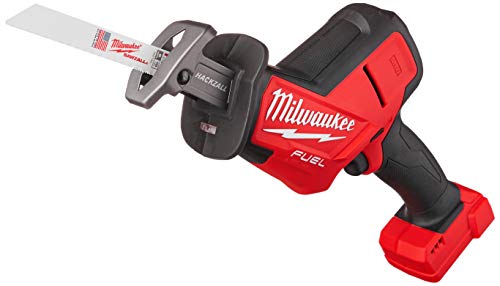
Wood, Metal or Demo: Picking Reciprocating Saw Blades
Diablo Steel Demon carbide tipped blades are the strongest all-round pick, surviving nail embedded timber and hardened metal that strip ordinary blades. Milwaukee TORCH carbide blades win for thick steel and rebar. The DEWALT DW4856 bi-metal set handles everyday wood and metal cutting at a lower cost per blade.
Diablo Steel Demon carbide tipped blades belong in the case for demolition and mixed material work, since they survive nails, screws and hardened metal that strip a standard blade in one cut. Heavy metal jobs favor the Milwaukee TORCH carbide blade instead, which resists the heat that kills ordinary teeth. For general wood and light metal, the DEWALT DW4856 bi-metal set covers daily use without carbide pricing.
Blade packaging rarely explains why tooth material and TPI matter more than brand name. We compared published tooth construction, TPI ranges, blade length and thickness, shank compatibility and each maker’s rated cutting materials. That data was checked against what owners report about tooth loss and blade bending during real demolition and trade work.
What we recommend
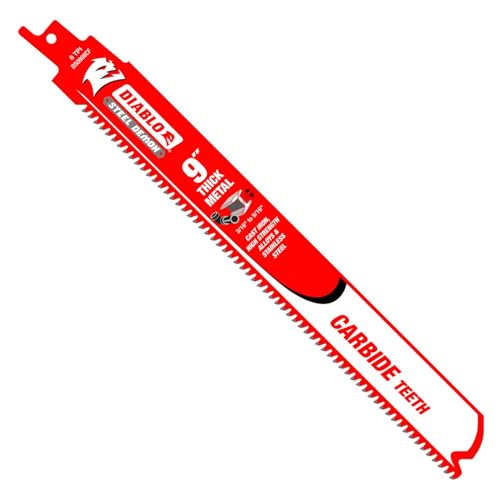
Diablo Steel Demon Carbide Tipped Reciprocating Blades
Brazed carbide teeth stay sharp long after bi-metal teeth round off on this blade. Owners report it slices stainless, cast iron and thick mild steel without stalling or burning. A single blade often outlasts an entire pack of standard bi-metal blades in hard metal work.
Pros
- Carbide teeth outlast bi-metal many times over
- Cuts stainless and cast iron without burning
- Stiff body resists bending in deep cuts
Cons
- Costs noticeably more per blade
- Unnecessary for plain softwood cuts
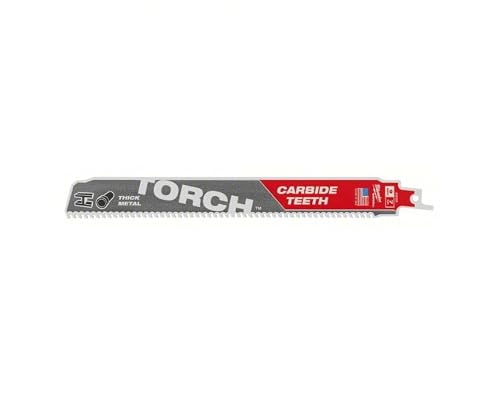
Milwaukee TORCH with Carbide Teeth Reciprocating Blade
A wider body sheds vibration so this blade tracks straight through rebar and angle iron. Carbide tips resist the heat that kills ordinary teeth in heavy steel cuts. Trades reach for it once a bi-metal blade has already failed on the same job.
Pros
- Handles rebar and cast iron pipe reliably
- Wider body cuts down on flex and wander
- Keeps cutting after bi-metal blades give out
Cons
- Coarse pitch tears softwood badly
- Priced well above standard bi-metal blades

DEWALT DW4856 Metal and Woodcutting Reciprocating Blade Set
This set pairs coarse wood blades with fine tooth metal blades, so one pack covers most home and site jobs. Bi-metal construction bends under strain instead of snapping outright. First time reciprocating saw owners get a workable blade for nearly any material here.
Pros
- One set spans both wood and metal cutting
- Bi-metal bodies flex rather than snap
- Wide TPI range from 6 to 18
Cons
- Teeth wear fast on nail embedded lumber
- Set skips a carbide option entirely

LENOX Gold Reciprocating Saw Blades
Titanium nitride coating over bi-metal teeth cuts friction and slows heat buildup during metal cuts. That coating adds real service life without carbide pricing. Tradespeople cutting mixed materials all day get a solid middle ground here.
Pros
- Coating extends life past plain bi-metal
- Runs cooler through sustained metal cutting
- Priced between bi-metal and carbide options
Cons
- Still falls short of carbide on cast iron
- Coating wears away under heavy daily use

Bosch RAP9V Pruning Reciprocating Saw Blade
Widely spaced teeth on this blade clear sap and wet fiber instead of clogging. Live branches cut faster here than with any general purpose wood blade. Keep it away from reclaimed lumber, since a hidden nail destroys the teeth instantly.
Pros
- Clears wet sawdust without clogging the gullets
- Cuts through live limbs quickly
- Inexpensive enough to replace often
Cons
- Hidden nails ruin the blade in one pass
- Leaves a rough cut unsuited to joinery

EZARC Wood Pruning Reciprocating Saw Blades
Multi packs of long wood blades from EZARC cost a fraction of major tool brand pricing. Japanese style teeth bite aggressively on the pull stroke through clean timber. According to owner feedback, the cut finish is rough but the speed holds up.
Pros
- Low cost per blade across a multi pack
- Long blades reach through thick limbs
- Fast cutting in clean, unobstructed timber
Cons
- Carbon steel dulls quickly on hard material
- Thin blade bodies bend under side load

Milwaukee AX with Carbide Teeth Nail Embedded Wood Blade
Demolition timber often hides nails, screws and plate steel that shred standard wood teeth. Carbide tips on this coarse pitch blade shrug off those hidden fasteners. Strip out crews treat it as a specialist buy that earns its keep fast.
Pros
- Survives hidden nails and screws in framing
- Coarse pitch still clears timber quickly
- Thick body holds steady during plunge cuts
Cons
- Expensive for occasional home projects
- Pitch too coarse for a tidy finish cut
How to pick the right one
What matters most when picking a reciprocating saw blade Teeth per inch and tooth material decide almost everything about how a blade performs. Low TPI counts around five to eight rip through wood fast because deep gullets clear big chips. Metal needs higher counts, usually fourteen to twenty four, so several teeth stay in contact with the wall of the stock. Tooth material then sets how long those teeth survive: high carbon steel is cheap and fine for clean wood, bi-metal resists snapping, and carbide tipped teeth cut hardened steel and nail embedded timber that would strip anything else.
TPI and tooth material for metal versus wood Cutting sheet metal or thin pipe calls for fourteen to eighteen TPI so teeth do not snag and tear out. Thicker steel sections work better around ten to fourteen TPI with carbide or coated bi-metal teeth. Wood cutting flips that logic, since five to eight TPI clears large chips fast in clean lumber. Demolition wood hiding nails needs carbide tipped teeth even at that coarse pitch, because standard steel teeth chip on contact with a fastener.
Which blade length suits your cut A blade should extend only slightly beyond the material thickness for steady, controlled cuts. Longer blades reach further but flex more and can wander off line. Six inch blades cover most framing and pipe work without excess flex. Nine and twelve inch blades suit branches, joists and deep demolition where reach matters more than precision. Thicker blade bodies near 0.05 inch resist bending during plunge cuts into a wall or floor.
How to make blades last through heavy use Heat and side load cause most premature blade failures. Resting the saw’s shoe against the workpiece lets the tool pull itself into the cut instead of bouncing. Lower speed settings and cutting fluid extend blade life in thick steel. A blue tint on the teeth means the temper is already gone and the blade will not recover. Keeping a few different pitches on hand beats forcing one blade through every material.
How they stack up
| # | Model | Tooth material | Best for | Score | Price |
|---|---|---|---|---|---|
| 1 | Diablo Steel Demon Carbide Tipped Reciprocating Blades | Carbide tipped | Best overall | 9.4 | Check price |
| 2 | Milwaukee TORCH with Carbide Teeth Reciprocating Blade | Carbide teeth | Best for thick metal | 9.2 | Check price |
| 3 | DEWALT DW4856 Metal and Woodcutting Reciprocating Blade Set | Bi-metal | Best value | 9.0 | Check price |
| 4 | LENOX Gold Reciprocating Saw Blades | Bi-metal with TiN coating | Best for long life bi-metal | 8.8 | Check price |
| 5 | Bosch RAP9V Pruning Reciprocating Saw Blade | High carbon steel | Best for pruning green wood | 8.6 | Check price |
| 6 | EZARC Wood Pruning Reciprocating Saw Blades | SK5 carbon steel | Best budget | 8.3 | Check price |
| 7 | Milwaukee AX with Carbide Teeth Nail Embedded Wood Blade | Carbide tipped | Best for demolition | 8.0 | Check price |
Questions worth asking
What TPI is best for cutting metal?
Aim for a blade where at least three teeth touch the material at once. Sheet metal and thin wall pipe generally need 14 to 18 TPI. Thicker steel sections work better around 10 to 14 TPI. Too few teeth in contact causes snagging and quick tooth loss.
Are reciprocating saw blades universal?
Most modern blades use a universal half inch tang shank that fits any standard reciprocating or sabre saw. Brand does not usually limit fit. Older tools and a handful of compact models use a proprietary mount, so check your saw’s chuck first.
Is a carbide tipped blade worth the extra cost?
For clean softwood, a bi-metal blade does the job fine. For demolition, nail embedded wood, cast iron pipe or stainless steel, carbide usually costs less overall. One carbide blade often replaces several bi-metal blades that fail mid cut.
Bi-metal vs carbide blades: which lasts longer?
Bi-metal blades flex under strain and resist snapping, which suits everyday wood and light metal. Carbide tipped teeth survive hardened steel, cast iron and hidden nails that dull bi-metal within a cut or two. Carbide costs more upfront but often lasts far longer per dollar in tough material.
Why does my reciprocating saw blade keep bending?
Side loading, oversized blade length for the cut, and forcing the saw all cause bending. Pressing the shoe firmly against the workpiece steadies the blade. That single habit removes most of the bouncing that leads to flex.
Can a reciprocating saw cut tree branches?
Yes, a dedicated pruning blade around five TPI clears damp fiber quickly through live wood. Standard wood blades clog fast in green timber. Avoid pruning blades on reclaimed wood, since a hidden nail can destroy the coarse teeth instantly.
How do I know when a blade needs replacing?
Look for rounded tooth tips, missing teeth, or a blue tint from overheating. A sudden need to push harder for the same cut is another sign. A blade that has lost its temper will not sharpen back to working condition.
Which blade cuts through nails and screws?
Only blades rated for nail embedded wood handle that reliably, usually carbide tipped or heavy duty bi-metal demolition blades. A standard wood blade loses teeth the moment it meets a nail. Match the blade to whatever might be hidden in the material.
What length reciprocating saw blade should I buy?
Pick a blade that extends roughly an inch past the material thickness at full stroke. Six inch blades handle most framing and pipe cuts. Nine inch blades suit branches and joists, and twelve inch blades cover deep demolition where reach outweighs precision.
What is the best reciprocating saw blade for beginners?
A bi-metal set with mixed wood and metal blades, like the DEWALT DW4856, covers most early jobs. It bends instead of snapping when a cut binds, which forgives inconsistent technique. Add a carbide blade later once tougher materials come up.
Final word
Diablo Steel Demon blades take the top spot because carbide teeth cut the widest range of materials without giving up their edge, which suits mixed demolition work best. Buyers focused mainly on metal should reach for the Milwaukee TORCH carbide blade instead. For everyday wood and light metal, the DEWALT DW4856 set remains the practical, flexible choice.
Jake Monroe
Jake worked as a residential contractor for over a decade before shifting to full-time writing. He evaluates power tools, hand tools and workshop gear through the lens of someone who has actually used them on job sites, not just read the box.