Which Quilt Batting Fits Your Next Project Best?
Warm Company’s Warm & Natural Cotton Batting suits most machine-pieced bed quilts, holding shrinkage near 3 percent with a stable scrim. Hobbs Heirloom Premium 80/20 adds durability at a similar loft, while Pellon Legacy 100% Natural Cotton delivers a soft cotton hand for tighter budgets.
Warm Company’s Warm & Natural Cotton Batting fits quilters who want a dependable, low-loft cotton feel for everyday bed quilts. A needle-punched scrim keeps its two layers from shifting during machine quilting, and shrinkage lands near 3 percent after the first wash. At about 1/8 inch of loft, it won’t give a puffy, comforter-style silhouette.
Fiber choice changes shrinkage, warmth, and how far apart you can safely quilt, so a batting suited to a bed quilt can bunch inside a small wall hanging. We compared listed fiber blends, loft measurements, recommended quilting intervals, and shrinkage percentages from each manufacturer’s spec sheet, weighing owner feedback on drape, bearding, and needle resistance along the way.
The shortlist, ranked
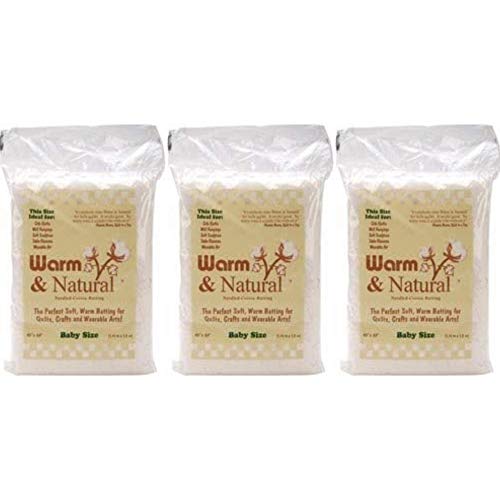
Warm Company Warm & Natural Cotton Batting
A lightweight scrim holds this 100% cotton batting stable under machine quilting. Loft measures about 1/8 inch, and roughly 3 percent shrinkage after washing gives finished quilts a slightly crinkled, antique look. Quilting lines can sit up to 10 inches apart without loose spots forming.
Pros
- Scrim resists tearing and bunching during handling
- Even, low shrinkage produces a soft washed finish
- Breathes well for year-round bed use
Cons
- Loft runs too thin for a puffy tied comforter
- Unbleached version shows a slight yellow tint
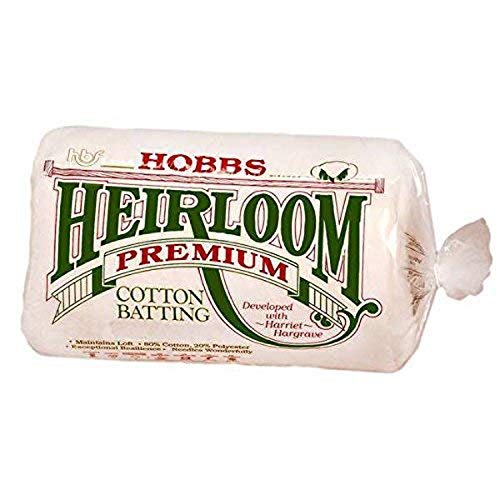
Hobbs Heirloom Premium 80/20 Cotton Blend Batting
Hobbs blends 80 percent cotton with 20 percent polyester, needle-punched onto a scrim that keeps shrinkage lower than pure cotton battings. The blend drapes softer than all-poly options while resisting the bearding plain cotton can show through dark fabric. Recommended quilting distance reaches up to 8 inches.
Pros
- Warmer than 100% cotton at a similar loft
- Minimal bearding shows through dark fabrics
- Handles repeated washing without flattening
Cons
- Costs more per yard than plain cotton lines
- Slightly stiffer to work through by hand

Pellon Legacy 100% Natural Cotton Batting
Legacy skips the scrim found in similar cotton battings, which keeps its cost per yard lower. Shrinkage runs closer to 5 percent, an effect some quilters use deliberately for a crinkled, vintage texture. Without scrim reinforcement, quilting lines should stay within about 4 to 6 inches of each other.
Pros
- Lower cost per project than scrim-backed cotton
- Soft, natural hand feel
- Higher shrinkage creates an antique puckered look
Cons
- Needs closer quilting lines without a scrim
- Stretches or tears more easily when handled

Hobbs Tuscany Wool Batting
Tuscany is needle-punched from 100 percent wool to a loft near 3/8 inch, thicker than most cotton battings here. Wool fibers resist a hand needle less than cotton or polyester, so stitching moves faster. It also holds more warmth ounce for ounce than cotton, with minimal shrinkage after washing.
Pros
- Glides easily under a hand needle
- Higher warmth per ounce than cotton or poly
- Springs back after folding or storage
Cons
- Needs wool-safe washing to avoid felting
- Priced above most cotton and poly battings

Quilters Dream Poly Select Batting
Select sits at a mid loft near 1/4 inch within the Quilters Dream Poly line. Polyester fibers don’t shrink, so a finished quilt keeps its exact pieced dimensions after washing. It also traps more warmth per ounce than cotton, suiting tied comforters and outdoor throws.
Pros
- Zero shrinkage keeps pieced blocks crisp
- Traps more warmth per ounce than cotton
- Lightweight for its loft
Cons
- Can beard through loosely woven fabric
- Less breathable than cotton or wool for hot sleepers

Quilters Dream Orient Batting
Bamboo, cotton, and silk fibers combine in Orient’s very low loft, close to 1/8 inch, and drape more like fabric than padding. That drape suits garments, art quilts, and wall hangings where stiffness would show. Both hand and machine quilting move through it with light needle resistance.
Pros
- Drapes softly for garments and art quilts
- Low loft avoids bulky seams
- Smooth surface reduces needle drag
Cons
- Too thin for bed quilts needing real warmth
- Highest price per yard in this lineup

Warm Company Warm & White Cotton Batting
Warm & White shares the needle-punched cotton and scrim construction of Warm & Natural, though its fibers are bleached rather than left natural. That bleaching keeps show-through invisible behind pastel and white fabrics, useful for baby quilts and nursery projects. Loft and shrinkage closely match its unbleached sibling.
Pros
- Bleached fibers avoid shadowing behind light fabric
- Same reliable scrim as Warm & Natural
- Machine washable without special settings
Cons
- Bleaching adds a small cost over the natural version
- Still too low-loft for a puffy comforter look
Before you buy
What to check before choosing quilt batting Batting sits between the quilt top and backing, so fiber content drives warmth, drape, and how the finished piece washes. Loft, the batting’s thickness, decides whether a quilt lies flat or puffs like a comforter. Shrinkage percentage matters too, since cotton often puckers slightly after the first wash while polyester holds its shape. Checking the recommended quilting distance on the packaging beforehand prevents the batting from bunching inside the quilt over time.
Cotton, wool, polyester, and blends compared Cotton batting breathes well and shrinks a little, giving quilts a soft, worn-in look after washing. Polyester never shrinks and holds more warmth per ounce, suiting tied comforters more than heirloom bed quilts. Wool, like Hobbs Tuscany, offers the least resistance to a hand needle and springs back well after storage. Blends such as Hobbs Heirloom’s 80/20 cotton-poly split the difference, adding durability to a cotton feel without full polyester stiffness.
How loft changes warmth and drape A thin loft near 1/8 inch, like Warm & Natural or Pellon Legacy, keeps quilting stitches visible and the quilt easy to fold. Mid loft around 1/4 inch, such as Quilters Dream Poly Select, adds noticeable warmth without excess bulk in seams. Wool reaches a higher natural loft near 3/8 inch while staying lightweight, which explains why it feels warmer than its thickness suggests. Garment and wall hanging projects usually call for the thinnest lofts available, since bulk shows in seams and drape.
Shrinkage and quilting distance by project type Most cotton battings shrink between 3 and 5 percent after their first wash, a texture many quilters welcome rather than avoid for an antique look. Polyester batting shrinks close to zero, so pieced blocks keep their exact measurements through repeated laundering. Scrim-backed battings like Warm & Natural tolerate wider quilting distances, up to 10 inches, while scrim-free cotton needs closer lines to prevent shifting. Wool needs cool, gentle washing to avoid felting, unlike cotton or polyester, which handle standard machine cycles.
How they compare
| # | Model | Fiber content | Best for | Score | Price |
|---|---|---|---|---|---|
| 1 | Warm Company Warm & Natural Cotton Batting | 100% cotton with scrim | Best overall | 9.4 | Check price |
| 2 | Hobbs Heirloom Premium 80/20 Cotton Blend Batting | 80% cotton, 20% polyester | Best value | 9.1 | Check price |
| 3 | Pellon Legacy 100% Natural Cotton Batting | 100% cotton, no scrim | Best budget | 8.8 | Check price |
| 4 | Hobbs Tuscany Wool Batting | 100% wool | Best for hand quilting | 8.6 | Check price |
| 5 | Quilters Dream Poly Select Batting | 100% polyester | Best for warmth | 8.4 | Check price |
| 6 | Quilters Dream Orient Batting | Bamboo, cotton, and silk blend | Best for wall hangings and garments | 8.2 | Check price |
| 7 | Warm Company Warm & White Cotton Batting | 100% bleached cotton with scrim | Best for baby quilts and low-loft projects | 8.0 | Check price |
Questions worth asking
What is the best quilt batting for beginners?
Warm Company’s Warm & Natural Cotton Batting suits beginners well, since its scrim resists tearing during handling and pinning. Its wide 10 inch quilting distance also forgives simple, spaced-out quilting patterns.
Is cotton or polyester batting better for a quilt?
Cotton breathes better and gives a softer, more traditional drape, while polyester holds more warmth per ounce and never shrinks. Bed quilts favor cotton or cotton blends, while tied comforters and outdoor throws often use polyester.
Quilt batting vs wadding, what’s the difference?
Batting and wadding name the same product, the insulating layer inside a quilt sandwich. Batting is the term used in the United States, while wadding is more common in the United Kingdom and Australia.
How far apart can you quilt with cotton batting?
Scrim-backed cotton battings, such as Warm & Natural, allow quilting lines up to 10 inches apart. Scrim-free cotton, like Pellon Legacy, needs lines closer together, around 4 to 6 inches, to prevent shifting.
Does quilt batting shrink after washing?
Cotton battings typically shrink 3 to 5 percent on the first wash, creating a slightly puckered, antique texture. Polyester battings, including Quilters Dream Poly Select, show close to zero shrinkage.
Can you hand quilt through wool batting easily?
Yes, wool fibers offer less resistance to a hand needle than cotton or polyester, which speeds up stitching. Hobbs Tuscany Wool is built specifically with that lower needle drag in mind.
What loft works best for a baby quilt?
Low loft options near 1/8 inch, such as Warm & White, work well for baby quilts since they wash easily and fold flat. Bleached cotton also avoids show-through behind pastel or white fabrics common in nursery projects.
Is wool batting worth the extra cost?
Wool costs more than cotton or polyester but delivers higher warmth per ounce and easier hand quilting. It earns that cost for hand quilters and anyone wanting a lighter, warmer finished quilt.
What batting works best for a wall hanging or art quilt?
Quilters Dream Orient’s very low loft, close to 1/8 inch, drapes like fabric rather than padding, suiting garments and wall art. Its bamboo, cotton, and silk blend keeps seams from bulking up under a frame.
The bottom line
Warm Company’s Warm & Natural Cotton Batting remains the strongest general pick, pairing scrim stability, low shrinkage, and a wide 10 inch quilting distance for machine-pieced bed quilts. Hand quilters or anyone prioritizing warmth per ounce should choose Hobbs Tuscany Wool instead, since lower needle resistance and a higher natural loft suit slower, hand-stitched projects better. Budget-focused quilters still get a soft cotton feel from Pellon Legacy at a lower cost per yard.
Jake Monroe
Jake worked as a residential contractor for over a decade before shifting to full-time writing. He evaluates power tools, hand tools and workshop gear through the lens of someone who has actually used them on job sites, not just read the box.