Which Projector Gives the Brightest Picture in Daylight?
Epson’s Home Cinema 2350 leads this list for its bright, sharp picture and built-in streaming. BenQ’s HT2060 suits movie fans who want accurate color and low input lag. Anker’s Nebula Capsule 3 Laser fits anyone who needs a truly portable setup. Owners report all three project a big, watchable image.
For a big screen without a big television, Epson’s Home Cinema 2350 leads this list with a bright, detailed image and built-in Android TV streaming. BenQ’s HT2060 delivers movie-accurate color for dedicated viewing rooms, and Anker’s Nebula Capsule 3 Laser handles a grab-and-go setup. Seven real models follow, ranked to match how and where you watch.
Choosing a projector gets harder than it looks, since the numbers that matter most rarely stand out on a spec sheet. Real-world brightness, throw distance from the wall, and input lag for gaming get overlooked easily. We compared published lumens, resolution, contrast and throw figures against what owners report in bright and dark rooms.
The best picks, ranked

Epson Home Cinema 2350
A 2,700-lumen 3LCD engine keeps this projector watchable in rooms with some ambient light. Built-in Android TV streams content without a separate box. Owners report a sharp, color-accurate image, and zoom plus lens shift make placement flexible for most rooms.
Pros
- Bright enough for rooms with ambient light
- Android TV built in, no extra streamer needed
- Zoom and lens shift ease placement
Cons
- Native 1080p rather than true 4K panels
- Larger body than portable models

BenQ HT2060
Strong contrast and accurate out-of-box color make this projector a fit for dedicated movie rooms. Input lag stays low enough that owners use it for gaming too. Its LED light source lasts far longer than a traditional lamp, though everyday lighting dims the picture more than a darkened room does.
Pros
- Accurate color straight out of the box
- Low input lag suits gaming and film alike
- LED light source lasts for years
Cons
- Best results need a darker room
- No built-in streaming apps

XGIMI Horizon Ultra
True 4K resolution pairs with Dolby Vision support and a dual laser and LED light source for rich color. Owners compare the image favorably to dedicated home theater setups. Autofocus and keystone correction simplify placement, though the price sits at the top of this range.
Pros
- Native 4K with Dolby Vision support
- Dual laser and LED produce vivid color
- Autofocus and keystone speed up setup
Cons
- Premium price above most rivals here
- More projector than casual, occasional viewing needs
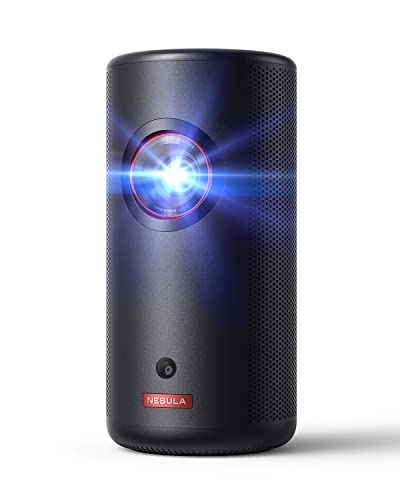
Anker Nebula Capsule 3 Laser
A soda-can-sized body holds a built-in battery, Android TV and autofocus, so movie night moves to any room or the backyard. Owners report a surprisingly sharp 1080p laser image for the unit’s size. Lower brightness means it performs best after dark.
Pros
- Pocketable size with a built-in battery
- Android TV and autofocus built in
- Sharp laser image for such a small unit
Cons
- Lower brightness needs a dark space
- Small size limits maximum image size

Optoma HD146X
A bright 3,600-lumen 1080p image comes at a wallet-friendly price point. Fast response time draws console gamers who value low lag over smart features. A single HDMI input keeps things simple, so a separate streaming device becomes necessary, but picture quality punches above the cost.
Pros
- Very bright output for well-lit rooms
- Fast response time for console gaming
- Affordable price for a full 1080p image
Cons
- No built-in streaming or notable speakers
- Single HDMI input limits connections

ViewSonic PX748-4K
Genuine 4K resolution meets a bright 4,000-lumen output at a mid-range price, making detailed big-screen images more accessible. Owners report crisp detail and low lag for both movies and games. Short-throw placement and setup menus need a little more attention to dial in correctly.
Pros
- Real 4K resolution at a mid-range price
- Bright enough for rooms with some light
- Low lag suits movies and gaming alike
Cons
- Menus take time to fine-tune
- Short-throw design needs careful placement

Anker Nebula Mars 3 Air
A rugged, portable body pairs with a built-in battery, Google TV and loud onboard speakers for outdoor movie nights without extra gear. Its 1080p image stays bright for a battery-powered projector. Like every portable here, it looks its best once the sun goes down.
Pros
- Battery power and Google TV built in
- Loud onboard speakers suit outdoor use
- Durable, portable design with a carry handle
Cons
- Needs darkness for a strong image
- Battery life shortens at full brightness
How to choose
How many lumens does a projector need for daytime use? Brightness, measured in lumens, decides whether a projector holds up in a lit room. A space with lamps or daylight calls for roughly 2,500 lumens or more, which is why Epson, Optoma and ViewSonic suit living rooms. Portable battery models run dimmer, so they reward a dark room or a nighttime backyard. ANSI lumens offer a stricter, more honest measure than the plain lumen figures some brands quote.
Is a 4K projector worth it over 1080p? Most affordable projectors run native 1080p, which still looks sharp on a large screen from normal viewing distance. True 4K models like the XGIMI Horizon Ultra and ViewSonic PX748-4K resolve finer detail and pair well with 4K streaming and Blu-ray sources. Sitting close to a very large image, or watching mostly high-resolution content, makes the step up worthwhile. Otherwise a good 1080p projector delivers most of the experience for less.
What is throw distance and how does it affect placement? Throw distance is how far a projector must sit from the wall to fill a given screen size, and it shapes where the unit can live. Standard-throw models need several feet of distance, while short-throw projectors like the ViewSonic sit close to the wall, which helps in small rooms. Checking the throw ratio against room dimensions before buying avoids a mismatch. Lens shift and zoom, as on the Epson, fine-tune placement without moving furniture.
Which projectors work best for gaming and streaming? Built-in streaming saves buying a separate stick, and several models here run Android TV or Google TV out of the box. Gamers should check input lag, where the BenQ and Optoma respond fast enough for consoles. HDMI port count matters too, since budget units like the Optoma offer only one. Onboard speakers help when external sound isn’t always connected.
How they compare
| # | Model | Brightness | Best for | Score | Price |
|---|---|---|---|---|---|
| 1 | Epson Home Cinema 2350 | 2,700 lumens | Best overall | 9.4 | Check price |
| 2 | BenQ HT2060 | 2,300 lumens | Best for movies | 9.1 | Check price |
| 3 | XGIMI Horizon Ultra | 2,300 ISO lumens | Best premium | 8.9 | Check price |
| 4 | Anker Nebula Capsule 3 Laser | 300 ANSI lumens | Best portable | 8.7 | Check price |
| 5 | Optoma HD146X | 3,600 lumens | Best budget | 8.5 | Check price |
| 6 | ViewSonic PX748-4K | 4,000 lumens | Best 4K value | 8.3 | Check price |
| 7 | Anker Nebula Mars 3 Air | 400 ANSI lumens | Best for backyard nights | 8.0 | Check price |
Frequently asked questions
What is the best projector overall in 2026?
Epson’s Home Cinema 2350 takes the overall pick, based on specifications and owner feedback. It stays bright enough for rooms with some light, streams through built-in Android TV, and its zoom and lens shift make placement easy.
How many lumens do I need for my room?
A room with lamps or daytime light calls for around 2,500 lumens or more, like the Epson, Optoma or ViewSonic. A fully dark home theater can use a dimmer, more contrast-focused model such as the BenQ. Portable battery projectors run dimmer still and look best after dark.
Is a 4K projector worth it over 1080p?
It depends on screen size and content source. True 4K models like the XGIMI Horizon Ultra and ViewSonic PX748-4K resolve more detail on very large screens and with 4K sources. Many rooms get most of the experience from a sharp 1080p projector for noticeably less money.
Which projector is best for gaming?
The Optoma HD146X and BenQ HT2060 offer low enough input lag for responsive console gaming, both with a bright, sharp image. Anyone wanting gaming plus true 4K detail should look at the ViewSonic PX748-4K, which keeps lag low.
What is throw distance and why does it matter?
Throw distance is how far a projector must sit from the wall to produce a given screen size. Standard-throw models need several feet, while short-throw units like the ViewSonic sit close to the wall. Checking the throw ratio against room dimensions keeps the image sized correctly.
Do I need a projector screen or can I use a wall?
A smooth, light-colored wall works fine for casual viewing, and many owners start that way. A dedicated screen improves brightness, contrast and color accuracy, especially with 4K models. Frequent viewing or a bright room makes a screen a worthwhile upgrade over bare drywall.
Can projectors work well in a bright room?
Brighter projectors handle ambient light better. Models around 2,700 lumens and up, like the Epson and Optoma, stay watchable with lamps on or some daylight. Lower-lumen portable units suit darker spaces and look washed out in bright rooms.
Which projector is best for portable, backyard use?
The Anker Nebula Capsule 3 Laser wins on portability, with a soda-can size and built-in battery. The Nebula Mars 3 Air adds louder speakers for backyard nights. Both run their own smart TV platform for streaming without extra gear.
Final word
Epson’s Home Cinema 2350 remains the projector most people should buy, thanks to a bright picture, built-in Android TV and flexible placement. Choose BenQ’s HT2060 for movie-accurate color in a dark room, or Anker’s Nebula Capsule 3 Laser when portability matters most.
Marcus Chen
Marcus covered consumer electronics for enthusiast tech publications for six years before joining ChoiceCrest. He specializes in translating manufacturer spec sheets into plain-language buying advice, with a focus on audio, computing accessories and smart-home gear.
