Setting Up a Real Home Theater Projector Room
The Epson Home Cinema 3800 gives most dedicated theater rooms strong contrast and color without a premium price. Cinephiles chasing the deepest black levels should look at the JVC DLA-NZ7, while living rooms that cannot be fully darkened are better served by the Hisense PX3-Pro ultra short throw laser projector.
The Epson Home Cinema 3800 covers most dedicated theater rooms with strong color and contrast for its price, while the JVC DLA-NZ7 pushes further into deep black levels for viewers who prioritize picture quality above cost. Living rooms that double as a theater space are often better matched to an ultra short throw model like the Hisense PX3-Pro instead.
A home theater projector lives or dies on contrast, placement flexibility and how dark the room can actually get, not just the resolution printed on the box. We compared light source, throw distance requirements, contrast handling and built in audio across current listings before narrowing this to seven projectors.
Our top picks
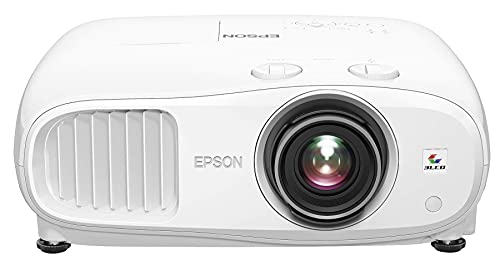
Epson Home Cinema 3800 4K PRO-UHD Projector
Epson’s Home Cinema 3800 uses 3LCD pixel-shifting technology to deliver 4K detail along with strong out of box color accuracy. A dynamic iris adjusts aperture to deepen black levels in darker scenes without a separate laser light source. Lens shift and a long zoom range give installers real flexibility in a dedicated room.
Pros
- Strong color accuracy out of the box
- Lens shift and zoom simplify installation
- Lower price than laser based alternatives
Cons
- Lamp will eventually need replacement
- Black levels fall short of laser native 4K models
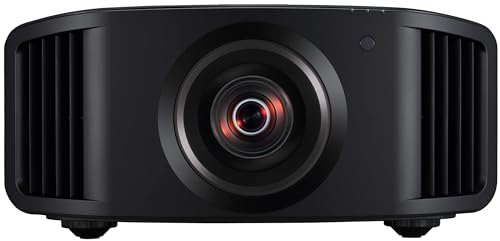
JVC DLA-NZ7 Native 4K Laser Projector
JVC’s D-ILA panel technology is a genuine native 4K chip, and the NZ7 pairs it with a laser light source and a dynamic contrast system built specifically for deep black levels. It targets a fully dark dedicated room rather than a multipurpose living space. The laser source also removes bulb replacement from the long term cost of ownership.
Pros
- True native 4K detail
- Among the deepest black levels available in a projector
- Laser source avoids future bulb replacement
Cons
- Premium price well above entry level home theater projectors
- Needs a fully dark room to show its full contrast advantage

LG CineBeam HU810PW 4K Laser Projector
LG’s CineBeam HU810PW uses a laser light source in a smaller chassis than many dedicated theater projectors, which makes it easier to fit on a shelf rather than requiring a ceiling mount. It runs webOS for built in streaming apps without a separate media box. The compact laser design still delivers pixel-shifted 4K resolution for movie detail.
Pros
- Smaller footprint than most laser home theater projectors
- Built in streaming apps without extra hardware
- Laser source avoids bulb replacement
Cons
- Contrast falls short of dedicated high end models like the JVC NZ7
- Built in speakers are modest for serious movie audio

BenQ HT2060 1080p Short Throw Home Theater Projector
The HT2060 is built for rooms where a standard long throw projector cannot sit far enough back to fill a large screen. Its short throw lens produces a sizable image from a closer mounting distance than most home theater projectors need. BenQ keeps the resolution at 1080p here, trading 4K detail for a lower price and shorter throw design.
Pros
- Fills a large screen from a closer mounting distance
- Lower price than 4K alternatives
- Good color accuracy for a 1080p projector
Cons
- No 4K resolution
- Lamp based light source needs eventual replacement

Hisense PX3-Pro TriChroma Laser Cinema Projector
The PX3-Pro sits just inches from the screen or wall using ultra short throw optics, which avoids a ceiling mount or long cable run through a living room. Its triple laser light source targets a wider color range than typical single or dual laser designs. Built in speakers and a smart TV platform let it work as a standalone living room setup rather than a dedicated theater install.
Pros
- No ceiling mount or long throw distance needed
- Wide color range from triple laser light source
- Works as a standalone unit with built in audio and smart platform
Cons
- Needs a compatible ambient light rejecting screen for best results
- Higher price than a standard long throw projector

Epson Home Cinema 2350 Full HD 3LCD Projector
The Home Cinema 2350 trades 4K resolution for a lower price and a brightness rating high enough for moderate ambient light. It uses the same 3LCD color technology as Epson’s higher end models for consistent color saturation. Built in speakers and streaming options make it workable as a simple all in one setup.
Pros
- Lower price than 4K home theater models
- Bright enough for rooms with some ambient light
- 3LCD color technology carried over from pricier models
Cons
- No 4K resolution
- Contrast is weaker than laser based competitors

Optoma CinemaX P2 4K UST Laser Projector
The CinemaX P2 pairs ultra short throw placement with a built in NuForce sound system, aiming to replace a TV and soundbar combination in one unit. It uses a laser light source and pixel-shifted 4K resolution similar to other UST models in this price range. The integrated audio is tuned specifically for this projector rather than a generic built in speaker.
Pros
- Integrated sound system reduces need for separate speakers
- Ultra short throw avoids ceiling mounting
- Laser light source for long term reliability
Cons
- Still benefits from a proper screen for best contrast
- Price sits above standard long throw 4K projectors
Side by side
| # | Model | Resolution tech | Best for | Score | Price |
|---|---|---|---|---|---|
| 1 | Epson Home Cinema 3800 4K PRO-UHD Projector | 4K pixel-shifting 3LCD | Best overall | 9.2 | Check price |
| 2 | JVC DLA-NZ7 Native 4K Laser Projector | Native 4K D-ILA | Best picture quality | 9.5 | Check price |
| 3 | LG CineBeam HU810PW 4K Laser Projector | 4K pixel-shifting | Best for flexible placement | 8.9 | Check price |
| 4 | BenQ HT2060 1080p Short Throw Home Theater Projector | 1080p | Best for small rooms | 8.6 | Check price |
| 5 | Hisense PX3-Pro TriChroma Laser Cinema Projector | 4K pixel-shifting | Best ultra short throw for living rooms | 9.1 | Check price |
| 6 | Epson Home Cinema 2350 Full HD 3LCD Projector | 1080p | Best budget | 8.3 | Check price |
| 7 | Optoma CinemaX P2 4K UST Laser Projector | 4K pixel-shifting | Best all in one with sound | 8.9 | Check price |
How to choose
What actually makes a good home theater projector Contrast matters more for perceived picture quality than resolution alone, since a sharp image with washed out blacks still looks flat. Room darkness, screen material and throw distance all affect real world results more than the spec sheet suggests. Decide whether you are building a dedicated dark room or working inside a multipurpose living space before comparing models.
Dedicated dark rooms versus multipurpose living rooms A fully dark, purpose built room lets a projector like the JVC DLA-NZ7 show its full contrast advantage, since ambient light is the main thing that washes out deep blacks. Living rooms with windows or overhead lighting are better matched to an ultra short throw, higher brightness design like the Hisense PX3-Pro, often paired with an ambient light rejecting screen. Forcing a dark room optimized projector into a bright living room wastes most of its contrast advantage.
Throw distance and room size Long throw projectors like the Epson Home Cinema 3800 typically mount on a ceiling or rear shelf, which needs enough room depth to reach the desired screen size. Short throw models such as the BenQ HT2060 fill a large image from a closer distance, useful in smaller rooms. Ultra short throw designs sit just inches from the wall or screen, which removes the throw distance question entirely at the cost of needing a specific compatible screen for the sharpest image.
Built in audio and light source tradeoffs Projectors with integrated sound, like the Optoma CinemaX P2 and Hisense PX3-Pro, can replace a TV and soundbar setup for casual viewing, though dedicated theater builds still often prefer a separate surround system. Laser light sources cost more upfront than lamp based projectors like the Epson 2350 but remove the recurring bulb replacement cost over years of use.
Common questions
What makes a projector good for a home theater versus a basic projector?
Home theater specific projectors prioritize contrast, accurate color and often lens shift or zoom flexibility for precise installation, where basic office or portable projectors prioritize brightness and simplicity instead.
Do I need a fully dark room for a home theater projector?
A fully dark room shows off deep black levels and contrast best, which matters most for high contrast models like the JVC DLA-NZ7. Brighter, ambient light tolerant projectors like the Hisense PX3-Pro are built specifically for rooms that cannot be fully darkened.
What is the difference between short throw and ultra short throw projectors?
Short throw projectors still sit a few feet from the screen to fill a large image, while ultra short throw models sit just inches from the wall or screen, which removes the need for a long mounting distance or ceiling mount.
Is native 4K worth it for a home theater projector?
Native 4K panels, like the one in the JVC DLA-NZ7, deliver finer detail than pixel-shifting designs, but the price difference is significant. Many viewers watching from a normal seating distance are satisfied with a quality pixel-shifting projector instead.
Do home theater projectors need a special screen?
A dedicated projector screen generally improves image quality over a painted wall, and ultra short throw models in particular often need a specific ambient light rejecting screen designed for their throw angle.
How long do projector lamps last before replacement?
Lamp life varies by model and brightness setting, but many lamp based home theater projectors are rated for several thousand hours before the lamp dims enough to need replacement.
Can a home theater projector replace a soundbar?
Models with integrated audio systems, such as the Optoma CinemaX P2, are built to work without a separate sound system, though dedicated theater setups often still prefer a true surround sound system for movie viewing.
What throw distance do I need for a 100 inch screen?
Throw distance depends on the specific projector’s lens and zoom range, so check the manufacturer’s throw distance calculator for the exact model rather than assuming a single standard distance.
Is a laser projector better than a lamp based projector for home theater?
Laser light sources generally offer longer lifespan, instant full brightness, and often better contrast handling than lamp based projectors, though they typically cost more upfront.
Final word
For most dedicated theater rooms, the Epson Home Cinema 3800 delivers the best balance of contrast, color and price without stepping up to laser pricing. Viewers who treat picture quality as the top priority and can commit to a fully dark room should spend the extra money on the JVC DLA-NZ7 instead. Anyone building a home theater inside a shared living room should skip long throw designs entirely and choose the Hisense PX3-Pro for its ambient light tolerance and built in audio.
Marcus Chen
Marcus covered consumer electronics for enthusiast tech publications for six years before joining ChoiceCrest. He specializes in translating manufacturer spec sheets into plain-language buying advice, with a focus on audio, computing accessories and smart-home gear.
You might also need
Setting Up Dual Monitors for a Home Office Desk

Premium AV Receivers That Elevate Your Home Theater

How to Choose a Subwoofer That Matches Your Room Size
