How to Choose a Soccer Ball for Match Day or Training
Select Brillant Super leads with FIFA Quality Pro certification and hand-stitched panels built for professional and semi-pro leagues. Weekend league players and club coaches get more mileage from the Adidas Tiro League Thermally Bonded Ball. Franklin Sports Competition 100 stocks a full roster for casual and backyard games.
Select Brillant Super carries FIFA Quality Pro certification, the top tier reserved for elite competition, and hand-stitched seams that resist splitting over a full season. Weekend leagues and club training lean on the Adidas Tiro League Thermally Bonded Ball instead, since thermal bonding sheds rain better than stitching. Franklin Sports Competition 100 keeps a team stocked with backyard and rec-league balls at a simpler build.
Ball feel depends on bladder material as much as brand, and that detail rarely shows up in a product photo. Latex bladders return sharper touch but lose air faster than butyl. We compared FIFA certification status, panel construction, bladder type, and owner reports on air retention and cover wear across seven size 5 balls.
The best picks, ranked

Select Brillant Super FIFA Quality Pro Soccer Ball
FIFA Quality Pro sits above FIFA Quality as the highest certification a match ball can carry, and Select earns it through hand-stitched panels rather than thermal bonding. That stitched build gives the cover a softer break-in period. A latex bladder underneath adds responsive touch off the boot, which is why semi-pro and pro clubs pick it by name.
Pros
- FIFA Quality Pro certification fits professional and semi-pro leagues
- Hand-stitched seams resist splitting across a full season
- Latex bladder delivers responsive, true touch
Cons
- Latex bladder needs reinflating every few days
- Hand-stitched construction takes longer to break in than thermally bonded balls

Adidas Tiro League Thermally Bonded Soccer Ball
Heat fuses the panels on this ball instead of thread, so it sheds rain and holds its shape better than a stitched training ball across a season. A butyl bladder keeps pressure steady for weeks between pumps. Club coaches run it for both weekly training and weekend league matches.
Pros
- Thermally bonded cover resists water absorption
- Butyl bladder holds air for weeks between pumps
- Handles both training sessions and league match duty
Cons
- Not FIFA Quality Pro certified for elite competition
- Firmer touch than a latex-bladder match ball
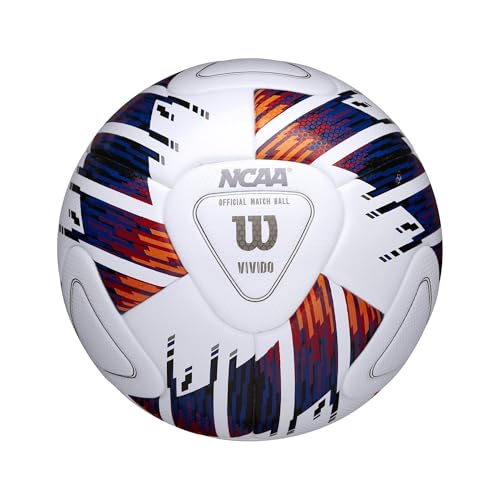
Wilson NCAA Copia II Official Match Soccer Ball
This ball carries official NCAA match status, thermally bonded to perform on the wet college pitches common in fall play. Panel graphics mirror what collegiate referees check against the rulebook. Adult club leagues use it too, for that same official-match consistency.
Pros
- Official NCAA status suits collegiate and adult club leagues
- Thermally bonded cover performs in wet fall conditions
- Consistent shape holds through a full match schedule
Cons
- Touch runs firmer than a latex-bladder match ball
- Fewer color options than training-focused balls

Nike Flight Soccer Ball
Grooves molded into the cover, branded AerowTrac, cut down on wobble so the ball flies straighter on long passes and shots. A latex bladder underneath adds the soft touch professional-level match balls need. Clubs chasing that pro-level feel on game day pick this over a training ball.
Pros
- Grooved surface reduces wobble for straighter flight
- Latex bladder delivers professional-level touch
- Textured casing grips the foot on passes and shots
Cons
- Latex bladder needs more frequent reinflation than butyl
- Grooved surface shows scuffs faster on rough turf

Puma Orbita 6 MS Training Ball
Machine-stitched seams on this training ball survive daily cone drills and shooting practice better than a delicate match ball would. A textured surface keeps grip consistent moving from grass to turf. Coaches buy several at once, since it holds up through a full training cycle.
Pros
- Stitched seams withstand daily training wear
- Textured cover grips on both turf and grass
- Butyl bladder holds pressure through repeated sessions
Cons
- Flight feels less refined than a thermally bonded match ball
- Not certified for official league competition

Franklin Sports Competition 100 Soccer Ball
A synthetic PVC cover and machine-stitched seams keep this ball simple and easy to replace, suited to backyard games and rec leagues. Sizes run from 3 to 5, so one product line covers most youth teams. It skips certified competition but holds up fine for casual weekend use.
Pros
- Simple build makes it easy to keep several on hand
- Sizes cover most youth age groups
- Butyl bladder holds air well for casual use
Cons
- PVC cover wears faster than PU or TPU covers
- Flight is less consistent than certified match balls

Adidas Starlancer Club Soccer Ball
This entry-level ball introduces young players to fundamentals without a match-grade cover’s complexity. Sizes scale across common youth age brackets, letting a team standardize gear by grade. A machine-stitched TPU cover keeps it light and easy to control for beginners.
Pros
- Sized for different youth age groups
- Light cover suits beginners learning ball control
- Simple construction is easy to replace
Cons
- Lacks the flight technology of pro-level match balls
- Cover scuffs faster on asphalt or concrete
Compared at a glance
| # | Model | Certification | Best for | Score | Price |
|---|---|---|---|---|---|
| 1 | Select Brillant Super FIFA Quality Pro Soccer Ball | FIFA Quality Pro | Best overall | 9.4 | Check price |
| 2 | Adidas Tiro League Thermally Bonded Soccer Ball | Thermally bonded panels | Best value | 9.1 | Check price |
| 3 | Wilson NCAA Copia II Official Match Soccer Ball | Official NCAA match ball | Best for college and club matches | 8.9 | Check price |
| 4 | Nike Flight Soccer Ball | AerowTrac grooved surface for flight stability | Best for professional-level flight control | 8.7 | Check price |
| 5 | Puma Orbita 6 MS Training Ball | Machine-stitched panels | Best for daily training | 8.4 | Check price |
| 6 | Franklin Sports Competition 100 Soccer Ball | Machine-stitched synthetic cover | Best budget | 8.2 | Check price |
| 7 | Adidas Starlancer Club Soccer Ball | Machine-stitched TPU cover | Best for youth and beginners | 8.0 | Check price |
How to pick the right one
What separates a match-grade soccer ball from a rec ball FIFA runs two certification tiers for match balls: FIFA Quality Pro and FIFA Quality. Pro-level balls pass roundness, weight, and water-absorption tests that recreational balls skip entirely. Panel construction is the next signal, since thermally bonded seams shed water better than stitched ones across a season. Regulation size 5 balls weigh between 410 and 450 grams and measure 68 to 70 centimeters around. Bladder material, covered next, decides how the ball actually feels off the boot.
Thermally bonded panels or hand-stitched: which lasts longer Thermally bonded balls fuse panels with heat instead of thread, keeping water out and holding shape through a full season. Hand-stitched balls, Select’s signature approach, use thread that can loosen after heavy use but often give a softer first touch. Machine-stitched balls sit between the two, cheaper to produce and easy to repair with a needle. Most FIFA Quality Pro balls today use thermal bonding, though Select proves stitched construction can still meet that standard.
Match ball vs training ball: which one your team actually needs Match balls like the Select Brillant Super and Nike Flight carry latex bladders for maximum touch and true flight. Training balls, including the Puma Orbita 6 MS, trade some of that feel for a tougher cover built to survive cone drills and repeated shooting. Buying one match ball for game day and a separate training ball for practice extends both. Squads relying on a single ball for everything usually pick a thermally bonded option, since it tolerates that mixed duty better.
Choosing the right size and bladder for your level Youth players under age eight typically use a size 3 ball; ages eight to twelve move up to size 4; anyone twelve and older plays size 5. Adidas Starlancer Club covers that youth range with a matching size for each bracket. Latex bladders feel softer and truer off the foot but need reinflation every few days. Butyl bladders hold pressure for weeks, which suits training balls and younger players who forget the pump.
Frequently asked questions
What does FIFA Quality Pro certification actually mean?
It’s the top tier of FIFA’s ball-testing program, covering circumference, roundness, weight, rebound, and water absorption. Balls carrying this mark are approved for professional and top-flight amateur competition. Select Brillant Super and similar certified balls list it directly on the packaging.
Do adult and professional matches require a size 5 ball?
Yes, size 5 is the regulation size for players twelve and older, including every professional league. It weighs 410 to 450 grams and measures 68 to 70 centimeters around. Smaller sizes exist only for youth age brackets.
Thermally bonded vs hand-stitched: which soccer ball lasts longer?
Thermally bonded panels resist water absorption and hold shape better across a wet season. Hand-stitched balls can loosen at the seams under heavy use but often break in with a softer touch. Most professional leagues now favor thermally bonded balls for that durability edge.
Latex or butyl bladder: which is better for match play?
Latex gives a truer, softer touch, which is why most match balls, including Select Brillant Super and Nike Flight, use it. Butyl holds air pressure for weeks instead of days, which training balls like the Puma Orbita rely on. Match day favors latex; practice favors butyl.
Can a match ball handle everyday training sessions?
It can, but the latex bladder needs reinflating more often and the surface wears faster under cone drills. Many clubs save the match ball for game day and use a stitched or thermally bonded ball for practice instead. That split extends the life of both balls.
What size soccer ball do youth players need?
Players under eight use size 3, ages eight through twelve use size 4, and twelve and up move to size 5. Adidas Starlancer Club comes in each of those sizes. Matching size to age group matters more than brand for skill development.
How often should a soccer ball be re-inflated?
Butyl bladder balls hold pressure for two to three weeks under normal use. Latex bladder match balls lose noticeable pressure within a few days and need more frequent topping up. Check pressure before every match regardless of bladder type.
Which soccer ball works best on turf versus natural grass?
Textured covers like the Puma Orbita 6 MS grip better on artificial turf, where footing is slicker. Thermally bonded match balls perform well on both surfaces but show wear faster on abrasive turf. Natural grass treats any cover type more gently.
Is a FIFA Quality Pro ball worth it for a rec league team?
Probably not: rec leagues rarely need pro-tier roundness and water-absorption tolerances. A thermally bonded ball like the Adidas Tiro League handles weekend matches at a lower ongoing cost. Save the certified match ball for competitive or semi-pro play.
Select Brillant Super vs Adidas Tiro League: what’s the real difference?
Select carries FIFA Quality Pro certification and hand-stitched panels with a latex bladder for maximum touch. Adidas Tiro League uses thermal bonding and a butyl bladder built for rain and repeated training. Pick Select for certified competition, Tiro League for club training and weekend leagues.
Final word
Select Brillant Super takes the top spot for players who want FIFA Quality Pro certification and hand-stitched construction that holds up over a season. Weekend league players and coaches running daily training should reach for the Adidas Tiro League Thermally Bonded Ball instead, since thermal bonding survives rain and repeated drills better than a match-day ball. Teams outfitting a full youth roster get more value from the Adidas Starlancer Club, sized for each age bracket.
Derek Holt
Derek has a background coaching recreational and amateur athletes and has worked the sales floor at specialty fitness retailers. He focuses on equipment durability, ergonomics and realistic use cases rather than marketing claims.


