Which Soccer Ball Fits Your Game: Match, Turf or Training
Adidas MLS Pro Official Match Ball leads this comparison thanks to thermally bonded panels and predictable flight. Nike Academy Team Soccer Ball offers the best value for regular training sessions. Select Numero 10 Soccer Ball stands out for touch and technical control.
Adidas MLS Pro Official Match Ball delivers match grade flight through thermally bonded panels, making it our overall pick. Nike Academy Team Soccer Ball offers the best value for players logging regular training hours. Adidas Starlancer Club Soccer Ball fits casual games and younger players who need a properly sized youth ball.
Soccer balls look nearly identical in online listings despite being engineered for different jobs. A thermally bonded match ball used on concrete wears out faster than a training ball costs to replace. We compared panel construction, bladder material, cover thickness and stated surface suitability, then weighed owner reports on shape retention and air loss over a season.
How to choose
What’s the difference between match, training and recreational soccer balls? Match balls use thermally bonded panels with no stitched seams, giving predictable flight and low water absorption. Training balls rely on thicker, machine stitched construction built to survive repetition. Recreational balls prioritize low price over performance. Buying a match ball for daily wall practice wastes money fast, since the cover wears through in weeks.
What size soccer ball fits which age group? Size 5 is standard for players around age twelve and older. Size 4 suits roughly ages eight to twelve, and size 3 fits younger children. An oversized ball forces poor technique because a young player cannot strike it cleanly. Local leagues sometimes set slightly different age bands, so check before buying for competitive play.
Which soccer ball surface should you buy for? Concrete and asphalt abrade any cover within weeks. Artificial turf wears a ball down faster than natural grass does. A hard court surface calls for a durable training ball over a refined match ball. Owners consistently report that surface, not brand, predicts how long a ball stays round.
How do you keep a soccer ball properly inflated? An underinflated ball deforms permanently and feels dead off the foot. Overinflating stresses the seams and feels harsh to strike. Check the pressure range printed near the valve and use a pump gauge rather than judging by squeeze. Wetting the needle before inserting it prevents the torn valve that ends a ball’s life early.
The best picks, ranked

Adidas MLS Pro Official Match Ball
Thermally bonded panels replace traditional stitching, removing seams that trap water and disturb flight. Strike feel stays consistent across the entire surface, and flight holds true in the air. Grass is the intended surface, and concrete wears the cover down fast.
Pros
- Seamless build gives predictable flight
- Consistent strike feel across the surface
- Butyl bladder holds pressure between sessions
Cons
- Cover wears quickly on concrete or asphalt
- Priciest construction type in this lineup

Nike Academy Team Soccer Ball
Training sessions punish a ball far more than match play does. Academy Team answers with a thicker, abrasion resistant cover and reinforced casing. Flight feels slightly less refined than a match ball, though it survives a full season of drills on grass or turf.
Pros
- Durable cover built for heavy training volume
- Holds shape through repeated daily use
- Performs on both grass and artificial turf
Cons
- Flight less refined than a thermally bonded ball
- Stitched seams absorb some water in wet conditions
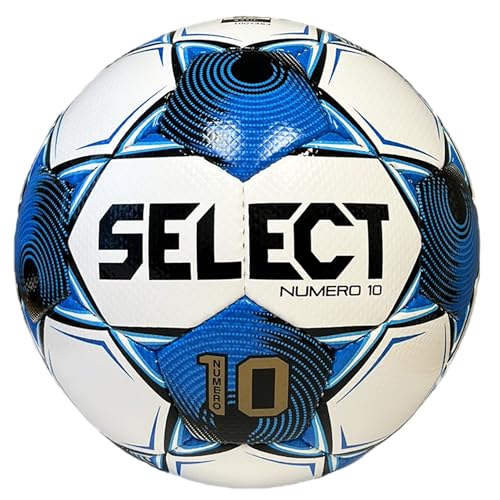
Select Numero 10 Soccer Ball
Select built its reputation on how balls feel off the foot, and Numero 10 is the model players mention most. Hand stitched panels and a softer polyurethane cover suit technical training where control outweighs raw durability. Wall work and daily abuse wear it down faster than a training ball.
Pros
- Excellent touch and strike feel
- Hand stitching keeps its shape over time
- Preferred by players who value technical control
Cons
- Not suited to concrete or wall drills
- Costs more than a standard training ball

Puma Orbita 6 MS Soccer Ball
Artificial turf abrades a thin cover faster than grass does. Orbita 6 MS counters with a tougher outer layer built for 3G and 4G surfaces. Durability took priority over the final percent of flight refinement, which suits club training more than match play.
Pros
- Cover withstands abrasive turf surfaces
- Butyl bladder retains air between sessions
- Reasonable price for a club training ball
Cons
- Feels firmer than premium match balls
- Flight less refined than thermally bonded balls

Mikasa Serious Soccer Ball SS50
Schools and clubs put balls through dozens of users and rough storage. SS50 answers with a hard wearing cover built to tolerate that treatment. Feel stays functional rather than premium, which fits a ball meant to survive a full term of lessons.
Pros
- Survives rough surfaces and shared daily use
- Keeps its shape after cheaper balls go lopsided
- Good value when buying multiple balls at once
Cons
- Feel is firm rather than refined
- Flight is not match ball accurate

Wilson Traditional Soccer Ball
Spontaneous park games call for a ball you will not mourn losing over a fence. Wilson Traditional fits that role with basic machine stitching and a synthetic cover. It needs reinflating more often than premium balls, but it is fine for casual play.
Pros
- Affordable option to keep on hand
- Works fine for casual park and garden games
- Available in youth and adult sizes
Cons
- Needs reinflating more often than better balls
- Not built for regular training loads

Adidas Starlancer Club Soccer Ball
Younger players need a ball sized to their age group, not a shrunk down adult ball. Starlancer covers youth sizes 3, 4 and 5 at an accessible price point. Machine stitching and a butyl bladder hold air reasonably well between sessions.
Pros
- Sized correctly for youth age groups
- Butyl bladder holds pressure between sessions
- Recognizable brand at an accessible price
Cons
- Cover wears on abrasive surfaces
- Not intended for high volume training
How they compare
| # | Model | Construction | Best for | Score | Price |
|---|---|---|---|---|---|
| 1 | Adidas MLS Pro Official Match Ball | Thermally bonded panels | Best overall | 9.4 | Check price |
| 2 | Nike Academy Team Soccer Ball | Machine stitched panels | Best value for training | 9.2 | Check price |
| 3 | Select Numero 10 Soccer Ball | Hand stitched panels | Best for touch and control | 9.0 | Check price |
| 4 | Puma Orbita 6 MS Soccer Ball | Machine stitched | Best for artificial turf | 8.8 | Check price |
| 5 | Mikasa Serious Soccer Ball SS50 | Machine stitched | Best for schools and PE | 8.6 | Check price |
| 6 | Wilson Traditional Soccer Ball | Machine stitched | Best budget pick | 8.3 | Check price |
| 7 | Adidas Starlancer Club Soccer Ball | Machine stitched | Best for youth players | 8.0 | Check price |
Good to know
What size soccer ball should I buy?
Size 5 fits ages twelve and up. Size 4 suits roughly eight to twelve. Size 3 works for younger children. Check your local league’s age bands before buying for competitive play.
What’s the difference between a match ball and a training ball?
Match balls use thermally bonded panels for seamless, predictable flight and low water absorption. Training balls use thicker stitched construction that survives far more repetition, at a small cost to flight precision.
Can I use a match ball on concrete?
Yes, but the cover wears through quickly on concrete. Match ball covers are optimized for grass. Choose a training or recreational ball with a thicker cover for hard surfaces.
How often should I inflate a soccer ball?
Check pressure before every session. Butyl bladders hold air for weeks, while latex bladders lose pressure within days. Use the range printed near the valve rather than judging by feel.
Do you need to wet a pump needle before inflating a soccer ball?
Yes. A dry needle tears the valve seal on the way in, and a torn valve stops the ball from holding air. A drop of water or valve oil takes seconds and prevents that failure.
Why does a soccer ball go out of shape?
Chronic underinflation is the usual cause, along with storing a ball under weight and abrasive surfaces breaking down the panels. Keep pressure at the printed specification and store balls loose rather than crushed in a bag.
Are expensive soccer balls actually better than cheap ones?
For flight consistency and touch, yes, and players notice the difference immediately. For durability under heavy training, a mid priced ball often outlasts a premium match ball. Match the purchase to the job, not the price tag.
How should soccer balls be stored during the offseason?
Store balls slightly deflated, somewhere dry and away from direct sun. Avoid stacking heavy equipment on top of them. Full pressure for months stresses the seams, and heat degrades the bladder over time.
Which soccer ball is best for artificial turf?
Puma Orbita 6 MS Soccer Ball uses an abrasion resistant cover built for 3G and 4G turf. It trades a touch of flight refinement for surface durability.
What soccer ball is best for youth players?
Adidas Starlancer Club Soccer Ball comes in youth sizes 3, 4 and 5 at an accessible price. A correctly sized ball helps younger players develop technique faster than an oversized adult ball would.
The verdict
Adidas MLS Pro Official Match Ball earns the top spot when flight consistency matters most, since thermally bonded panels deliver a predictability that stitched balls cannot match. Players logging heavy training hours get more value and a longer lifespan from Nike Academy Team Soccer Ball. Adidas Starlancer Club Soccer Ball remains the sensible first ball for younger players in a properly fitted size.
Derek Holt
Derek has a background coaching recreational and amateur athletes and has worked the sales floor at specialty fitness retailers. He focuses on equipment durability, ergonomics and realistic use cases rather than marketing claims.