Which Resistance Bands Work Best From Strength to Rehab
Bodylastics’ Stackable Tube System offers the strongest all-around resistance for home training, stacking tubes up to 116 pounds. WODFitters’ Pull-Up Assist Bands deliver the best value for mobility and assisted pull-ups. Fit Simplify’s Loop Band Set gives beginners five resistance levels at the lowest starting cost.
Bodylastics’ Stackable Tube System leads home strength training because its clip-on tubes stack to 116 pounds of combined resistance, though the plastic clips wear faster than a welded steel loop.
Resistance bands vary widely by material, loop length, and rated pull weight. We compared listed specs, owner feedback on snap resistance, and fit against specific use cases like powerlifting warmups, pull-up assistance, and physical therapy.
The best picks, ranked

Bodylastics Stackable Tube Resistance Bands System
Five color-coded tubes clip together for a combined resistance ceiling of 116 pounds. Handles, ankle straps, and a door anchor ship in the box for full-body routines. Anti-snap sleeves wrap each tube to lower breakage risk during heavy pulls.
Pros
- Stacks five tubes for progressive overload as strength builds
- Anti-snap sleeves cover every tube in the set
- Door anchor and ankle straps cover lower-body exercises
Cons
- Plastic clip connectors wear faster than welded steel rings
- Setting up multiple tubes takes longer than grabbing one loop band

WODFitters Pull-Up Assist Resistance Bands
Individual bands span a 5 pound assist up to a 125 pound loop for heavier lifters. Each measures 41 inches and ships with a mesh carrying bag. Lifters use them for pull-up progressions, mobility drills, and light strength work.
Pros
- Wide resistance spread across individual band strengths
- Compact 41 inch loop packs into a gym bag
- Mesh storage bag included with purchase
Cons
- Buying several individual bands can cost more than one bundled set
- Latex smell is noticeable straight out of the packaging, per the listing

Fit Simplify Resistance Loop Bands Set
Five loop bands cover light activation work through moderate strength moves in one package. Each band measures 12 inches and ships with a carry bag and instruction guide. Lighter exercises like glute activation suit this set better than heavy lifting.
Pros
- Lowest starting cost for trying five resistance levels
- Small loop size suits lower-body activation drills
- Carry bag and printed exercise guide included
Cons
- Top resistance level tops out near 25 lbs, light for advanced lifters
- Latex loops can roll up the thighs during squats without a fabric grip

Rogue Fitness Monster Bands
Monster Bands loop around a barbell or power rack upright to add accommodating resistance during squats, bench presses, and deadlifts. Color coding marks each resistance level, and Rogue sells them one color at a time. Lifters use the same bands for warmups and dedicated banded strength work.
Pros
- 41 inch loop fits standard barbells and power rack uprights
- Natural latex holds up under repeated heavy stretching
- Color-coded system matches common powerlifting gym standards
Cons
- Building a full set of strengths means buying each color separately
- Not built for light mobility work or physical therapy use

Gornation Fabric Resistance Bands
A woven polyester-cotton shell over a latex core keeps this loop from rolling on hips and thighs. Three resistance levels cover glute bridges, lateral walks, and general warmups. The wider band profile reduces the skin pinching common with thin latex-only loops.
Pros
- Non-slip fabric stays in place during lateral movements
- Washable exterior beats rubber-only bands for hygiene
- Wider profile cuts down on skin pinching
Cons
- Only 3 resistance levels versus 5-band latex sets
- Fabric bulk packs less easily for travel than thin latex loops

TheraBand Professional Resistance Bands
Flat construction avoids the pinch point some loop bands create during seated or lying exercises. Clinics track patient progress with the same color-coded resistance system across visits. A latex-free version serves people with latex sensitivities.
Pros
- Latex-free option available for allergy concerns
- Flat profile reduces pinching during rehab exercises
- Color-coded levels simplify progress tracking across sessions
Cons
- Flat bands can twist during fast, dynamic movements
- No handles or anchor points included with the basic band
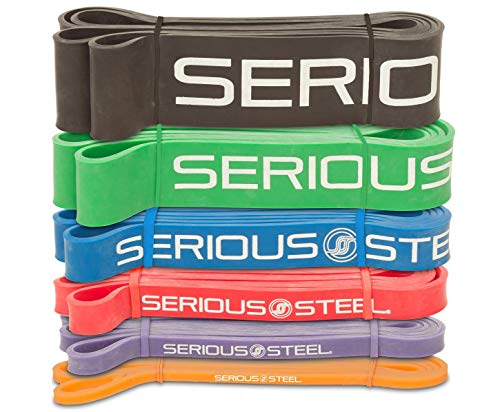
Serious Steel Fitness Resistance Bands
The heaviest bands in this lineup reach 200 pounds of resistance for advanced pull-up assistance and mobility work. A 41 inch loop length matches standard rig and barbell setups. Multi-band sets bundle several strengths together for progressive training.
Pros
- Highest resistance ceiling in this comparison at up to 200 lbs
- 41 inch length fits racks, rigs, and barbells alike
- Multi-band bundles cover several strengths in one purchase
Cons
- Heaviest bands demand significant strength to stretch safely
- Natural latex may trigger allergic reactions in sensitive users
How they compare
| # | Model | Resistance range | Best for | Score | Price |
|---|---|---|---|---|---|
| 1 | Bodylastics Stackable Tube Resistance Bands System | 2 to 116 lbs stacked | Best overall | 9.4 | Check price |
| 2 | WODFitters Pull-Up Assist Resistance Bands | 5 to 125 lbs depending on band | Best value | 9.1 | Check price |
| 3 | Fit Simplify Resistance Loop Bands Set | 2 to 25 lbs across 5 bands | Best budget | 8.8 | Check price |
| 4 | Rogue Fitness Monster Bands | Varies by color, roughly 10 to 200 lbs | Best for powerlifting | 8.5 | Check price |
| 5 | Gornation Fabric Resistance Bands | Light, medium and heavy (3 levels) | Best fabric loop set | 8.2 | Check price |
| 6 | TheraBand Professional Resistance Bands | Color-coded, Yellow (thin) to Black (extra heavy) | Best for physical therapy | 8.1 | Check price |
| 7 | Serious Steel Fitness Resistance Bands | 5 to 200 lbs depending on band | Best heavy resistance | 8.0 | Check price |
What to look for
Loop, Tube, Flat, or Fabric: How Band Types Differ Loop bands form one continuous ring and suit squats, lateral walks, and pull-up assistance. Tube bands add handles and clip attachments, a better match for shoulder presses and rows. Flat bands lie without pinching, a common pick for seated rehab work. Fabric bands layer woven cotton or polyester over a latex core, cutting down on rolling during hip and glute drills.
Matching Resistance Levels to a Training Goal Color coding runs light to extra heavy, though pound ratings differ between brands. A 5 pound band suits shoulder rehab, while a 150 pound loop suits banded squats. Multi-band sets let a lifter progress without repurchasing gear every few months. Advanced lifters who already know their target range often do better with a single high-resistance band.
Bands for Powerlifting Warmups and Accommodating Resistance Powerlifters loop heavy bands around a barbell or rig upright to add resistance at the top of a squat or deadlift. Rogue’s Monster Bands and Serious Steel’s heavier loops both use a 41 inch length that clears standard rack uprights. Accommodating resistance speeds up bar movement through the sticking point of a lift. This use case calls for a durable natural latex loop rather than a fabric or flat band.
Latex Allergies and Physical Therapy Considerations Clinics standardize patient exercise progressions with flat, color-coded bands like TheraBand’s lineup. Natural rubber triggers reactions in some users, so anyone with a latex sensitivity should check for a latex-free label first. Physical therapy routines often need lower resistance and a flat profile that avoids pinching skin during seated stretches. A lightweight flat band that rolls into a small bag also suits injury recovery while traveling.
Questions worth asking
What resistance band should a beginner start with?
A light to medium loop band rated under 20 lbs works well, or a five-band set like Fit Simplify’s that covers several levels at once.
How do resistance bands compare to free weights for strength training?
Bands add increasing tension as they stretch, unlike the constant load of a dumbbell, which trains the top range of a movement differently.
Which resistance bands work best for physical therapy?
Flat, color-coded bands such as TheraBand’s are common in clinics because they avoid pinching and offer a latex-free option.
Can resistance bands replace a full powerlifting warmup routine?
Bands add accommodating resistance to barbell warmups, but they do not replace bar speed and technique work with actual plates.
Is natural latex or fabric better for resistance bands?
Latex loops offer a wider resistance range, while fabric bands like Gornation’s stay in place better for hip and glute drills.
Loop bands vs tube bands: which suits home workouts better?
Loop bands suit lower-body and mobility work, while tube bands with handles like Bodylastics’ system cover upper-body pressing and rowing moves.
What is the best resistance band for pull-up assistance?
WODFitters’ bands span 5 to 125 lbs, letting a lifter pick the exact assist level and reduce it as pull-up strength improves.
Do resistance bands wear out and need replacing?
Natural latex degrades with UV exposure and heavy stretching, so most bands need replacing after months of regular heavy use.
Are fabric resistance bands worth the extra cost?
Fabric bands cost more than latex loops but stay in place better during glute and hip drills, which matters for lateral-movement exercises.
How many resistance bands does a home gym actually need?
Three to five bands spanning light through heavy cover most strength and mobility goals without buying every available resistance level.
The verdict
Bodylastics’ Stackable Tube System remains the strongest overall choice for home strength training, since its stacking tubes and included attachments cover pressing, rowing, and lower-body moves in one set. Powerlifters should pick Rogue Fitness Monster Bands instead, given the 41 inch loop length matches barbell and rig setups. Anyone recovering from injury or managing a latex allergy should choose TheraBand’s latex-free flat bands over any loop-style option here.
Derek Holt
Derek has a background coaching recreational and amateur athletes and has worked the sales floor at specialty fitness retailers. He focuses on equipment durability, ergonomics and realistic use cases rather than marketing claims.