Work-Grade Life Jackets for Deck Crews and Serious Anglers
The Mustang Survival MD3183 Khimera Foam Vest leads for all-around professional use, pairing foam buoyancy with a rugged nylon shell. The Stohlquist Fisherman PFD delivers strong value through universal sizing. The NRS Chinook Fishing PFD suits anglers who need pocket storage and paddling mobility together on the water.
Commercial and professional water work is best served by the Mustang Survival MD3183 Khimera Foam Vest. Foam panels meet Type III buoyancy while a 210D nylon shell resists daily abrasion from deck gear. Anglers needing tackle storage should look at the NRS Chinook instead, since the Khimera skips fishing pockets entirely.
USCG type ratings, foam thickness, and back panel design all factor into picking a work-grade PFD at once, which makes specs alone hard to compare. We checked listed classifications, foam ratings, and owner feedback across seven current models built for kayaking, fishing, and commercial duty.
The shortlist, ranked

Mustang Survival MD3183 Khimera Foam Vest
Foam panels rated for Type III buoyancy sit inside a 210D nylon shell built for daily commercial handling. Crews can layer clothing underneath during cold-weather shifts thanks to side-adjustable straps. Fishing-specific storage is absent by design, since the focus stays on durability and consistent fit.
Pros
- Rugged 210D nylon shell built for daily commercial wear
- Foam panels meet Type III buoyancy without inflation upkeep
- Adjustable side straps accommodate layering in cold conditions
Cons
- Bulkier than paddling-specific vests
- No dedicated fishing pockets
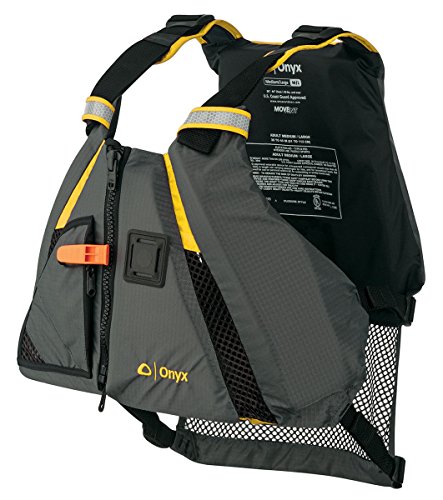
Onyx MoveVent Dynamic Paddle Sports Vest
Segmented foam panels flex with each paddle stroke instead of moving as one rigid block. A low-profile back panel clears most kayak seat backs, and mesh sections limit heat buildup on long outings. Onyx aimed this vest at paddlers who value range of motion over pocket storage.
Pros
- High-cut armholes clear most kayak seat backs
- Segmented foam panels flex with paddle strokes
- Mesh ventilation reduces heat buildup on long trips
Cons
- Limited storage for tackle or gear
- Runs narrow through the torso for larger builds

NRS Chinook Fishing PFD
Multiple pockets sized for pliers, tackle, and a fishing knife keep gear within reach on this angler-focused PFD. A mesh lower back panel matches the high-backed seats common on fishing kayaks. Reflective trim adds visibility near boat traffic at dawn or dusk.
Pros
- Multiple pockets hold tackle, pliers, and a knife
- Mesh lower back suits high-back kayak seats
- Reflective trim aids visibility in low light
Cons
- Heavier than minimalist paddling vests
- Pocket zippers add points of wear over time

Full Throttle Rapid-Dry Flex-Back Life Vest
A quick-drying knit mesh shell covers a foam flex-back panel on this boater-focused vest, built for comfort without a premium price. Type III buoyancy minimums are still covered without added bulk. Sizing runs narrower than several commercial-grade competitors listed here.
Pros
- Rapid-dry knit mesh sheds water quickly
- Flex-back foam panel improves boat seat comfort
- Lower cost than most commercial-grade options
Cons
- Fewer size options than premium competitors
- Mesh panels show wear faster than solid nylon
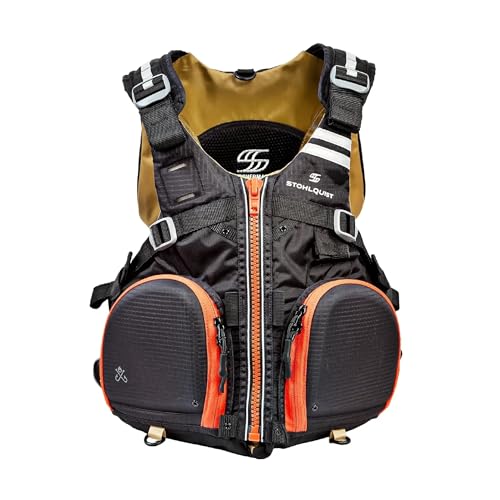
Stohlquist Fisherman PFD
Universal sizing adjusts across a wide chest range on this simply designed vest, paired with a mesh lower back for boat seat comfort. Foam panels run slightly thicker than paddling-specific vests, which trades packability for consistent buoyancy. Fewer pockets than dedicated fishing vests keep the buckle count low.
Pros
- Universal sizing adjusts to a wide chest range
- Mesh lower back stays comfortable in a boat seat
- Simple design keeps buckles and straps low-maintenance
Cons
- Fewer pockets than dedicated fishing vests
- Thicker foam panels reduce packability
MTI Adventurewear Journey Vest
Sizing extends into 5XL and 6XL on this vest, closing a gap most Type III models leave near the top of standard charts. Buoyancy spreads across a larger torso through wider foam panels, and reflective trim adds visibility near boat traffic. Extra foam volume does add bulk under outerwear.
Pros
- Extended sizing covers 5XL and 6XL frames
- Foam panels distribute buoyancy across a larger torso
- Reflective trim improves visibility near boat traffic
Cons
- Added foam volume increases bulk under a jacket
- Fewer color options than smaller sizes

Onyx Commercial Foam Vest
Type II buoyancy sets this vest apart from the Type III options above, built around a vinyl-coated nylon shell that resists repeated soaking on deck. A foam collar turns most wearers face up faster than typical Type III designs manage. Universal sizing fits a narrower range but suits standard-issue fleet use.
Pros
- Type II rating turns most wearers face up
- Vinyl-coated nylon resists soaking and gear abrasion
- Foam collar adds buoyancy near the head and neck
Cons
- Bulkier and less mobile than Type III vests
- Universal sizing fits a narrower range than adjustable models
How to choose
What USCG type ratings mean for professional use Highest buoyancy and automatic face-up turning define Type I vests, which explains why offshore and commercial crews rely on them. Similar turning ability with less bulk comes from Type II vests, often stocked as onboard commercial gear. Comfort and freedom of movement take priority in Type III vests, trading some turning ability, which suits anglers and paddlers who stay active. Type V vests only meet their rating when used exactly as labeled, since they are activity-specific. Match the type to the job first, before comparing brands or features.
Best for kayaking and paddling Armholes need to clear a kayak seat back without restricting a paddle stroke, which is why cut height matters for paddlers. A segmented foam design with a low-profile rear panel handles that on the Onyx MoveVent Dynamic. Foam vests trap heat against the torso, so mesh ventilation becomes important on long paddling days. Layering a drysuit underneath in cold water also works better with side-adjustable straps, since fit stays consistent.
Life jackets for commercial and work settings Type I or Type II buoyancy tends to fit commercial deckhands better than the Type III vests anglers typically choose. Repeated soaking and abrasion from deck equipment are what the Onyx Commercial Foam Vest’s vinyl-coated nylon shell is built to resist. Foam collars on these vests turn a wearer face up faster than most Type III designs manage. Job-site rules vary by vessel and operator, so crews near heavy equipment should confirm their required type rating before buying.
Sizing for larger frames and extended fits A 52 inch chest is where standard PFD sizing tops out, which leaves larger wearers underinsured on buoyancy. Closing that gap is exactly why MTI Adventurewear extends its Journey Vest sizing into 5XL and 6XL. Real-world flotation gets cut short when a poorly sized vest rides up or gaps open at the shoulder straps. Sizing up and checking the manufacturer’s weight range, not just chest measurement, matters most for buyers near a size boundary.
The lineup, side by side
| # | Model | USCG Type | Best for | Score | Price |
|---|---|---|---|---|---|
| 1 | Mustang Survival MD3183 Khimera Foam Vest | Type III | Best overall | 9.4 | Check price |
| 2 | Onyx MoveVent Dynamic Paddle Sports Vest | Type III | Best for kayaking and paddling mobility | 9.2 | Check price |
| 3 | NRS Chinook Fishing PFD | Type III | Best for fishing | 9.0 | Check price |
| 4 | Full Throttle Rapid-Dry Flex-Back Life Vest | Type III | Best budget | 8.7 | Check price |
| 5 | Stohlquist Fisherman PFD | Type III | Best value | 8.4 | Check price |
| 6 | MTI Adventurewear Journey Vest | Type III | Best for larger sizes | 8.2 | Check price |
| 7 | Onyx Commercial Foam Vest | Type II | Best for high-buoyancy commercial use | 8.0 | Check price |
Common questions
What is the difference between a Type II and Type III life jacket?
Type II vests turn most unconscious wearers face up and suit calm inland water. Type III vests offer more comfort and mobility but turn some wearers only partially, making them better suited to active users who stay alert.
Which life jacket is best for kayaking?
The Onyx MoveVent Dynamic fits paddling best, with high-cut armholes and a low rear profile that clears most kayak seat backs. Anglers who paddle and fish often prefer the NRS Chinook for its added pockets.
Can a fishing PFD double as a work vest?
Some fishing PFDs meet Type III standards suitable for light commercial tasks, but most lack the Type I or Type II buoyancy many employers require. Check job-site rules before substituting one for the other.
Is a foam life jacket better than an inflatable one for commercial use?
Foam vests need no maintenance and float immediately without inflation, which many commercial operators prefer for reliability. Inflatable vests pack smaller but require regular cylinder and canister checks to stay functional.
What size life jacket fits a 250 pound frame?
Most adult Type III vests fit chests up to about 52 inches, which covers many 250 pound wearers depending on build. Larger frames should check extended sizing like the MTI Adventurewear Journey Vest, which runs to 5XL and 6XL.
How much buoyancy does a Type III life jacket provide?
Adult Type III vests provide a minimum of 15.5 pounds of buoyancy under USCG rules. Several models in this roundup exceed that minimum, with foam panels rated near 16.5 pounds.
NRS Chinook vs Stohlquist Fisherman, which fishing PFD fits better?
The NRS Chinook carries more storage with dedicated tackle pockets, while the Stohlquist Fisherman uses a simpler mesh lower back for better seated comfort. Anglers fishing from a kayak seat often prefer the Stohlquist’s ventilation.
Do professional life jackets need to be USCG approved?
Most commercial operators and charter services require USCG-approved vests by regulation, regardless of type. Confirm the specific type rating your role requires before choosing a vest on comfort alone.
Which life jacket works best for larger body types?
The MTI Adventurewear Journey Vest extends sizing to 5XL and 6XL, covering frames that standard charts leave underinsured on buoyancy.
How is a professional life jacket different from a recreational one?
Professional vests use heavier abrasion-resistant shells and often carry Type I or Type II ratings for commercial duty, while recreational vests favor lighter Type III builds for comfort during casual use.
Our pick
For general professional and commercial use, the Mustang Survival MD3183 Khimera Foam Vest earns the top recommendation, thanks to its Type III buoyancy and abrasion-resistant shell. Anglers who need pocket storage should choose the NRS Chinook instead, and paddlers focused on mobility will get more from the Onyx MoveVent Dynamic. Crews requiring Type I or Type II buoyancy should skip Type III options entirely and pick the Onyx Commercial Foam Vest.
Derek Holt
Derek has a background coaching recreational and amateur athletes and has worked the sales floor at specialty fitness retailers. He focuses on equipment durability, ergonomics and realistic use cases rather than marketing claims.