Elliptical Machines Compared for Home Cardio Workouts
Sole’s E35 tops this roundup thanks to a heavy flywheel and a full 20 inch stride built for long sessions. Schwinn’s 470 delivers similar comfort with more programmes for less money. Cubii’s JR1 stands apart as a seated, under desk option for adding movement during work hours.
Stride length and flywheel weight decide whether an elliptical feels smooth or choppy, more than any console feature. Sole’s E35 pairs a heavy flywheel with a 20 inch stride, which keeps the motion fluid during long sessions. Schwinn’s 470 comes close for less outlay, and Cubii’s JR1 solves an entirely different problem: staying active while seated at a desk.
Marketing pages bury stride length and flywheel weight beneath touchscreen specs and workout counts, making machines hard to compare on paper. We compared stride length, flywheel weight, resistance and incline range, console and app connectivity, maximum user weight and footprint across seven current listings. Check with a doctor before starting a new exercise routine, especially with existing joint or heart concerns.
The best picks, ranked

Sole E35 Elliptical
A heavy flywheel and 20 inch stride combine to produce a glide rather than a step, according to the listing. Power incline shifts emphasis across calves, hamstrings and glutes without breaking pace. Expect a large footprint, so measure the room before assembly.
Pros
- Smooth motion holds up at higher resistance levels
- Adjustable pedal angle cuts foot numbness during long rides
- Frame handles taller and heavier users comfortably
Cons
- Bulky frame is hard to reposition once assembled
- Assembly reportedly takes two people and several hours

NordicTrack FS14i FreeStride Trainer
FreeStride geometry lets the pedal path shorten or lengthen mid session, covering both a stepping motion and a long stride on one machine. Incline and resistance adjust automatically during guided workouts, so the console does much of the thinking. Most of the appeal depends on an ongoing subscription for content.
Pros
- Stride adapts on the fly to match your pace
- Guided sessions handle resistance changes automatically
- Long stride range suits taller users well
Cons
- Core features require an active subscription
- Frame and footprint are among the largest here

Schwinn 470 Elliptical
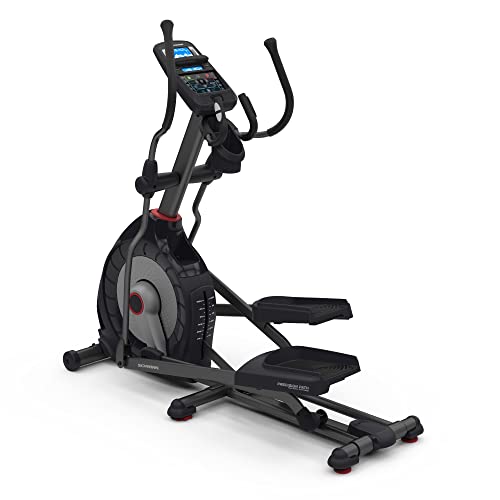
Schwinn built the 470 around a 20 inch stride, motorised incline and 29 workout programmes packed into one console. Dual track displays show several metrics side by side, without cycling through menus. Owners report the frame holds up well and moves more easily than the heaviest machines in this group.
Pros
- Full length stride at a mid range price point
- Wide programme selection adds workout variety
- Dual display shows multiple metrics at once
Cons
- Flywheel weighs less than the premium options here
- Console design looks dated next to newer machines
ProForm Carbon EL Elliptical
App based coaching sits at the center of the Carbon EL, complete with a tablet holder and automatic resistance control during guided sessions. Its frame runs lighter than flagship machines, which shows up as slight flex during hard efforts. Anyone who needs structure to stay consistent gets real value here.
Pros
- Guided sessions control resistance without manual input
- Oversized cushioned pedals reduce foot fatigue
- Lighter frame is easier to reposition at home
Cons
- Frame flexes noticeably under harder efforts
- 18 inch stride fits shorter users better

Horizon Fitness EX-59 Elliptical
A manual console and magnetic resistance keep the EX-59 simple, with a stride length that suits most average height adults. No subscription or login is required, which appeals to buyers who just want to move. A lighter flywheel means resistance feels less fluid near the top end.
Pros
- No subscription or account needed to start
- Magnetic resistance runs quietly during use
- Priced reasonably for a full size frame
Cons
- Lighter flywheel feels less fluid at high resistance
- Console tracks only a few basic metrics

Bowflex Max Trainer M6
Bowflex positions the M6 between an elliptical and a stepper, with a steeper motion path that raises heart rate fast in a small footprint. Interval style sessions suit this machine better than long steady rides. Expect a more demanding motion than a conventional elliptical delivers.
Pros
- Compact footprint suits a full body workout
- Heart rate climbs quickly during intervals
- Upper body handles sit in a natural position
Cons
- Motion demands more effort than standard ellipticals
- Not suited to long, gentle cardio sessions

Cubii JR1 Under Desk Elliptical
This seated pedal unit tucks under a desk, adding movement to hours spent sitting during a workday. It will not replace a full elliptical session, but it beats staying still. Owners report low resistance settings keep it quiet enough for video calls.
Pros
- Adds activity to a desk bound routine
- Runs quietly enough for shared office spaces
- Stores easily in a cupboard or closet
Cons
- Delivers far lower intensity than a full size machine
- Needs a stable chair to stay in place
Before you buy
What stride length do you need on an elliptical? Stride length decides whether the pedal motion feels natural or cramped, more than any other spec. Most adults do well between 18 and 20 inches. Anyone over six feet should look for 20 inches or a variable stride design instead. Shorter strides force a stepping motion that many people quit within months.
Does flywheel weight really change how it feels? A heavier flywheel carries momentum through the dead spots in the pedal path, producing a glide instead of a pulse. Manufacturers often skip publishing the exact weight, usually because it is unremarkable. Between two similar machines, favor the one with the heavier flywheel for long term comfort.
How much space does a home elliptical need? Full size machines need roughly six by three feet of floor space, plus clearance behind for the flywheel housing. Pedals also raise you eight to ten inches off the ground. Low ceilings can bring a tall user’s head close to the ceiling at the top of the stride. Measure ceiling height, subtract pedal rise, then add your own height before ordering.
Should you pick a machine with subscription workouts? Several machines here rely on guided sessions that adjust resistance and incline automatically, which genuinely helps some people stay consistent. That content carries an ongoing cost, and the hardware loses some appeal without it. Prefer your own music and pace? A simple console machine puts more hardware budget into the frame instead.
The lineup, side by side
| # | Model | Stride length | Best for | Score | Price |
|---|---|---|---|---|---|
| 1 | Sole E35 Elliptical | 20 inches | Best overall | 9.4 | Check price |
| 2 | NordicTrack FS14i FreeStride Trainer | Variable up to around 32 inches | Best for varied motion | 9.2 | Check price |
| 3 | Schwinn 470 Elliptical | 20 inches | Best value | 9.0 | Check price |
| 4 | ProForm Carbon EL Elliptical | 18 inches | Best for guided workouts | 8.7 | Check price |
| 5 | Horizon Fitness EX-59 Elliptical | 18 inches | Best budget full size | 8.5 | Check price |
| 6 | Bowflex Max Trainer M6 | Elliptical and stepper hybrid | Best for short sessions | 8.2 | Check price |
| 7 | Cubii JR1 Under Desk Elliptical | Seated under desk elliptical | Best for seated use | 8.0 | Check price |
Good to know
What stride length works best for most people?
Adults between five foot four and six feet typically feel comfortable with an 18 to 20 inch stride. Taller users should look for 20 inches or a variable stride design like NordicTrack’s FreeStride. Anything shorter tends to force a choppy, stepping motion.
Are ellipticals easier on the joints than a treadmill?
Ellipticals keep both feet on the pedals at all times, removing the repeated impact that running produces. That makes them gentler on knees, hips and ankles for many users. Anyone recovering from an injury should still check with a doctor or physiotherapist first.
How much floor space does an elliptical take up?
Plan for roughly six feet by three feet of floor space, plus extra clearance for access and airflow. Ceiling height matters too, since pedals lift you eight to ten inches above the floor. Measure before you buy, not after delivery.
Do you actually need incline adjustment?
Incline is not essential, but a moving ramp shifts the workload between calves, hamstrings and glutes. That variety helps some people stick with a routine longer. Motorised incline, like on the Schwinn 470, changes the angle without stopping.
Can an under desk elliptical replace a full workout?
Under desk units like the Cubii JR1 add movement and circulation during long seated stretches, which is worthwhile on its own. They do not match the workload of a full size elliptical. Treat them as a supplement to exercise, not a replacement.
How loud are ellipticals during use?
Magnetic resistance machines run quietly, with most noise coming from the drive belt and frame flex. A rubber mat under the machine cuts transmitted sound further. That matters most in apartments or upstairs rooms.
What maintenance keeps an elliptical running smoothly?
Wipe the frame and rails down after each session, and keep rollers free of dust. Check bolts every few months, since loose hardware is the usual source of new creaks. Follow the manual’s lubrication schedule for the rail system.
Can two people of different heights share one elliptical?
Yes, as long as the stride length suits the taller user in the household. Handlebars and pedal angle usually adjust to fit different people. Stride length itself stays fixed on most machines, so buy for the tallest user.
Is rear drive or front drive better for a home elliptical?
Rear drive machines, like the NordicTrack FS14i, tend to feel more like a natural stride and take up more floor length. Front drive designs sit more upright and often fit smaller rooms. Neither layout is objectively better, so match it to your space and stride preference.
The bottom line
Sole’s E35 earns the top spot for anyone who wants a machine that still feels smooth an hour into a session and years down the line. Schwinn’s 470 covers most of that ground for considerably less, making it the sensible value pick for a home gym. Cubii’s JR1 solves an unrelated problem, keeping legs moving through a desk bound workday rather than replacing a full cardio session.
Derek Holt
Derek has a background coaching recreational and amateur athletes and has worked the sales floor at specialty fitness retailers. He focuses on equipment durability, ergonomics and realistic use cases rather than marketing claims.