Dice Games That Reward Skill, Not Just Lucky Rolls
King of Tokyo (IELLO) leads for mixed groups of two to six, pairing rerolls with monster brawling. Dice Throne Season One ReRolled (Roxley Games) is stronger for two player duels between asymmetric heroes. Sagrada (Floodgate Games) fits anyone who wants a quiet drafting puzzle with no direct conflict.
King of Tokyo (IELLO) is the one box to buy for a group that plays a few times a year. Three rolls per turn hand every player real choices, and holding Tokyo puts a target on your back. Depth is the tradeoff, since a hot run of claw symbols can close a game early. Duelling, drafting and roll and write titles below pull the luck back.
Dice games run from five minute speed races to 45 minute drafting puzzles, and the box rarely makes that obvious. Components vary just as widely, from stock pips to etched custom faces and translucent resin. We compared published player counts, playing times, age ratings and exactly what dice ship inside. Owner feedback on repeat plays decided which titles still get used after the first month.
The top picks, ranked

King of Tokyo (IELLO)
Six custom dice roll up to three times a turn, so results get steered rather than accepted. Whoever occupies Tokyo scores points but absorbs damage from everyone standing outside it. Energy cubes buy power cards, a light engine layer that stops two sessions playing the same way.
Pros
- Three rolls a turn give genuine control
- Power cards reshuffle strategy between games
- Works at two players and still at six
Cons
- A hot dice streak can end a game early
- Knocked out players sit and watch

Dice Throne Season One ReRolled (Roxley Games)
Eight heroes arrive with their own dice, ability board and deck, so a Barbarian plays nothing like a Moon Elf. Rerolls work as they do in Yahtzee, except each combination maps to an attack, defence or status effect. Individual hero trays cut setup to roughly a minute once players know their character.
Pros
- Eight asymmetric heroes stretch replay value
- Hero trays make setup and packing fast
- Supports duels, teams or a free for all
Cons
- Status tokens take one game to learn
- Box footprint is large on a shelf
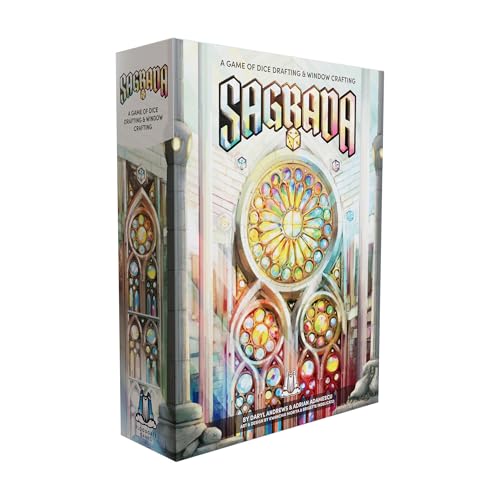
Sagrada (Floodgate Games)
Ninety translucent dice stand in for coloured glass, drafted into a window grid under colour and shade restrictions. Nothing gets rolled on your own turn after the draw, so planning carries the weight. A solo mode with a scoring target ships in the base box, which is unusual in this category.
Pros
- Drafting puts planning ahead of luck
- Translucent dice are the best components here
- Solo mode included without an expansion
Cons
- Player interaction stays low at every count
- Placement rules need a full game to click
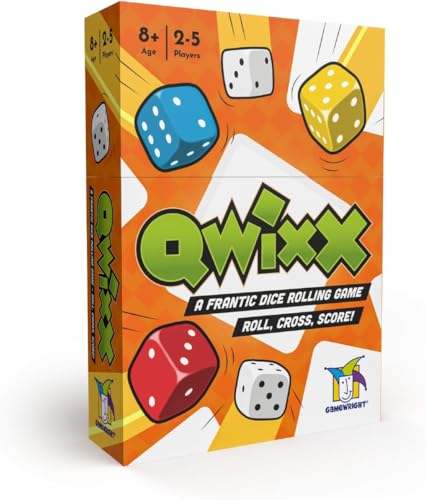
Qwixx (Gamewright)
Everyone marks their own sheet from the same public roll, so nobody waits for a turn. Crossing a number locks out every space to its left, turning each mark into a commitment. Fifteen minutes and a pocket box explain why this one ends up in a bag for restaurants and flights.
Pros
- Every player acts on every roll
- Teaches in roughly two minutes
- Box fits a coat pocket or glovebox
Cons
- Score pads run out and need replacing
- Too light to anchor a whole game night

Zombie Dice (Steve Jackson Games)
Three dice come out of the cup at a time, and you choose between eating more brains or banking. Three shotgun blasts end a turn with nothing scored at all. Thirteen dice split across three difficulty colours, so the odds shift with whatever your hand pulls.
Pros
- Rules explain in under a minute
- Handles a large, informal crowd
- Cup and dice travel in a coat pocket
Cons
- No strategy layer under the gambling
- Gets repetitive several games in a row

Hasbro Gaming Classic Yahtzee
Five dice, three rolls and thirteen scoring boxes set the template that later dice games borrow from. Knowing when to chase a large straight and when to scratch a category is the entire decision. Familiarity is the real advantage, since most guests need no rules explanation.
Pros
- Most players already know the rules
- Scoring choices carry real weight
- Suits a wide spread of ages
Cons
- Components look basic beside modern boxes
- Score pads need replacing over time

Tenzi (Carma Games)
Forty dice split into four colours, giving each player ten to roll at once until all ten match. Rounds end in well under a minute, so twenty pass before anyone drifts away from the table. Variant cards sold separately change the win condition and keep the set in rotation.
Pros
- Simultaneous rolling means zero downtime
- Two sets combine for eight players
- Young children compete on equal terms
Cons
- Speed and luck only, with no decisions
- Loose dice scatter across hard floors
How to choose
What to look for in a dice game Where the randomness sits matters more than how many dice come in the box. Rerolling, drafting and spending mechanics all put decisions after the luck, and those games survive repeat plays. Roll and compare titles resolve before a player touches anything. Components deserve a look too. Etched and inked faces stay legible for years, while printed pips on soft plastic wear at the corners. Check whether a cup or tray ships in the box, because loose dice on a hard table are how pieces vanish under furniture.
Player count and table time Fit the box to your group rather than to a review score. Two player evenings favour Dice Throne, built from the ground up around duels. Five or six players do better with King of Tokyo or a simultaneous roll and write, where nobody waits ten minutes between turns. Length shapes the evening just as much. Fifteen minute games fill the gap while people arrive, and a 45 minute drafting game becomes the centrepiece once everyone sits down. Two boxes covering both roles beat one compromise title.
Push your luck, drafting and dice combat compared Push your luck games ask one question over and over: bank now or roll again. Zombie Dice is the clean example, and it thrives in noisy rooms. Drafting games hand you a pool of already rolled dice and make placement the puzzle, which is why Sagrada plays quietly. Combat games map faces to attacks and defences, then layer cards on top for hidden information. Groups that argue about luck usually settle on drafting. Groups that want fast turns and shouting go the other way.
Best dice games for families and mixed ages Reading and arithmetic set the real age floor, not dexterity. Tenzi works from around seven because matching ten dice needs no maths at all. Qwixx and Yahtzee suit eight and up, since both ask for simple addition and a little planning. King of Tokyo lands at the same age but adds card text, so a reading adult helps the first time. Zombie Dice carries a ten and up rating for theme rather than complexity. Avoid Dice Throne with young children, where status effects and asymmetric abilities pile up quickly.
Compared at a glance
| # | Model | Players | Best for | Score | Price |
|---|---|---|---|---|---|
| 1 | King of Tokyo (IELLO) | 2 to 6 | Best overall | 9.4 | Check price |
| 2 | Dice Throne Season One ReRolled (Roxley Games) | 2 to 6 | Best for two player duels | 9.2 | Check price |
| 3 | Sagrada (Floodgate Games) | 1 to 4 | Best strategy dice game | 9.0 | Check price |
| 4 | Qwixx (Gamewright) | 2 to 5 | Best quick filler | 8.8 | Check price |
| 5 | Zombie Dice (Steve Jackson Games) | 2 or more | Best push your luck party game | 8.6 | Check price |
| 6 | Hasbro Gaming Classic Yahtzee | 2 to 4 | Best classic | 8.3 | Check price |
| 7 | Tenzi (Carma Games) | 2 to 4 per set | Best for large groups | 8.0 | Check price |
Common questions
What is the best dice game for adults?
King of Tokyo covers mixed groups without a rules lecture. Dice Throne Season One ReRolled offers far more depth for two experienced players. Sagrada suits anyone who prefers a quiet puzzle to direct conflict.
Which dice game is best for two players?
Dice Throne is designed for duels, with asymmetric heroes and enough card interaction to carry a long series. Sagrada plays cleanly at two as well, though the competition stays indirect.
Are dice games just luck?
The better ones are not. Rerolls, drafting and dice spending all hand control back after the dice land. Speed titles such as Tenzi really are pure luck, and that is exactly their appeal.
What dice game works for a big group?
Tenzi reaches eight players with two sets. Zombie Dice accepts any number since turns are short. Qwixx also scales well, because every player marks the same public roll.
How long does a game of King of Tokyo take?
Roughly 30 minutes at four to six players, and noticeably faster at two. Setup runs under five minutes once somebody has played before.
King of Tokyo vs Yahtzee, which should I buy?
Yahtzee is simpler and already familiar to most guests. King of Tokyo adds player interaction, power cards and a monster theme, which is what brings groups back to it.
Do any dice games have a solo mode?
Sagrada includes solo play in the base box, with a target score to beat. Every other title listed here needs at least two players.
What age can kids start playing dice games?
Tenzi begins around seven, Qwixx, Yahtzee and King of Tokyo around eight, and Zombie Dice carries a ten and up rating. Reading and simple arithmetic set those limits.
Is Sagrada good for beginners?
Yes, provided the group accepts a quiet game. Colour and shade restrictions take one play to absorb, after which the drafting logic becomes clear. Solo mode makes learning the rules easier.
What is a roll and write dice game?
Players mark results on personal score sheets from a shared roll, rather than moving pieces on a board. Qwixx is the compact example here, and it removes downtime entirely.
Our take
Start with King of Tokyo if your group plays occasionally. It teaches in minutes, scales from two to six and still leaves real choices on every turn. Pairs who play weekly should buy Dice Throne Season One ReRolled instead, because eight asymmetric heroes give it far more mileage head to head. Keep Qwixx or Tenzi on hand for the first twenty minutes of an evening, and choose Sagrada when your group would rather build something than knock each other out of the city.
Rachel Simmons
Rachel previously worked in child-product retail and brings a practical, detail-first eye to gear reviews, focusing on safety standards, ease of use and the fine print that matters most for new caregivers.


