Party Games That Handle Big Groups and Latecomers
Codenames leads this list because two teams of any size learn it in a minute and each round runs about fifteen. Telestrations needs no rules explanation at all, which suits mixed groups. Once a room passes fifteen people, Monikers keeps everyone involved in every round.
Codenames is the first party game to own if you host often. Four players or a full room both work, rules land in about a minute, and a game finishes in fifteen. Quiet guests can hide behind a loud spymaster, which is the real weakness. Rowdier and larger rooms are better served by Telestrations or Monikers.
Games that shine with a dedicated group often collapse at a party. People arrive late, hold drinks and half listen to rules. We compared player counts, stated play time, rules complexity and component durability across current editions. Owner feedback on repeat play, and on how each game lands with mixed ages, shaped the order.
What we recommend

Codenames by Czech Games Edition
Two spymasters give one word clues, and their teams guess which agents on the grid belong to them. Explaining it takes about a minute, and a full game runs roughly fifteen, so a group plays several rounds and swaps teams. Two hundred double sided word cards keep the grid from repeating across a night.
Pros
- Rules land in about a minute with a room of adults
- Scales by adding people to teams, not turns
- Fifteen minute games let latecomers join the next round
Cons
- Quiet guests drift when one spymaster dominates
- Clue giving pressure sits on two people all game
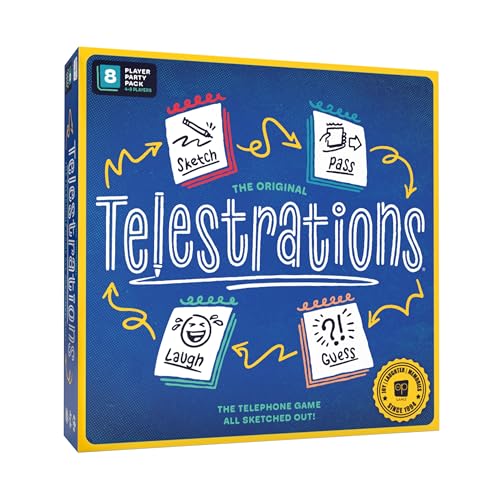
Telestrations 8 Player Party Game
Sketch a word, pass the book, guess the drawing, pass again. Chains mangle the original beyond recognition, and reading them out at the end is the payoff. Eight dry erase sketch books, markers and cloths come in the box, so nothing needs printing or refilling.
Pros
- No learning curve for guests who avoid board games
- Drawing skill is irrelevant and often funnier without it
- Dry erase books wipe clean for the next round
Cons
- Caps at eight players without a second copy
- Markers dry out when caps go missing

Just One Cooperative Party Game
One player guesses a secret word from clues everyone else writes down. Duplicate clues cancel before the guesser sees them, which turns the game into a group puzzle instead of a contest. Thirteen rounds take about twenty minutes from setup to score.
Pros
- Cooperative scoring keeps competitive guests calm
- An age 8 rating puts children and grandparents in one round
- Fits neatly between other activities at a gathering
Cons
- Seven player ceiling is low for a big party
- Tension fades once a group learns the word list
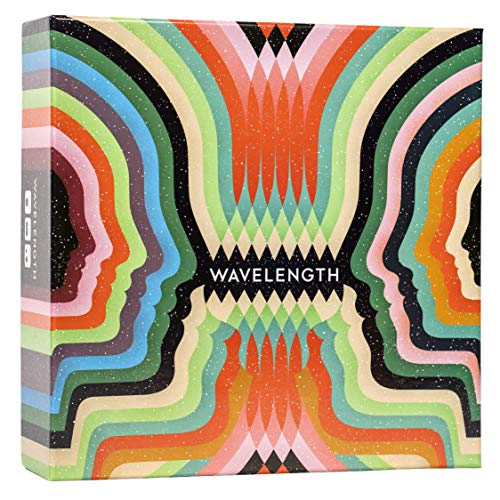
Wavelength Party Game by Palm Court
A hidden target sits somewhere on a spectrum such as cold to hot. One player gives a clue while their team turns the dial toward it. Arguing about whether lukewarm coffee counts as cold is the actual entertainment, and the dial unit survives repeated table use.
Pros
- Produces real discussion rather than one word answers
- Plays as a team game or a casual two player round
- Physical dial makes the reveal satisfying
Cons
- Sessions run longer than most games here
- Abstract spectrums confuse some first time players

Herd Mentality by Big Potato Games
Answer each question the way you expect most of the group to answer, then score by matching the majority. Being the lone original thinker earns the pink cow, and holding that cow blocks you from winning. Ten year olds follow it, adults still laugh at it, and twenty people play without splitting into teams.
Pros
- Handles a room of twenty as one group
- Content stays clean for mixed ages
- Written answers keep shy players in the game
Cons
- Rewards conformity, which frustrates contrarian players
- Question cards deplete faster with a big group

Monikers Party Game by CMYK
Each card set gets played three times: describe freely, then one word only, then silent acting. Repetition is the design, since by round three the room shares in-jokes about every card. Twenty people fit comfortably, which almost nothing else on this list manages.
Pros
- Built for crowded rooms rather than stretched to fit
- Escalating rounds build shared jokes across the night
- Acting round gets people off the sofa
Cons
- Some card references land badly with mixed ages
- Needs clear floor space for the acting round

Cards Against Humanity
A black card poses a prompt, everyone answers anonymously with a white card, and a rotating judge picks a winner. No skill is required, which is why it survives late evenings and absorbs people arriving mid game. Content is deliberately crude, so it belongs at an adult gathering and nowhere near a family table.
Pros
- Players join or leave mid game without disruption
- Nothing to remember after a long evening
- 600 cards in the base box keep prompts fresh
Cons
- Unsuitable for mixed ages or work gatherings
- Humor wears thin with the same group over time
Before you buy
What makes a party game work with a real crowd Three constraints apply at a party that never matter on a dedicated game night. Rules have to land in under two minutes, because half the room is talking. Rounds need to stay short, so guests can step out to the kitchen and rejoin. Player count must stretch, since the guest list is never what you planned. Codenames and Telestrations clear all three. A strategy game with a rulebook does not, however good it is on a quiet Tuesday.
Matching player count to your guest list Group size is the first filter. Just One caps at seven and Telestrations at eight, which fits a dinner party. Herd Mentality, Monikers and Cards Against Humanity all run to twenty. Codenames scales differently, by adding people to two teams rather than adding turns, so it stays fast as the room fills. Hosts whose crowds vary wildly should own one game from each bracket instead of hoping a single title covers everything.
Family, office or adults only: reading the room Content is where hosts get burned. Cards Against Humanity is explicitly adults only and will end an office party badly. Monikers includes references that land awkwardly across generations. Herd Mentality and Just One stay clean with children present. Codenames and Wavelength suit almost any group, coworkers included. When the guest list holds people you do not know well, open with the mildest content and let the room warm up.
Components, replay value and what wears out first Party games take abuse. Telestrations markers dry out when caps go missing, so buy spare fine tip markers early. Card driven games age differently. Once a regular group has seen most cards, Herd Mentality and Just One turn predictable, while Codenames stays fresh because the grid combination changes every deal. Games with a physical piece, like the Wavelength dial or the pink cow, get pulled off the shelf more often simply because they look interesting sitting on a table.
How they compare
| # | Model | Players | Best for | Score | Price |
|---|---|---|---|---|---|
| 1 | Codenames by Czech Games Edition | 2 to 8 or more in two teams | Best overall | 9.4 | Check price |
| 2 | Telestrations 8 Player Party Game | 4 to 8 | Best for mixed groups | 9.2 | Check price |
| 3 | Just One Cooperative Party Game | 3 to 7 | Best cooperative game | 8.9 | Check price |
| 4 | Wavelength Party Game by Palm Court | 2 to 12 | Best for conversation | 8.7 | Check price |
| 5 | Herd Mentality by Big Potato Games | 4 to 20 | Best for family game night | 8.5 | Check price |
| 6 | Monikers Party Game by CMYK | 4 to 20 | Best for large groups | 8.2 | Check price |
| 7 | Cards Against Humanity | 4 to 20 or more | Best for adults-only nights | 8.0 | Check price |
Good to know
What is the best party game for a large group?
Monikers, Herd Mentality and Cards Against Humanity all handle twenty players. Monikers keeps everyone active through team guessing instead of making people wait a turn, which is usually the difference between a crowd staying engaged and drifting off.
Which party game is easiest to teach?
Telestrations, because the instructions are draw, pass, guess, pass. Nobody needs them repeated. Codenames follows at around a minute, and its short rounds mean a confused player has it by the second game.
Are there good party games for families with kids?
Just One works from about age eight and rewards lateral thinking over vocabulary. Herd Mentality is rated ten and up with clean content. Both sidestep the reading speed problem that trips younger players in card driven games.
Codenames vs Wavelength: which is better for a party?
Codenames is faster, easier to teach and scales to more people. Wavelength produces better argument and conversation, which suits a smaller group around one table. Hosts with a mixed guest list get more nights out of Codenames.
Can party games work with only four people?
Yes. Codenames, Just One, Wavelength and Herd Mentality all play well at four, though team games lose some tension. Monikers and Cards Against Humanity need a bigger crowd before the humor builds.
Which party game keeps quiet guests involved?
Herd Mentality and Just One, because answers get written down rather than shouted. Nobody has to perform in front of the room. Monikers does the opposite and rewards people who enjoy an audience.
How do you handle guests who arrive late?
Pick games with short rounds or open membership. Cards Against Humanity absorbs arrivals mid game. Codenames finishes a round in fifteen minutes, so a latecomer waits briefly and joins a team. Avoid anything needing a fixed setup per player.
Is Cards Against Humanity appropriate for a work party?
No. Its content is deliberately offensive and rated seventeen and up. For an office gathering, Codenames, Just One or Herd Mentality create the same social effect without the risk.
Do party games still work without alcohol?
Most do. Codenames, Just One and Wavelength rely on thinking rather than looseness. Cards Against Humanity leans hardest on a rowdy mood and falls flattest at a sober table.
How many party games should a regular host own?
Three covers nearly everything: one fast team game for any size, one drawing or writing game for people who avoid board games, and one built for crowds. Codenames, Telestrations and Monikers together fill that spread.
Final word
Codenames is the one to buy first, since it teaches in a minute, stretches from four players to a full room, and finishes fast enough to replay all night. Hosts whose guests dislike anything resembling a board game should start with Telestrations instead. Add Monikers once the room regularly passes fifteen people, because it is the only pick here genuinely built for a crowd that size.
Rachel Simmons
Rachel previously worked in child-product retail and brings a practical, detail-first eye to gear reviews, focusing on safety standards, ease of use and the fine print that matters most for new caregivers.