How to Choose Potting Mix That Actually Keeps Plants Alive
FoxFarm Ocean Forest Potting Soil suits most vegetable and annual containers, thanks to its rich starting fertility and open, aerated texture. Espoma Organic Potting Mix works better for seedlings and houseplants that need a milder feed. Miracle-Gro Potting Mix is the easiest choice when a large planter needs several bags at once.
Buy FoxFarm Ocean Forest Potting Soil if most of your containers hold vegetables or annuals; its bark and perlite keep roots aerated even in large pots. Seedlings and houseplants do better in Espoma Organic Potting Mix, which carries a gentler nutrient charge. Filling several big planters at once? Miracle-Gro Potting Mix comes in bag sizes built for that job.
Potting mix looks simple until a bag that grows perfect tomatoes turns a succulent to mush. Labels blur the line between potting soil and garden soil too. We compared drainage components, starting fertility, base material, and what owners report about compaction after a full season to rank the seven below.
What we recommend

FoxFarm Ocean Forest Potting Soil
Earthworm castings, bat guano and crab meal give this mix enough starting fertility to skip feeding for several weeks. Perlite and bark keep the texture open, so roots get air even in five gallon containers. Container tomatoes and peppers respond fastest to it, according to grower reports.
Pros
- Rich enough to skip feeding early in the season
- Stays aerated instead of compacting over time
- Strong choice for container vegetables and annuals
Cons
- Too potent for seedlings and many succulents
- Heavier per bag than lighter peat mixes
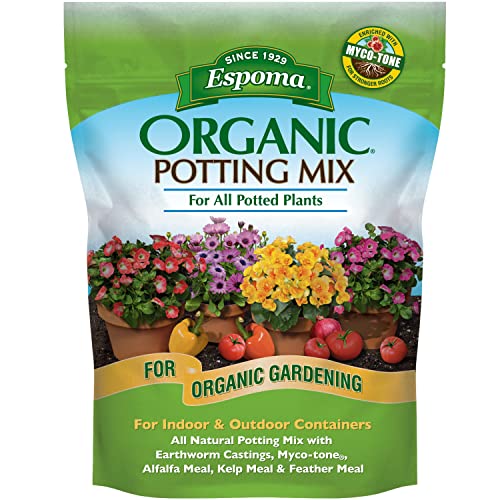
Espoma Organic Potting Mix
Myco-tone mycorrhizae ships blended into this peat and humus base, helping new roots establish faster. Alfalfa, kelp and feather meal supply a mild nutrient charge that will not scorch seedlings. Dry sections rewet more readily than dense peat-only mixes, based on the product listing.
Pros
- Mild enough for seedlings and delicate houseplants
- Mycorrhizae speed up root establishment
- Rewets easily once it dries out
Cons
- Needs supplemental feeding sooner than richer mixes
- Bag sizes run small for big planters

Miracle-Gro Potting Mix
Slow release fertilizer blended into this peat, forest product and coir base feeds plants for roughly three months. Large bag sizes cut down on trips for anyone filling patio planters or raised beds. Shaded pots can hold more water than ideal, so mixing in extra perlite helps in low light spots.
Pros
- Sold in bag sizes built for large planters
- Included feed covers most of a growing season
- Consistent quality from bag to bag
Cons
- Retains more water than ideal in shaded containers
- Synthetic fertiliser rules it out for organic growers
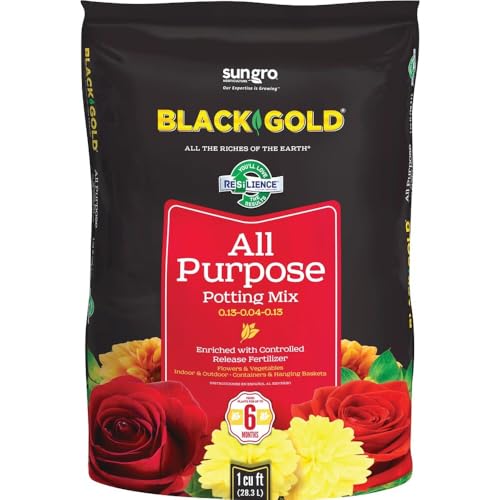
Black Gold All Purpose Potting Soil
Pumice and perlite work through this peat and compost base without floating to the surface like some lighter additives. A mild organic fertiliser charge supports general growth without overwhelming small pots. Finer texture than bark heavy mixes makes it easier to fill narrow containers evenly.
Pros
- Works across most container plant types
- Fine texture suits small pots and tight spaces
- Pumice keeps drainage open without washing out
Cons
- Not rich enough for heavy feeders without added fertiliser
- Harder to find than the largest national brands

Burpee Organic Premium Potting Mix
Coconut coir replaces peat as the base here, so bone dry mix rewets in minutes instead of repelling water. Organic plant food mixed in feeds new growth for about three months. Patio vegetable growers report steadier moisture levels than peat based mixes deliver.
Pros
- Coir base rewets without the peat repellency problem
- Organic feed carries plants through early growth
- Lighter to carry than bark heavy mixes
Cons
- Holds less air than mixes with more bark content
- Volume settles noticeably by the end of a season

PRO-MIX Premium Potting Mix
Commercial growers use formulas close to this peat and perlite blend, and the low nutrient charge hands feeding control entirely to the grower. Mycorrhizae included in the bag support cuttings as they root. Texture stays consistent from bag to bag, which matters for anyone running a set feeding schedule.
Pros
- Consistent texture between bags
- Low starting nutrients give full feeding control
- Strong aeration for cuttings and seedlings
Cons
- Established plants need feeding almost immediately
- Dry peat repels water until it is first soaked

Hoffman Organic Cactus and Succulent Soil Mix
Sand and perlite blended into reed sedge peat let water pass through fast instead of pooling around roots. Cacti, jade plants and snake plants that rot in standard mixes do better here. Very rot prone species often still need extra pumice mixed in, according to grower feedback.
Pros
- Drains quickly enough to prevent most root rot
- Nutrient level matches what succulents actually need
- Sold in bag sizes for one pot or several
Cons
- Rot prone species often need extra grit added
- Denser and heavier to carry than peat only mixes
How they stack up
| # | Model | Base | Best for | Score | Price |
|---|---|---|---|---|---|
| 1 | FoxFarm Ocean Forest Potting Soil | Aged forest products and sphagnum peat | Best overall | 9.4 | Check price |
| 2 | Espoma Organic Potting Mix | Sphagnum peat moss and humus | Best for houseplants and seedlings | 9.2 | Check price |
| 3 | Miracle-Gro Potting Mix | Peat, processed forest products and coir | Best for large containers | 9.0 | Check price |
| 4 | Black Gold All Purpose Potting Soil | Canadian sphagnum peat moss and compost | Best all round balance | 8.8 | Check price |
| 5 | Burpee Organic Premium Potting Mix | Coconut coir and compost | Best for vegetable containers | 8.6 | Check price |
| 6 | PRO-MIX Premium Potting Mix | Sphagnum peat moss | Best for propagation | 8.3 | Check price |
| 7 | Hoffman Organic Cactus and Succulent Soil Mix | Reed sedge peat, sand and perlite | Best for succulents | 8.0 | Check price |
What matters most
Is potting mix the same as garden soil? No. Garden soil is built to be dug into a bed, where worms and weather keep it loose. Pack that same soil into a container and it compacts into a dense block within weeks. Roots lose access to air, and water sits at the bottom instead of draining through. Potting mix skips real soil entirely, using peat or coir for structure and bark, perlite or pumice for air pockets. Check the bag before buying; if it never mentions containers, it probably was not made for one.
Drainage or moisture retention: which matters more in a pot? Most new gardeners chase moisture retention, worried about pots drying out too fast. Root rot from soggy soil kills far more container plants than drought does, especially in shaded spots and plastic pots. Look through the bag for visible perlite or pale pumice chunks. Add more if you barely see any; a handful per bucket of mix costs little and changes drainage dramatically. FoxFarm Ocean Forest and Black Gold both show plenty of drainage material through the bag.
How much fertility does a container plant actually need? Vegetables and annuals want a strong start. FoxFarm Ocean Forest carries enough nutrients to skip feeding for weeks, which suits tomatoes and peppers well. That same richness burns seedlings and stresses succulents. PRO-MIX takes the opposite approach, with a low starting charge that hands feeding control back to the grower. Match the bag to the plant: rich mix for hungry vegetables, mild mix for seedlings and houseplants, low nutrient mix for anything prone to rot.
Peat or coir: which one changes how you water? Peat holds water well right up until it dries out completely. Once that happens, it turns water repellent, and water runs down the inside of the pot instead of soaking in. Coir behaves differently. Burpee Organic Premium Potting Mix uses a coir base that rewets within minutes, even after going bone dry. Gardeners who water inconsistently, or travel often, tend to get better results from coir based mixes. A peat mix that has dried hard can still be saved; set the pot in a shallow tray of water for thirty minutes and let it draw moisture from below.
Frequently asked questions
Can I reuse potting mix from last year?
Yes, but refresh it first. Old mix loses structure and nutrients over a season. Blend it roughly half and half with a fresh bag, then stir in compost or a slow release fertiliser. Skip reusing mix from any plant that had root disease or fungus gnats; start that pot with a fresh bag instead.
How often do container plants need feeding?
Starting fertility decides the schedule. FoxFarm Ocean Forest supports hungry plants for four to six weeks before liquid feed becomes necessary. PRO-MIX, with its low starting charge, needs feeding within a week or two. Water drains nutrients out of containers fast, so light, frequent feeding usually beats one heavy dose.
Does a layer of gravel at the bottom of a pot improve drainage?
No, and the idea persists despite being backwards. Gravel actually raises the point where water collects in the mix above it, making the root zone wetter rather than drier. Choose a pot with real drainage holes, fill it entirely with mix, and work perlite through the whole volume instead of layering gravel underneath.
What is the best potting mix for indoor houseplants?
Espoma Organic Potting Mix or Black Gold All Purpose Potting Soil, both mild enough to avoid overfeeding. Skip mixes built for outdoor vegetables; their fertiliser charge runs stronger than most houseplants want. Aroids and other plants that crave extra airflow benefit from stirring in orchid bark or perlite.
Does potting mix go bad in storage?
It will not spoil the way food does, but stored bags dry out and lose their fertiliser charge over time. Damp storage invites fungus gnats and mould. Keep bags sealed and off wet ground, and break apart compacted lumps before use. Slow release fertiliser already in the bag fades within a year or two.
Is potting mix the same as seed starting mix?
No, the two serve different jobs. Seed starting mix stays finer and lighter, with almost no added nutrients, because germinating seeds need air and moisture more than food. Potting mix runs coarser and carries more fertility. Sowing seeds directly into a rich mix like Ocean Forest often causes poor germination and burnt roots.
Why does water run straight through my pot without soaking in?
Dry peat turns water repellent once it fully dries out. Set the pot in a shallow tray of water and let it pull moisture up from below for twenty to thirty minutes. Blending in coir, or switching to a coir based mix like Burpee Organic Premium, prevents the problem from recurring.
Is organic potting mix actually better than conventional?
It depends on the goal, not a fixed ranking. Espoma and Burpee feed through slower biological processes, gentler on edibles and better for growers avoiding synthetics. Conventional mixes with slow release fertiliser, like Miracle-Gro, behave more predictably season to season. Both grow healthy plants when matched to the right container.
How much potting mix do I need to fill a container?
A quick formula works better than guessing. Multiply the pot’s radius squared by pi, then by its height, to get cubic inches, and divide by 1728 for cubic feet. A typical 14 inch patio pot takes roughly one and a half cubic feet, close to one standard bag.
The verdict
FoxFarm Ocean Forest Potting Soil earns the top spot for anyone filling containers with vegetables, herbs or hungry annuals; its fertility and aeration handle most of the early season work. Seedlings and houseplants fare better in Espoma Organic Potting Mix, which will not overwhelm young roots. Keep a bag of Hoffman Organic Cactus and Succulent Soil Mix on hand too if any pots hold succulents or cacti.
Sierra Daniels
Sierra's background is in landscape design and nursery retail. She focuses on lawn and garden equipment, outdoor furniture and gear durability, weighing published specs against how materials actually hold up outside.


