Portable RV Water Filters: Sediment, Flow and Odor Fixes
Camco’s TastePURE RV/Marine Water Filter handles most campground hookups at a fair size and flow rate. Rusty or high-sediment sites call for the Clearsource Premium RV Water Filtration System and its two-stage design. Weekend campers watching cost should look at the Culligan RV-800.
Camco’s TastePURE RV/Marine Water Filter covers the basics well, cutting chlorine taste and sediment at a size that fits most hose compartments. Rusty or high-sediment water calls for the Clearsource Premium RV Water Filtration System, since its two-stage housing catches more before water reaches the tank. Budget-focused campers should look at the Culligan RV-800, which trades some capacity for a lower cost.
Municipal campground taps and rural well hookups deliver very different water, and one filter rarely handles both well. Flow rate matters as much as filtration, since a filter that chokes water pressure doubles the time it takes to fill a tank. We compared stated micron ratings, gallon capacity, flow rate and connection type, then checked owner reports of pressure drop, filter lifespan and how well each handled sulfur smell.
Before you buy
What an RV water filter actually removes Most inline filters use activated carbon, which reduces chlorine taste, odor and some sediment. Two-stage systems add a dedicated sediment pre-filter, catching rust and grit before it reaches the carbon stage. Neither type removes bacteria or viruses on its own, so questionable water sources still need boiling or a dedicated purification step.
Single-stage or two-stage filtration A single-stage inline filter, like the Camco TastePURE, suits municipal campground taps with generally clean water. A two-stage system, like the Clearsource, earns its keep at rural or well-fed sites where sediment and odor run higher. Extra housing and cost only pay off if the water source genuinely needs it.
Flow rate and filling a freshwater tank A narrow internal channel slows tank filling noticeably, which matters when hookup time at a site is limited. Filters marketed for high flow, like the Watts RV Pro-HD, prioritize speed over the deepest filtration. Balance flow rate against water quality needs rather than assuming faster is always better.
When to replace an RV water filter Most carbon filters carry a gallon rating, commonly 15,000 to 20,000 gallons, though heavy sediment shortens that lifespan. A visible drop in water pressure or the return of chlorine taste both signal it is time to swap the cartridge. Sticking to a seasonal schedule avoids guessing based on taste alone.
The best picks, ranked

Camco TastePURE RV/Marine Water Filter
A carbon filtration core cuts chlorine taste and odor from standard campground hookups without a major drop in flow rate. Its compact inline body fits most hose storage bins alongside a regular hose. Typical municipal water poses no issue, though heavy sediment clogs it faster than a two-stage design would.
Pros
- Reduces chlorine taste effectively
- Compact size fits most hose compartments
- Long rated capacity for the price
Cons
- Clogs faster in high-sediment water
- No pre-filter stage for visible particles
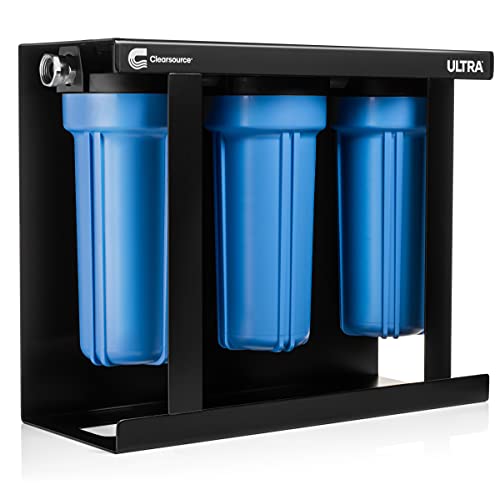
Clearsource Premium RV Water Filtration System
Two filter housings run in sequence, a sediment stage followed by a carbon stage, catching more than a single inline filter can. A mounted bracket keeps it stable rather than dangling off a hose bib. Extra cost and storage space are the trade, one that pays off mainly for full-time RVers hitting varied water sources.
Pros
- Two-stage design handles heavier sediment
- Bracket mounting keeps the unit stable
- Cartridges are replaceable rather than whole-unit disposal
Cons
- Larger footprint needs dedicated storage
- Higher upfront cost than inline filters
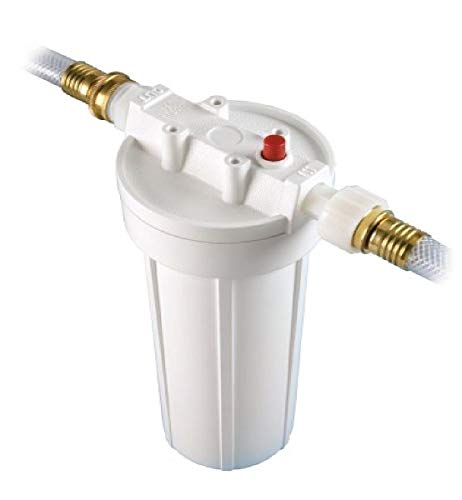
Culligan RV-800 Exterior Water Filter
Standard replacement cartridges fit Culligan’s exterior housing, keeping ongoing cost low after the first purchase. Sediment and chlorine taste drop to acceptable levels for typical campground stops. Basic plastic makes up the housing, functional but a step below metal-bracket systems in feel.
Pros
- Lower cost than multi-stage systems
- Replacement cartridges widely available
- Adequate for typical municipal hookups
Cons
- Plastic housing feels less durable
- Less effective on heavy sediment water

Camco EVO Premium Water Filter
A denser carbon block than Camco’s standard TastePURE pulls more taste and odor compounds out before water reaches the tank. Its flow indicator shows when the filter needs replacing instead of leaving that to a guess. Full pressure flow runs a bit slower here than on the basic TastePURE.
Pros
- Denser carbon block improves taste filtration
- Flow indicator signals replacement timing
- Fits the same compartments as basic filters
Cons
- Slightly slower flow than basic single-stage filters
- Costs more than the standard TastePURE

Hydro Life HL-200 Exterior RV Water Filter
KDF media blended with carbon targets sulfur smell and heavy metals more aggressively than plain carbon filters, useful at rural or well-fed campground taps. Its exterior housing mounts near the water inlet instead of sitting inline on the hose. Basic tools are required for filter changes, not a simple twist.
Pros
- KDF media targets sulfur and metals well
- Suited to well or lake-fed campgrounds
- Housing mounts securely near the inlet
Cons
- Cartridge changes need basic tools
- Overkill for clean municipal hookups
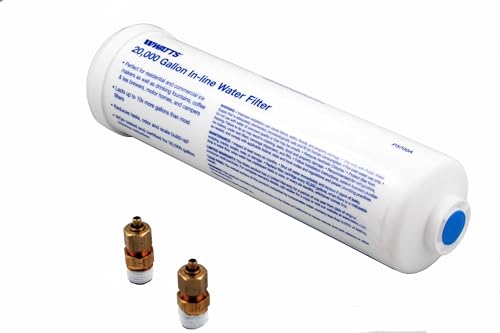
Watts RV Pro-HD Inline Water Filter
A wider internal channel keeps pressure drop low when filling a large freshwater tank quickly. Chlorine and basic sediment come out competently. Filtration runs less thorough than a two-stage system, so it suits known-clean municipal sources more than questionable rural taps.
Pros
- Maintains flow rate when filling large tanks
- Simple inline design needs no mounting
- Handles standard municipal water well
Cons
- Lower gallon rating than premium filters
- Less effective on heavier sediment or odor

AQUACREST RV Inline Water Filter Replacement
AQUACREST builds a direct-fit alternative to name-brand cartridges at a lower cost per filter, useful for anyone swapping filters every season. Chlorine and basic sediment filtration match mid-range name brands. No flow indicator comes included, keeping the design straightforward compared with pricier options.
Pros
- Lower cost per filter than name brands
- Compatible with common housing standards
- Adequate filtration for routine campground water
Cons
- No flow indicator included
- Build quality varies more between batches
Compared at a glance
| # | Model | Filtration | Best for | Score | Price |
|---|---|---|---|---|---|
| 1 | Camco TastePURE RV/Marine Water Filter | Carbon, single stage | Best overall | 9.3 | Check price |
| 2 | Clearsource Premium RV Water Filtration System | Sediment plus carbon, two stage | Best for heavy sediment | 9.0 | Check price |
| 3 | Culligan RV-800 Exterior Water Filter | Sediment and carbon cartridge | Best budget | 8.7 | Check price |
| 4 | Camco EVO Premium Water Filter | Carbon block, single stage | Best for taste and odor | 8.5 | Check price |
| 5 | Hydro Life HL-200 Exterior RV Water Filter | KDF and carbon blend | Best for well and lake sources | 8.3 | Check price |
| 6 | Watts RV Pro-HD Inline Water Filter | Sediment and carbon, single stage | Best for high flow demand | 8.1 | Check price |
| 7 | AQUACREST RV Inline Water Filter Replacement | Carbon and sediment, single stage | Best value replacement | 8.0 | Check price |
Common questions
Do I really need a water filter for my RV?
It is not strictly required, but campground water quality varies enough that most RVers use one to reduce chlorine taste, sediment and odor before it reaches tanks and faucets.
What is the difference between an RV filter and a marine filter?
Many filters are rated for both uses, since the core filtration media is similar. Hose fitting size and housing design suited to how each is typically mounted make up the main differences.
Can an RV water filter remove bacteria?
Standard carbon and sediment filters do not remove bacteria or viruses. A dedicated purification stage or boiling is needed for water from questionable or untreated sources.
How often should I replace my RV water filter?
Follow the gallon rating on the cartridge, typically 15,000 to 20,000 gallons, and replace sooner if flow slows or taste returns. Heavy sediment use shortens the interval.
Is a two-stage filter worth the extra cost?
It is worth it for full-time RVers or anyone drawing from wells and rural taps with visible sediment or sulfur smell. Occasional campers on municipal hookups often do fine with a single-stage inline filter.
Will a water filter slow down my hose flow?
Some pressure drop is normal with any filter, more noticeable with denser carbon block media. Filters marketed for high flow minimize this, trading some filtration depth for speed.
What size fitting do RV water filters use?
Nearly all portable RV filters use a standard garden hose thread, so they connect directly between a campground spigot and the RV’s fresh water hose without adapters.
Best RV water filter for well water at campgrounds?
The Hydro Life HL-200 targets sulfur odor and heavy metals more directly than standard carbon filters, making it a better fit for well-fed or rural campground taps.
RV water filter vs whole-house filter, what’s different?
Whole-house filters serve a fixed home plumbing system and handle far higher volume. Portable RV filters connect inline to a single hose, are sized for hose storage, and swap out in minutes at a campsite.
Final word
Go with the Camco TastePURE RV/Marine Water Filter for typical campground hookups, since it balances filtration and flow rate at a reasonable size. Full-time travelers hitting varied water sources should upgrade to the Clearsource Premium system for its two-stage filtration. Weekend campers on a budget can rely on the Culligan RV-800 without missing much on municipal water.
Tony Russo
Tony trained as an automotive technician and spent years in service and parts retail before moving into writing. He focuses on garage tools, car care products and accessories from a hands-on maintenance perspective.


