How to choose a plyo box: wood, foam or steel
Yes4All’s 3-in-1 Wooden Plyo Box fits most home gyms, since one flippable unit gives 20, 24 and 30 inch heights. Titan Fitness uses thicker plywood for larger athletes training daily. Anyone learning box jumps should start on the BalanceFrom Soft Foam Plyometric Jump Box instead.
Yes4All’s 3-in-1 Wooden Plyo Box covers the widest range of lifters in one purchase. Flip it and you get 20, 24 or 30 inches, plus a flat top that takes step ups and box squats. Assembly is the catch. Bolts work loose over the first few sessions, and a loose box wobbles exactly when you land on it.
Box jumps punish equipment choices. Hard plywood edges take skin off a shin when you miss, light foam slides on rubber flooring, and a box set too tall teaches a deep tuck rather than a higher jump. We compared height sets, landing surfaces, footprint and panel thickness. Owner feedback on assembly quality and how each box holds up to repeated impact settled the order.
What to look for
What to look for in a plyo box Three things decide whether a box gets used or gathers dust. Height range comes first, since one fixed height turns either too easy or too intimidating within months. Stability follows: a wide base and grippy feet stop the creep that ends in a shin strike. Landing surface closes the list. Plywood and foam create completely different risk profiles for the same movement, and that choice matters more than brand.
Wood vs foam vs steel plyo boxes Plywood is the default because it stays rigid, takes box squats and costs little to replace. Foam trades a firm takeoff for forgiveness, which is why coaches hand it to beginners and youth athletes. Steel, as on the REP Fitness box, wins in damp garages where plywood eventually swells and separates. Pick foam when fear limits you, wood when performance does, and steel when your storage space runs humid.
Which plyo box height should you train on Most adults jump between 20 and 24 inches, exactly where the standard 3-in-1 boxes begin. Reaching for 30 inches early produces a deep knee tuck rather than a higher jump, which trains nothing useful. Step ups and lateral hops belong in the 6 to 18 inch range, and that is where stackable sets like the ProsourceFit blocks earn a place. Step down between reps; jumping down adds impact without adding output.
Plyo boxes for small spaces and shared floors A 3-in-1 wooden box claims roughly two square feet permanently and stays where you put it. Look underneath before buying. Bare concrete transmits both noise and shock, so a rubber mat protects the slab and the neighbours below. Foam boxes slide under a bench or stack in a closet, which suits an apartment or a shared room. Frequent moves between rooms make weight the deciding spec, not height range.
What we recommend

Yes4All 3-in-1 Wooden Plyo Box
One box rotates to give 20, 24 and 30 inches, which covers a household training at different levels. Laminated plywood panels bolt together with the supplied hardware, and a wide base keeps it planted under step ups. Owners report retightening the bolts after about a month of impact work.
Pros
- Three heights inside a single footprint
- Flat top handles box squats and dips too
- Cut handles make repositioning a one person job
Cons
- Bolts need retightening after heavy use
- Hard edges are unforgiving on a missed jump
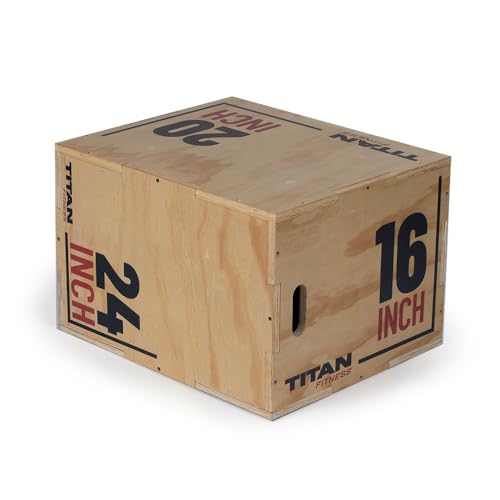
Titan Fitness 3-in-1 Wood Plyometric Box
Heavier plywood panels show up as less flex underfoot when a larger athlete lands. Height options match the standard 20, 24 and 30 inch set, but the added mass stops the box skidding across rubber flooring. Weight is the tradeoff, so plan on it living in one room.
Pros
- Minimal panel flex under heavier lifters
- Mass resists sliding during dynamic sets
- Panels sand and seal well for smoother edges
Cons
- Awkward to move once assembled
- Unfinished edges can splinter until sanded

REP Fitness Metal Plyo Box
Powder coated steel ignores the humidity swings that swell and delaminate plywood over a few seasons. Flipping the frame sets 20, 24 or 30 inches, and a non slip pad replaces the bare wood landing surface. Open sides keep the carry weight down compared with a solid wooden build.
Pros
- Unaffected by damp garage conditions
- Rubber feet stop creep on bare concrete
- Open frame carries easier than solid ply
Cons
- Steel edges hurt more than wood on a miss
- Frame rings loudly on hard landings

BalanceFrom Soft Foam Plyometric Jump Box
High density foam under a wipe clean vinyl shell turns a missed rep into bruised pride instead of a bleeding shin. Velcro side panels lock the three faces together so nothing shifts mid set. Returning from an ankle injury, this is where jump mechanics get rebuilt without fear of the edge.
Pros
- Removes the injury fear that stalls beginners
- Vinyl wipes down after group or class use
- Light enough for one person to carry upstairs
Cons
- Compresses slightly, so takeoff feels softer
- Low weight lets it slide on smooth flooring

Everyday Essentials 3-in-1 Wood Plyometric Jump Box
Nothing here goes beyond the basic plywood box, and that is the appeal. You still get the standard 20, 24 and 30 inch heights plus a flat top that handles the same movements as heavier builds. Panels arrive pre drilled, so owners report finishing assembly in about half an hour with a wrench.
Pros
- Same three heights as thicker wooden boxes
- Pre drilled panels cut assembly time
- Easy to sand and seal to your own finish
Cons
- Thinner panels flex under heavier athletes
- Raw surfaces need sealing before regular use

ProsourceFit Foam Plyometric Jump Box Set
Low foam blocks suit step ups, lateral hops and rehab progressions where a 30 inch box has no use. Stacking moves height in small increments instead of six inch jumps. Circuit training is the natural home, since a station height changes in seconds between rounds.
Pros
- Small increments allow genuine progressive loading
- Low profile fits lateral and single leg work
- Stores flat against a wall between sessions
Cons
- Too low for serious box jump training
- Stacked blocks shift under aggressive landings

Giantex 3-in-1 Soft Foam Plyometric Box
Three orientations and a vinyl shell put Giantex in the same category as the BalanceFrom, at a lower foam density. Landings compress a little further as a result. For occasional jump work at home rather than daily conditioning, that softer feel rarely changes anything.
Pros
- Arrives ready to use with no assembly
- Handles sewn into the cover for carrying
- Safe landing surface for nervous first timers
Cons
- Softer foam compresses more on landing
- Cover seams wear faster under daily use
Side by side
| # | Model | Heights | Best for | Score | Price |
|---|---|---|---|---|---|
| 1 | Yes4All 3-in-1 Wooden Plyo Box | 20, 24 and 30 inches | Best overall | 9.4 | Check price |
| 2 | Titan Fitness 3-in-1 Wood Plyometric Box | 20, 24 and 30 inches | Best for heavy daily use | 9.2 | Check price |
| 3 | REP Fitness Metal Plyo Box | 20, 24 and 30 inches | Best for garage gyms | 9.0 | Check price |
| 4 | BalanceFrom Soft Foam Plyometric Jump Box | 20, 24 and 30 inches | Best for beginners | 8.8 | Check price |
| 5 | Everyday Essentials 3-in-1 Wood Plyometric Jump Box | 20, 24 and 30 inches | Best value | 8.6 | Check price |
| 6 | ProsourceFit Foam Plyometric Jump Box Set | Stackable foam blocks | Best for step ups and low box work | 8.3 | Check price |
| 7 | Giantex 3-in-1 Soft Foam Plyometric Box | 20, 24 and 30 inches | Best entry level foam box | 8.0 | Check price |
Common questions
What height plyo box should a beginner use?
Start at 20 inches, or lower on a stackable foam block. Judge it by landing position: you should land in roughly the same squat depth you jumped from. Hard knee tucking to clear the edge means the box is too tall.
Are foam plyo boxes as good as wooden ones?
For learning and safety, foam is better. For takeoff feel and stability under a loaded barbell, wood wins because it does not compress. Plenty of home gyms keep both, using foam for jumps and plywood for step ups.
Is a 3-in-1 plyo box worth it?
For most homes, yes. Rotating one unit between 20, 24 and 30 inches replaces three boxes and three footprints. Flipping mid workout costs a few seconds and needs clear floor space around it.
How much weight can a plyo box hold?
Wooden and steel boxes from established brands support an adult plus a loaded barbell for box squats. Foam boxes are rated for body weight jumping, not loaded static work. Check the listing before attempting weighted step ups on foam.
Do you need a plyo box for CrossFit workouts?
Box jumps and step ups run through the benchmark workouts, with 24 inches standard for men and 20 for women. A 3-in-1 wooden box covers both, and the 30 inch face gives you somewhere to progress.
Should you build a plyo box instead of buying one?
Building gets you exact dimensions and thicker sheet goods. Savings rarely materialise once plywood and hardware are added up, and a DIY box still needs sanding and sealing. Buy if your weekend has better uses.
Will a plyo box damage my floor?
Repeated landings push shock straight into whatever sits underneath. Lay a rubber mat on concrete or hardwood first. Rubber feet, like those on the REP steel box, also prevent the scuffing that bare panel corners leave behind.
Can you do box squats on a soft foam box?
It works poorly. Foam compresses under a loaded bar, which changes your training depth and destabilises the pause. Reserve plywood or steel for box squats and keep foam for jump work.
Which plyo box is best for a garage gym?
The REP Fitness Metal Plyo Box, because powder coated steel shrugs off the humidity that warps plywood over a few seasons. Rubber feet also matter on concrete, where a sliding box is the most common cause of a scraped shin.
Our pick
Buy the Yes4All 3-in-1 Wooden Plyo Box if one purchase has to cover jumps, step ups and box squats at three heights. Larger athletes training daily should move up to the Titan Fitness version, where thicker plywood removes the flex you can feel through the sole of a shoe. Anyone coaching a nervous beginner, or already carrying a shin scar, should start on the BalanceFrom foam box and switch to wood once the landing stops feeling risky.
Derek Holt
Derek has a background coaching recreational and amateur athletes and has worked the sales floor at specialty fitness retailers. He focuses on equipment durability, ergonomics and realistic use cases rather than marketing claims.