How to Pick a Patio Heater for Windy Backyards
Amazon Basics Commercial patio heater leads this list with 46,000 BTU output and a weighted, stable base. Hiland HLDS01 delivers dependable propane warmth on any patio, and the Dr Infrared electric model suits covered spaces where an open flame will not work.
Amazon Basics Commercial patio heater suits most patios best, pairing 46,000 BTU output with a steady, weighted base. Hiland HLDS01 follows close behind for dependable propane warmth and easy repositioning. Covered porches favor the Dr Infrared electric model instead, since it skips the open flame entirely.
A tippy stand or a weak burner leaves a patio cold and the owner uneasy, and specs alone rarely reveal which units wobble. Electric heaters suited to a porch fall flat in an open, windy yard, and vice versa. We compared heat output in BTU or watts, base stability, fuel type and safety shutoffs across freestanding propane, tabletop and electric designs, then checked those specs against patterns owners report.
The top picks, ranked

Amazon Basics Commercial Patio Heater
46,000 BTU comes from a full-height propane tower here, backed by a weighted base for stability. Owners report quick warming across a wide area, and the reservoir base adds ballast against tipping. Strong wind still calls for securing or storing any tall propane unit, this one included.
Pros
- Strong 46,000 BTU heat output
- Weighted base improves overall stability
- Anti-tilt shutoff adds a safety layer
Cons
- Tall profile catches strong wind
- Requires a standard propane tank

Hiland HLDS01 Propane Patio Heater
A wide reflector and included wheels define this long-running propane tower, making repositioning simple. Dependable ignition and even heat spread show up repeatedly in owner reports. Covering the unit between uses keeps the powder-coated finish looking newer for longer.
Pros
- High 48,000 BTU heat output
- Wheels make repositioning genuinely easy
- Wide reflector spreads heat evenly
Cons
- Finish needs a cover to stay clean
- Tall design stays wind-sensitive

Dr Infrared Heater Electric Patio Heater
No flame, ash or fuel tank comes with this infrared heater, which suits covered patios and porches well. Instant warmth arrives at the push of a remote, and owners note quiet operation throughout. An outlet is required, and the heated zone runs smaller than a large propane tower covers.
Pros
- Instant flameless infrared heat output
- No fuel tank or ash to manage
- Remote control with quiet operation
Cons
- Needs a nearby power outlet
- Heats a smaller zone than propane towers
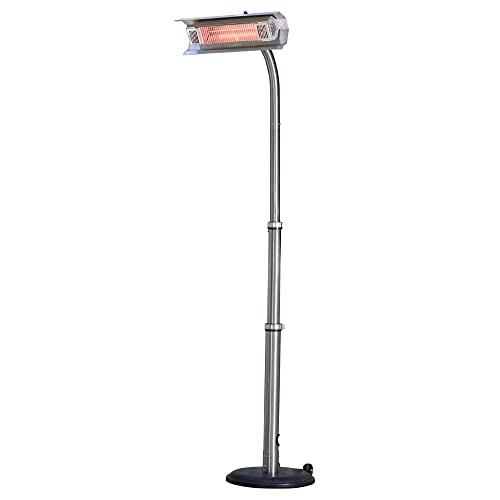
Fire Sense Stainless Patio Heater
Corrosion resistance pairs with a solid 46,000 BTU burner and piezo ignition here, in a stainless build. Coastal and humid climates suit this finish especially well according to owners. Exposed, windy spots benefit from the optional weight ring, since the base runs standard diameter.
Pros
- Corrosion-resistant stainless steel build
- Reliable piezo push-button ignition
- Solid 46,000 BTU heat output
Cons
- Benefits from an added weight ring
- Heavier to move without wheels
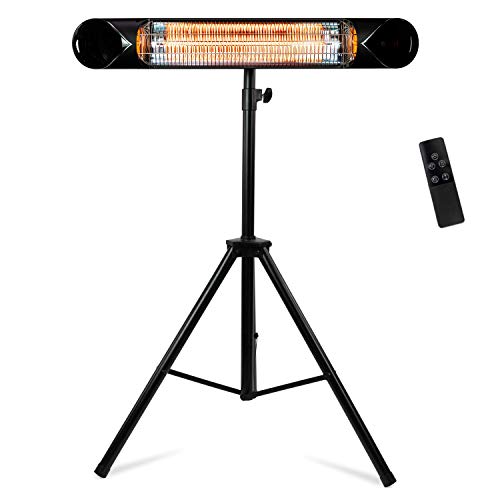
Briza Tabletop Patio Heater
A small propane canister powers this compact unit, designed to sit on a table for close-range warmth. Intimate settings and small balconies suit it well, according to owners. Lower output means it takes the chill off rather than heating an entire open patio.
Pros
- Compact size fits tables and balconies
- Runs on a small propane canister
- Anti-tilt shutoff built in for safety
Cons
- Lower output than full-size towers
- Small canister needs frequent swaps
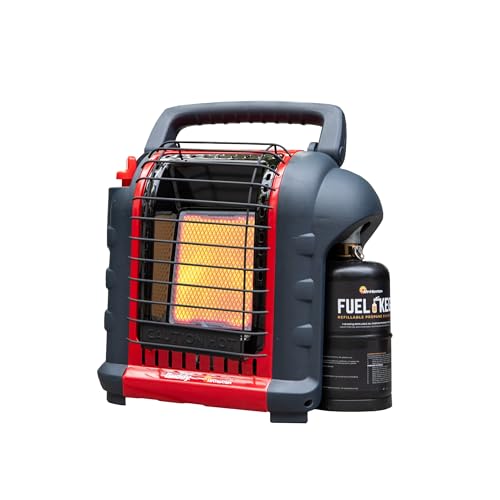
Mr Heater MH9BX Buddy Portable Heater
Small propane cylinders power this rugged, radiant heater, built with low-oxygen and tip-over shutoffs. Patios, campsites and workshops all get use from it, per owner reports. A smaller heating radius than a full tower comes with the portability, and it needs well-ventilated space to run.
Pros
- Highly portable radiant heat source
- Low-oxygen and tip-over safety cutoffs
- Two adjustable heat settings available
Cons
- Smaller heating radius than full towers
- Requires good ventilation to operate

EAST OAK Propane Patio Heater
Full-height warmth comes at an approachable price here, backed by a weighted base and simple assembly. Owners find it a solid value that heats a good radius. Finish and components feel a step below premium stainless units over the long term.
Pros
- High output at a friendly price
- Weighted base aids overall stability
- Straightforward assembly process
Cons
- Finish trails premium stainless rivals
- Wind-sensitive like most tall towers
Before you buy
Should I buy a propane or an electric patio heater? Propane towers deliver high BTU output and work anywhere without an outlet, making them the default for open patios. An open flame and a tank come with that convenience, though. Electric infrared heaters warm instantly with no fuel or fumes, better suited to covered porches and enclosed spaces. Match fuel type to where the heater will actually run, and whether power sits nearby.
How many BTU does a patio heater actually need? Freestanding propane towers typically put out 46,000 to 48,000 BTU, enough to warm a wide radius. Electric units around 1,500 watts and tabletop propane heaters cover a tighter zone instead. A small tabletop unit will not heat a large open deck, so space size should drive the output decision. More BTU adds comfort in cold or breezy conditions.
What stability and safety features matter most? Tall towers run top-heavy, so a weighted or reservoir base paired with an anti-tilt automatic shutoff prevents most accidents. Portable and tabletop units need tip-over cutoffs of their own, and gas heaters used in sheltered areas benefit from low-oxygen sensors. No patio heater should run unattended, and all of them need clearance from furniture, awnings and foot traffic.
How do materials and wind affect long-term upkeep? Stainless steel resists corrosion best in humid or coastal climates, while powder-coated steel costs less but needs a cover to slow rust. Tall towers catch wind easily, so a sheltered corner reduces how often you need to secure or store one. Cleaning the burner and reflector occasionally keeps any patio heater running reliably for longer.
Compared at a glance
| # | Model | Fuel type | Best for | Score | Price |
|---|---|---|---|---|---|
| 1 | Amazon Basics Commercial Patio Heater | Propane | Best overall | 9.4 | Check price |
| 2 | Hiland HLDS01 Propane Patio Heater | Propane | Best propane tower | 9.2 | Check price |
| 3 | Dr Infrared Heater Electric Patio Heater | Electric infrared | Best electric | 9.0 | Check price |
| 4 | Fire Sense Stainless Patio Heater | Propane | Best mid-size propane | 8.8 | Check price |
| 5 | Briza Tabletop Patio Heater | Propane canister | Best tabletop | 8.6 | Check price |
| 6 | Mr Heater MH9BX Buddy Portable Heater | Portable propane | Best portable | 8.3 | Check price |
| 7 | EAST OAK Propane Patio Heater | Propane | Best value tower | 8.1 | Check price |
Frequently asked questions
What type of patio heater works best?
It depends on the space: propane towers suit open patios since they need no outlet, while electric infrared heaters fit covered porches where an open flame is impractical. Tabletop and portable units cover smaller or on-the-go settings instead.
How many BTU do I need for a patio heater?
Open patios do well with a full-height tower in the 46,000 to 48,000 BTU range, covering a wide seating area. Smaller spaces or tabletops can run on lower output, though breezy or cold areas benefit from more BTU regardless of size.
Are electric patio heaters better than propane ones?
Neither wins outright. Electric infrared heaters run cleaner and flameless, ideal under a covered roof, while propane towers push more heat across a wider outdoor area. Pick electric where an outlet and shelter exist, propane for open or remote spaces.
Can a patio heater be used under a covered patio?
Electric infrared heaters are generally the safer choice under a roof, since they produce no open flame or exhaust. Propane heaters need adequate overhead clearance and ventilation, so check the manufacturer’s minimum clearances before running one in a covered area.
Is it safe to leave a patio heater running unattended?
No patio heater should run unattended or overnight. Models with anti-tilt shutoffs add a safety layer, and enclosed spaces call for low-oxygen sensors too. Keep any heater clear of furniture, fabric and walkways at all times.
How long does a propane tank last in a patio heater?
A standard tank powering a full-size tower typically runs 8 to 10 hours at high output, longer at lower settings. Actual runtime depends on the heater’s BTU rating and how high the flame runs.
Do patio heaters work well in windy conditions?
Tall propane towers struggle to stay lit or spread heat evenly in strong gusts, so a sheltered corner helps considerably. A weighted base matters more in windy areas, and securing or storing the heater during gusty weather prevents tipping.
How much maintenance do patio heaters require?
Maintenance stays light: keep the burner and reflector clean, check gas connections for leaks on propane models, and store the unit under a cover. Stainless finishes resist corrosion best, while powder-coated units especially benefit from covering between uses.
Can a patio heater tip over easily?
Tall towers can tip if bumped or caught by wind, which is why a weighted or reservoir base paired with an anti-tilt shutoff matters. Level ground away from foot traffic further reduces that risk.
What is the best portable patio heater for camping or patios?
Portable radiant units like the Mr Heater MH9BX Buddy run on small propane cylinders and include tip-over and low-oxygen shutoffs. They heat a smaller radius than a full tower but travel easily between the patio, campsite and garage with proper ventilation.
Our pick
Amazon Basics Commercial heater suits most patios first, combining strong 46,000 BTU output with a stable, weighted base and anti-tilt safety. Hiland HLDS01 offers equally dependable propane warmth with added mobility from its wheels. Covered porches favor the flameless Dr Infrared electric model instead, since an open flame is not practical there.
Sierra Daniels
Sierra's background is in landscape design and nursery retail. She focuses on lawn and garden equipment, outdoor furniture and gear durability, weighing published specs against how materials actually hold up outside.