How to Pick a Garden Cultivator for Your Soil Type
Compacted clay or larger plots call for the Mantis 7940, which tills 9 inches deep where lighter tools stall. Average garden soil near an outlet suits the corded Sun Joe TJ603E instead. Gardeners who want no motor at all can rely on the Garden Weasel 91367 for light surface work.
Soil type decides this pick before brand does. The Mantis 7940 digs 9 inches deep into compacted or clay ground, a depth lighter electric models cannot reach, though its 4-cycle engine needs fuel and occasional maintenance. Loamy garden beds near an outlet do nearly as well with the corded Sun Joe TJ603E for less money.
Spec sheets rarely mention how a tiller behaves in heavy clay versus loose loam, so bed condition gets overlooked. We compared tilling depth, width, weight and power source, then checked owner feedback on how each tool handled real soil rather than a demo bed.
What matters most
Matching power source to your soil Gas engines dig deepest into compacted or clay ground, which is why the Mantis 7940 leads on tough soil. Corded electric tools handle established, average beds fine as long as an outlet stays reachable. Manual options like the Garden Weasel only work once soil is already loose, so check your ground before choosing a category.
Tilling width and depth by plot size A wide path clears open plots quicker, which is why the Sun Joe TJ603E’s 16 inch width suits bigger beds. Narrow tools such as the Greenworks 27062 fit tight raised beds where a wider tiller would hit the frame. New beds needing a full soil turnover benefit most from extra depth.
Cordless tools for beds without power access Beds set far from an outlet rule out corded electric tools right away. The BLACK+DECKER LGC120 solves that with a 20V battery, trading some width and runtime for freedom to move. Keep a spare battery charged if the job runs past one cycle.
When a gas mini tiller earns its keep Tilling more than a couple of raised beds each season pushes past what electric or manual tools handle well. The Troy-Bilt TB154 covers larger plots without a cord or recharge break. That power trades off against fuel costs and basic engine upkeep electric owners never deal with.
Our top picks
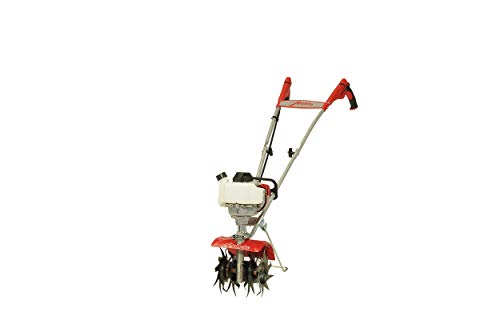
Mantis 7940 Tiller/Cultivator
A 4-cycle gas engine tills up to 9 inches into compacted or clay soil, deeper than most electric models manage. Tines adjust from 9 to 16 inches to match different bed widths. Weight lands near 24 pounds, light enough to steer through turns.
Pros
- Reaches deeper than corded or cordless tillers
- Tine width adjusts for narrow or wide beds
- Stays maneuverable despite its gas engine
Cons
- Needs fuel and periodic engine service
- Runs louder than electric alternatives

Sun Joe TJ603E Tiller Joe
Four angled steel tines run off a 6.5 amp motor across a 16 inch path. Working depth reaches 8 inches, enough for annual bed prep in average soil. At 11.4 pounds, a power switch replaces any pull-start engine.
Pros
- Starts instantly with no pull cord
- 16 inch path clears beds faster
- Light enough for easy one-person handling
Cons
- Cord range limits distance from an outlet
- Compacted soil slows this motor down

Earthwise TC70001 Corded Tiller/Cultivator
An 8.5 amp motor cuts an 11 inch path up to 8 inches deep, sized for raised beds and small plots. Handles fold flat for shed storage. Its price sits below most gas or cordless options.
Pros
- Costs less than gas or cordless models
- Folding handle saves storage space
- Depth suits raised bed prep
Cons
- Narrow path needs more passes on big plots
- Cord limits how far it reaches from an outlet

Greenworks 27062 Corded Tiller
An 8 amp motor works a 10 inch path at up to 5 inches deep, built for small raised beds rather than open ground. Around 20 pounds, it lifts easily in and out of a bed frame. Steel tines break up soil that is already loose.
Pros
- Fits small raised bed frames well
- Light enough to lift into a bed easily
- Works fast on already loose soil
Cons
- Shallow depth struggles on compacted ground
- Too small for open plots

BLACK+DECKER LGC120 Cordless Cultivator
A 20V battery cuts the cord for beds set far from an outlet. Width holds at 7 inches with 5 inches of depth, sized for containers and small beds. Low weight lets one hand manage the whole tool.
Pros
- No cord needed for far-off garden beds
- Light enough for one-handed use
- Quick on and off for spot weeding
Cons
- Battery runtime caps larger jobs
- Width trails corded competitors

Troy-Bilt TB154 Mini Tiller
A 21cc 4-cycle engine covers larger plots without a cord or battery to swap. Width adjusts from 6 to 9 inches, and depth reaches 7 inches in average soil. Counter-rotating tines pull the machine forward through resistance.
Pros
- Covers larger plots without cord limits
- Self-propelled tines cut through resistance
- No battery swaps during long sessions
Cons
- Heavier than electric or cordless models
- Needs gas and routine engine care

Garden Weasel 91367 Manual Cultivator
Three rotating claws turn surface soil with a back and forth push, no motor involved. It suits weeding and light prep once ground is already loose. A steel frame keeps weight under 5 pounds for wall storage.
Pros
- Runs on no fuel, battery or cord
- Quiet enough for early morning weeding
- Compact enough for wall storage
Cons
- Struggles on compacted or clay soil
- Slower than any motorized option
How they compare
| # | Model | Power source | Best for | Score | Price |
|---|---|---|---|---|---|
| 1 | Mantis 7940 Tiller/Cultivator | 4-cycle gas engine | Best overall | 9.4 | Check price |
| 2 | Sun Joe TJ603E Tiller Joe | 6.5 amp electric motor | Best value | 9.0 | Check price |
| 3 | Earthwise TC70001 Corded Tiller/Cultivator | 8.5 amp electric motor | Best budget | 8.7 | Check price |
| 4 | Greenworks 27062 Corded Tiller | 8 amp electric motor | Best for small garden beds | 8.4 | Check price |
| 5 | BLACK+DECKER LGC120 Cordless Cultivator | 20V battery, cordless | Best cordless | 8.2 | Check price |
| 6 | Troy-Bilt TB154 Mini Tiller | 21cc 4-cycle gas engine | Best gas-powered for larger plots | 8.1 | Check price |
| 7 | Garden Weasel 91367 Manual Cultivator | Manual, no motor | Best manual option | 8.0 | Check price |
Frequently asked questions
What is the difference between a tiller and a cultivator?
A cultivator mixes soil that is already loose, while a tiller breaks new or compacted ground. The Mantis 7940 does both jobs in one pass.
How deep should a garden cultivator till?
Most vegetable beds need 6 to 8 inches of tilled depth. Compacted clay benefits from the 9 inch reach a gas model like the Mantis 7940 provides.
Is electric or gas better for a home garden?
Electric tools such as the Sun Joe TJ603E handle average soil near an outlet well. Gas engines dig deeper and suit compacted or clay ground better.
Can a cordless cultivator handle a full garden plot?
Cordless models like the BLACK+DECKER LGC120 cover small beds but run low on charge across larger plots. A corded or gas option fits bigger areas better.
Do manual garden cultivators actually work?
Manual tools like the Garden Weasel 91367 handle soil that is already loose, mainly for weeding and light prep. Compacted or clay ground needs a powered tool instead.
What tilling width fits a raised bed?
Narrower tools around 7 to 11 inches wide, including the Greenworks 27062, fit typical raised bed frames without striking the sides.
How much does a garden cultivator weigh?
Manual and cordless picks weigh under 10 pounds. Gas mini tillers such as the Troy-Bilt TB154 run closer to 24 or 30 pounds fueled.
Do I need a self-propelled cultivator?
Self-propelled models like the Troy-Bilt TB154 pull themselves through resistance, which helps on larger plots. Small beds rarely need that feature.
Which cultivator works best for compacted clay soil?
The Mantis 7940 reaches 9 inches deep, enough to break through clay that stalls lighter electric or cordless tools.
Final word
Compacted soil or larger plots call for the Mantis 7940 and its 9 inch reach. Average garden beds near an outlet do nearly as well with the corded Sun Joe TJ603E, at less cost and upkeep. Save the Garden Weasel 91367 for light weeding once soil is already loose, and skip it for anything tougher.
Sierra Daniels
Sierra's background is in landscape design and nursery retail. She focuses on lawn and garden equipment, outdoor furniture and gear durability, weighing published specs against how materials actually hold up outside.


