What’s the Right NAS for Home or Small Office Backup?
Synology’s DiskStation DS224+ suits most first time buyers because DSM software stays simple while the processor still handles Plex. Households needing four bays and room to expand should look at the DS923+. Anyone chasing the most hardware per dollar gets there fastest with the TerraMaster F4-424.
Synology’s DS224+ earns the top spot here because DSM handles backups, photo indexing and Plex without asking the owner to become a system administrator. Families who expect their library to outgrow two bays should start with the DS923+ instead, since its memory ceiling and expansion unit support buy years of headroom. Anyone willing to trade software polish for raw hardware gets more from the TerraMaster F4-424 than from any established brand at the same outlay.
Shoppers who compare NAS units by capacity alone miss what actually determines daily performance. Processor generation decides whether a video transcodes smoothly for a phone on mobile data. Memory ceiling decides how many containers and background apps a unit can run without stalling. Software ecosystem decides whether scheduled backups keep running quietly or fail without anyone noticing. We compared bay counts, processor and transcoding support, maximum RAM, network interfaces and expansion paths, then checked what owners report about long term software support.
What to look for
How many bays should you actually buy Two bays running mirrored drives is the practical minimum for anything you would miss losing, since one drive failing does not take the data with it. Four bays let a parity array return more usable capacity from the same redundancy, with room to grow later. Buying two bays and filling them within a year is the most common regret in this category. Four bays usually costs less over the life of the unit when storage needs are already climbing.
Why software matters more than the spec sheet Hardware across this category is broadly similar, so daily experience comes down to the operating system. Synology DSM stays the most refined choice for a non specialist to maintain, backed by a large app catalogue and a long support history. QNAP QTS trades some of that simplicity for more control and more built in features. Asustor, TerraMaster and UGREEN all run capable software with smaller communities, which mostly shows up when searching for help with an unusual problem.
Processor and transcoding: what your media library actually needs Anyone planning to run Plex or Jellyfin should look for an Intel processor with integrated graphics, since hardware transcoding converts a high bitrate file on the fly for a phone on mobile data. ARM processors and some AMD chips skip this, leaving direct play only. Direct play works fine when every device already supports the formats in your library. Check what your actual client devices need before paying extra for transcoding you may never use.
RAID is not a backup, whatever the marketing implies This is where people get caught out. A mirrored or parity array protects against a drive failing, not against ransomware, accidental deletion, fire, theft or a controller writing corruption across the array. Three copies of important data, on two different media, with one copy offsite, remains the standard guidance. A NAS makes that easier by automating backups to an external drive or cloud storage, but on its own it only counts as one copy.
The best picks, ranked

Synology DiskStation DS224+
Two bays and an Intel Celeron J4125 processor give the DS224+ enough headroom for hardware transcoding, photo indexing and a handful of background apps. DSM remains the most approachable NAS operating system for anyone who does not want to administer a server. Owners report setup takes an evening, not a weekend.
Pros
- DSM software is mature and genuinely easy to use
- Intel processor handles media transcoding smoothly
- Wide app ecosystem covers backup and photos
Cons
- Gigabit only, with no 2.5 gigabit port
- Two bays cap how far storage can grow

Synology DiskStation DS923+
Four bays, two NVMe slots and a 32 GB memory ceiling make the DS923+ the choice for a library that keeps growing. An optional 10 gigabit card and expansion unit extend it further down the line. Its AMD processor skips hardware transcoding, the one tradeoff for all that expansion room.
Pros
- Large memory ceiling supports containers and virtual machines
- NVMe cache slots plus a 10 gigabit upgrade path
- Expansion unit support adds bays later without replacing the unit
Cons
- No integrated graphics, so no hardware transcoding
- Drive compatibility list is stricter than rivals
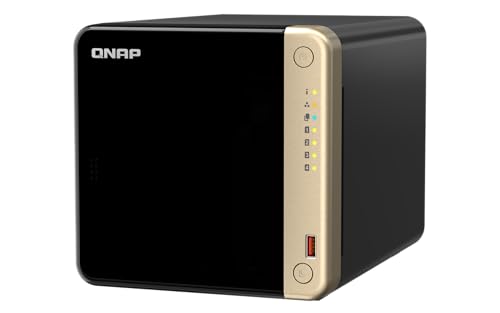
QNAP TS-464
An Intel Celeron N5105 with integrated graphics and dual 2.5 gigabit ports makes the TS-464 well suited to a household streaming to several devices at once. QTS hands over more manual control than DSM, at the cost of a steeper learning curve. Owners report the faster networking is obvious during large file transfers.
Pros
- Hardware transcoding keeps media libraries watchable everywhere
- 2.5 gigabit networking comes standard, not as an upgrade
- PCIe slot leaves room for further expansion
Cons
- QTS interface feels busier than Synology’s DSM
- Fan noise is noticeable in a quiet room
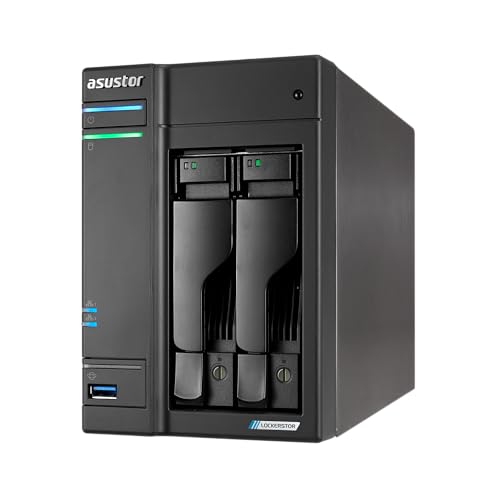
Asustor Lockerstor 2 Gen2 AS6702T
Two bays pair with dual 2.5 gigabit ports and two NVMe slots, so small file operations and caching feel faster than the bay count suggests. ADM software stays clean, and the hardware specification is generous for the size. A home office moving large files regularly gets the most from this combination.
Pros
- Fast networking and NVMe caching in a compact chassis
- ADM interface stays clean and responsive
- Hardware specification outpaces most two bay rivals
Cons
- Smaller app ecosystem than Synology offers
- Only two bays limit spinning drive capacity

TerraMaster F4-424
TerraMaster consistently packs more processor, memory and networking into its price bracket than established brands. Four bays, an Intel N95 processor and dual 2.5 gigabit ports headline the F4-424. TOS has improved considerably, according to owner reports, though it still trails DSM for polish and third party app support.
Pros
- Strongest hardware specification in this lineup
- 8 GB of standard memory outpaces most rivals
- Popular base for third party operating systems
Cons
- Software feels less polished than DSM or QTS
- Community and support resources are smaller

UGREEN NASync DXP4800 Plus
UGREEN built this NAS around enthusiast specifications: a Pentium Gold processor, 10 gigabit networking and multiple NVMe slots. Running containers and virtual machines alongside file storage suits this hardware well. The software platform is the newest and least proven of the group, based on how recently it launched.
Pros
- Serious processing power for containers and virtual machines
- 10 gigabit networking included as standard
- Highest memory ceiling in this comparison
Cons
- Newest software platform with the shortest track record
- More capability than a simple backup target needs
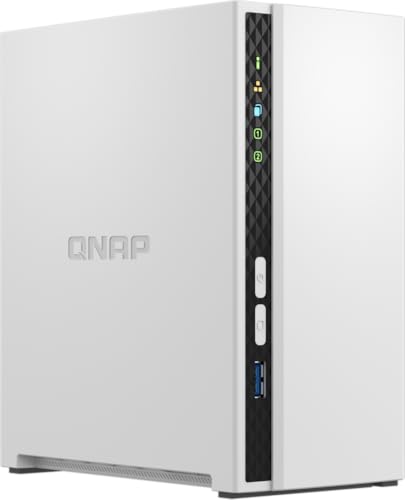
QNAP TS-233
Moving files off a single external drive and onto a redundant array costs little with the TS-233. An ARM processor keeps power draw and noise low while handling file serving and basic backup duties. Owners report it suits backup and file access, not transcoding a media library.
Pros
- Low power draw with quiet operation
- Enough performance for backups and file sharing
- Compact vertical footprint saves desk space
Cons
- Not capable of media transcoding
- Memory is fixed and cannot be upgraded
Compared at a glance
| # | Model | Drive bays | Best for | Score | Price |
|---|---|---|---|---|---|
| 1 | Synology DiskStation DS224+ | 2 bays, 3.5 or 2.5 inch | Best overall | 9.4 | Check price |
| 2 | Synology DiskStation DS923+ | 4 bays plus 2 NVMe slots | Best for growing storage needs | 9.2 | Check price |
| 3 | QNAP TS-464 | 4 bays plus 2 NVMe slots | Best for media servers | 9.0 | Check price |
| 4 | Asustor Lockerstor 2 Gen2 AS6702T | 2 bays plus 2 NVMe slots | Best for fast transfers | 8.8 | Check price |
| 5 | TerraMaster F4-424 | 4 bays plus NVMe slots | Best value | 8.6 | Check price |
| 6 | UGREEN NASync DXP4800 Plus | 4 bays plus 2 NVMe slots | Best for power users | 8.3 | Check price |
| 7 | QNAP TS-233 | 2 bays | Best budget | 8.0 | Check price |
Questions worth asking
What does NAS stand for and what is it actually used for?
Network attached storage. It is a small always on computer holding several drives, shared across a home or office network. Typical uses include automatic device backups, a central photo and document store, and streaming media to phones, tablets and televisions.
How many drive bays do I need for a NAS?
Two bays with mirrored drives is the sensible minimum for data you cannot lose. Four bays returns better usable capacity from parity redundancy plus room to grow. Buying more bays than needed today is usually cheaper than replacing the whole unit in two years.
Do I need special NAS hard drives?
Drives rated for NAS use handle constant operation, vibration inside multi drive enclosures and appropriate error recovery timing. Desktop drives work but tend to fail sooner under this duty cycle. Check the manufacturer’s compatibility list, since some vendors restrict which drives they support.
Can a NAS run Plex smoothly?
Most units here can, though transcoding is what varies. Models with Intel integrated graphics handle transcoding for devices that cannot play a file natively. ARM based units generally manage direct play only, which is fine when client devices already support the stored formats.
Is RAID the same thing as a backup?
No. RAID protects against a drive failing while the system keeps running. It does nothing against deletion, ransomware, corruption, theft or fire. Keep at least one separate backup copy, ideally offsite or in cloud storage.
How much power does a home NAS use?
A two bay unit typically draws between 10 and 30 watts depending on activity and whether drives spin down. Four bay units with faster processors draw more. Most models support scheduled shutdowns and drive hibernation to cut idle consumption.
Can I access my NAS files away from home?
Yes, every vendor here offers a remote access service and mobile apps. Enable two factor authentication, keep firmware updated, and avoid exposing administrative ports directly to the internet. A VPN back to the home network is the safest approach.
How loud is a NAS in a living room?
Spinning drives usually make more noise than the fan. Units with larger, slower fans and rubber drive mounts run quieter. A two bay unit with drive hibernation enabled suits a room used in the evenings, or place the unit in a ventilated cupboard instead.
Synology vs QNAP vs TerraMaster: which software is easiest?
DSM from Synology is the most polished and the easiest for a non specialist to maintain long term. QTS from QNAP offers more manual control at the cost of a steeper learning curve. TerraMaster’s TOS has improved but still trails both for third party app support.
Is a two bay or four bay NAS better for a first purchase?
A two bay unit like the DS224+ suits most first time buyers, since mirrored redundancy alone already protects against a drive failure. Choose four bays instead if a media library or growing photo archive already points toward needing more capacity within a year or two.
Our pick
Synology’s DS224+ remains the easiest recommendation for a first NAS, since DSM removes most of the administration burden while its Intel processor handles media and photo duties comfortably. Households already outgrowing two bays should go straight to the DS923+ for its expansion path. Anyone willing to trade software polish for hardware comes out ahead with the TerraMaster F4-424.
Marcus Chen
Marcus covered consumer electronics for enthusiast tech publications for six years before joining ChoiceCrest. He specializes in translating manufacturer spec sheets into plain-language buying advice, with a focus on audio, computing accessories and smart-home gear.
You might also need
Setting Up Dual Monitors for a Home Office Desk

How to Pick a Cross Cut Shredder for Home or Office
Finding the Right Chair Height for a Standing Desk
