How to Pick a Cross Cut Shredder for Home or Office
Fellowes’ Powershred 79Ci leads for jam resistance and continuous run time, the strongest all-round pick here. Bonsaii’s EverShred C149-C suits clearing years of filing, while the Amazon Basics 8-Sheet model covers light desk duty without taking up much floor space.
Fellowes’ Powershred 79Ci is the cross cut shredder to buy for most home offices, with Bonsaii’s EverShred C149-C better suited to large backlogs and the Amazon Basics 8-Sheet model covering occasional shredding.
Manufacturers quote sheet capacity under best-case conditions and run time in optimistic minutes, so two machines with similar numbers can behave very differently in practice. We compared published security levels, duty cycles, bin volumes and jam protection systems against what owners report about overheating and jams.
The shortlist, ranked

Fellowes Powershred 79Ci Cross-Cut Shredder
A 16 sheet cross cut throat pairs with Fellowes’ SafeSense touch protection and a jam prevention system that halts the feed before paper binds up. Owners report it chews through stapled and paper clipped documents without the constant reversing cheaper machines require. A 6 gallon pull out bin means fewer trips during a filing purge.
Pros
- Handles staples, paper clips and credit cards
- Long continuous run time before cooldown
- SafeSense stops the feed on touch
Cons
- Heavy and awkward to move between rooms
- Louder than small desktop shredders
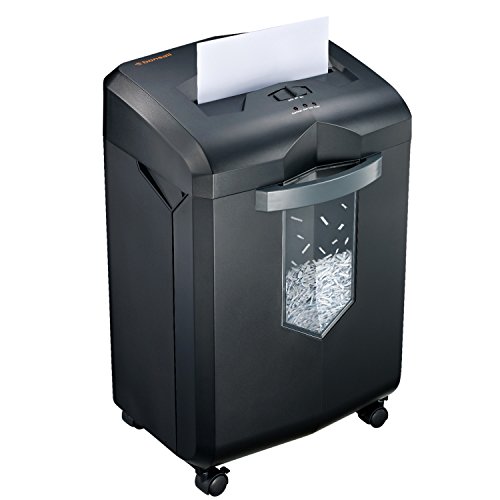
Bonsaii EverShred C149-C Cross-Cut Shredder
An 18 sheet throat and a 60 minute run time suit clearing out a decade of statements in one sitting. Bonsaii built the C149-C around long sessions rather than quick bursts. The 6 gallon transparent bin shows fill level without lifting the head.
Pros
- Very long run time for back to back sessions
- Shreds cards, CDs and stapled paper
- Casters make it easy to reposition
Cons
- Bulky footprint under a desk
- Cooldown period is long once triggered

Amazon Basics 8-Sheet Cross-Cut Paper and Credit Card Shredder
Eight sheets at a time plus cards cover a spare room desk handling a few pages of mail weekly. The 4.1 gallon bin holds roughly a fortnight of junk mail. Owners report it stays reliable within its limits but struggles once pushed past them.
Pros
- Small enough for a home desk
- Accepts credit cards without a separate slot
- Simple auto start and reverse controls
Cons
- Short run time before it needs to cool
- Struggles with thick stapled bundles
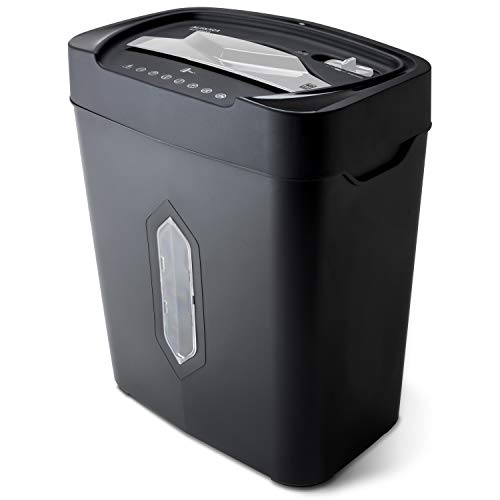
Aurora AU1230XA 12-Sheet Cross-Cut Shredder
Twelve sheets and a 30 minute run time sit the AU1230XA between a desk toy and a full office machine. Anti jam sensors and a thermal cutout protect the motor during longer sessions. It suits weekly rather than daily shredding.
Pros
- Good capacity for the size
- Thermal protection guards the motor
- Pull out basket is easy to empty
Cons
- Card slot wears faster than the paper feed
- No touch safety sensor

Swingline Stack-and-Shred 60X Auto Feed Shredder
Up to 60 sheets load into the hopper at once, and the machine works through the stack unattended. That auto feed design removes the tedium of feeding a handful of pages at a time. A manual slot still handles cards and the odd folded page.
Pros
- Auto feed hopper saves a lot of standing around
- Large bin suits batch shredding
- Quiet compared with open throat machines
Cons
- Hopper does not like stapled or crumpled sheets
- Slower per page than a manual feed shredder

Fellowes Powershred 99Ci Cross-Cut Shredder
An 18 sheet throat and a 30 minute duty cycle suit a two or three person office sharing one machine. The same SafeSense and jam prevention hardware from the 79Ci carries over in a taller body. Owners report the 9 gallon bin is the feature they notice most.
Pros
- Large bin cuts emptying frequency
- Jam prevention works on mixed document stacks
- Solid build for shared use
Cons
- Tall body does not fit under low desks
- Overkill for light personal shredding
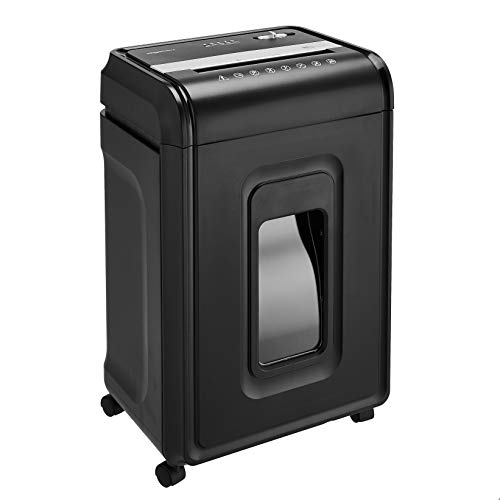
AmazonCommercial 24-Sheet Cross-Cut Shredder
A 24 sheet throat gives this machine the widest feed on the list, built for offices that shred in long sessions rather than a page at a time. A 12 gallon bin and 60 minute run time back up that capacity. Its size means measuring the space before committing.
Pros
- Widest sheet capacity in this group
- Very large bin for office volumes
- Long duty cycle before cooldown
Cons
- Large and heavy for a home office
- Noisy at full load
How they compare
| # | Model | Sheet capacity | Best for | Score | Price |
|---|---|---|---|---|---|
| 1 | Fellowes Powershred 79Ci Cross-Cut Shredder | 16 sheets | Best overall | 9.4 | Check price |
| 2 | Bonsaii EverShred C149-C Cross-Cut Shredder | 18 sheets | Best for high volume | 9.2 | Check price |
| 3 | Amazon Basics 8-Sheet Cross-Cut Paper and Credit Card Shredder | 8 sheets | Best budget | 9.0 | Check price |
| 4 | Aurora AU1230XA 12-Sheet Cross-Cut Shredder | 12 sheets | Best value | 8.8 | Check price |
| 5 | Swingline Stack-and-Shred 60X Auto Feed Shredder | 60 sheets | Best for hands off batches | 8.6 | Check price |
| 6 | Fellowes Powershred 99Ci Cross-Cut Shredder | 18 sheets | Best for a small office | 8.3 | Check price |
| 7 | AmazonCommercial 24-Sheet Cross-Cut Shredder | 24 sheets | Best for heavy duty runs | 8.0 | Check price |
How to pick the right one
What the DIN P rating actually tells you Cross cut is a marketing phrase covering a wide range of particle sizes. The DIN P rating is the number worth checking: P-3 leaves strips a determined person could reassemble, P-4 produces small confetti suited to household and most office paperwork, and P-5 or higher moves into micro cut territory for sensitive material. Every model here rates P-4, the practical sweet spot for bank statements, medical letters and tax records.
Sheet capacity and run time depend on each other Manufacturers test sheet capacity using fresh 20 pound paper fed perfectly straight, so treat the published number as a ceiling rather than a target. Feeding two or three sheets under the rating extends motor life and cuts jams. Run time matters just as much, since a three minute duty cycle followed by a 30 minute cooldown turns a weekend filing purge into a multi day project.
Why bin size decides how often you stop Shredded cross cut waste fluffs up, so a bin fills faster than the paper volume suggests. A 4 gallon basket handles weekly mail fine but needs emptying several times during a serious clearout. A pull out drawer beats a lift off head for frequent use, and a transparent window lets you check fill level before the cutters push back.
Maintenance that keeps cutters from dulling Cross cut blades dull faster than strip cut blades because they cut in two directions at once. Oiling the cutting head each time the bin empties, using shredder oil or an oil sheet, keeps the mechanism quiet and cuts jamming. Skip glossy paper, laminated sheets and adhesive backed labels, and pull staples from thick bundles even on machines rated to handle them.
Frequently asked questions
Is a cross cut shredder secure enough for personal documents?
Yes. A P-4 cross cut shredder reduces a sheet into hundreds of small particles, accepted as sufficient for household paperwork including bank statements and tax records. Micro cut machines go further and suit business confidential files.
How is cross cut different from micro cut?
Cross cut blades slice paper into short confetti pieces, typically a few millimeters wide. Micro cut machines cut those pieces smaller again, producing far more particles per sheet, filling the bin faster in the process.
Can these shredders handle staples and paper clips?
The higher capacity models here are rated for staples, and several accept paper clips too. Owners report longer cutter life when heavy clips and thick staple bundles get removed first regardless.
Why does my shredder stop before the bin is full?
Two things usually cause it. Either the thermal cutout triggered because the duty cycle was exceeded, needing a cooldown period, or shredded waste has piled up under the cutters without settling. Shaking the bin level often restores capacity.
How often should a cross cut shredder be oiled?
Oil the cutting head every time the bin gets emptied, or roughly every 20 to 30 minutes of use. Shredder oil or oil sheets work better than household lubricants, which can gum up the mechanism.
Do cross cut shredders take credit cards and CDs?
Most of these models shred credit cards, and several accept CDs through a separate slot or dedicated cycle. Cards wear blades harder than paper does, so use that function sparingly.
What sheet capacity do I actually need for home use?
Eight sheets covers a few pages of mail per week comfortably. Filing boxes to clear or a machine shared with others calls for 16 sheets or more paired with a long run time.
How loud is a cross cut shredder?
Most run about as loud as a kitchen blender at full load, and auto feed models tend to sound quieter since the lid muffles the cutters. Noise carries more on hard floors, so a mat under the unit helps in shared rooms.
Cross cut vs strip cut: which is more secure?
Cross cut wins clearly. Strip cut leaves long, straight strips that are far easier to piece back together than the confetti a cross cut or micro cut machine produces, which is why strip cut has mostly disappeared from home and office use.
Our take
Fellowes’ Powershred 79Ci is the model most people should buy, combining a 16 sheet throat, real jam prevention and a duty cycle long enough for a proper filing session. Choose Bonsaii’s EverShred C149-C for a backlog measured in boxes, or the Amazon Basics 8-Sheet model if a handful of pages a week is the whole job.
Marcus Chen
Marcus covered consumer electronics for enthusiast tech publications for six years before joining ChoiceCrest. He specializes in translating manufacturer spec sheets into plain-language buying advice, with a focus on audio, computing accessories and smart-home gear.