Which Motorcycle Helmet Fits Your Riding Style Best
The Shoei RF-1400 stands out as the strongest all-around pick, pairing a multi-ply fiberglass shell with strong ventilation for everyday street and highway riding. Touring riders who want a flip-up chin bar should look at the Schuberth C5 instead, while budget-conscious new riders get most of the same protection from the HJC i10 for considerably less.
The Shoei RF-1400 leads this list because its multi-ply fiberglass shell, dual-layer EPS liner and adjustable ventilation work well across commuting, touring and weekend canyon rides alike. Its main limitation is price, since it sits above most entry-level full-face helmets. Riders on a tighter budget still get solid DOT-certified protection from the HJC i10.
We compared shell materials, safety certifications, ventilation systems and intended riding style across each helmet rather than conducting our own impact testing.
Our top picks

Shoei RF-1400
A multi-ply fiberglass shell in four shell sizes keeps weight balanced across different head sizes rather than scaling one shell for everyone. Dual-layer EPS absorbs impact energy at two densities, and a ratcheting chin strap replaces the traditional D-ring closure. Ventilation ports at the chin and crown move air at highway speed without excessive wind noise.
Pros
- Four shell sizes keep weight proportional across head sizes
- Dual-density EPS liner suits a range of impact speeds
- Ratcheting strap closure is faster than a D-ring
Cons
- Costs more than most entry-level full-face helmets
- Narrower eye port than some competing sport helmets
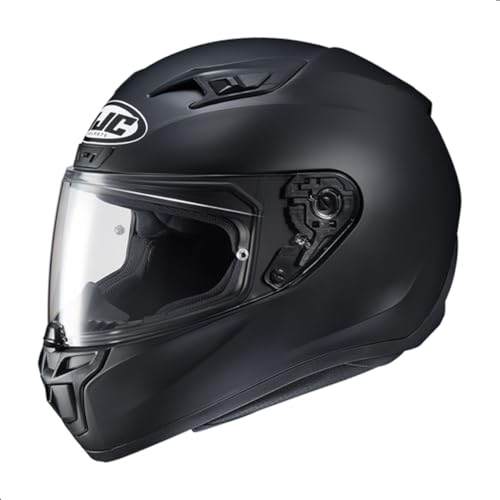
HJC i10
A polycarbonate shell keeps manufacturing cost down while still meeting DOT certification for street use. An advanced channeling ventilation system moves air front to back, and the included Pinlock-ready face shield resists fogging. Weight runs higher than premium fiberglass shells, noticeable on longer rides.
Pros
- Meets DOT certification at a fraction of premium helmet cost
- Pinlock-ready shield reduces fogging in cold weather
- Removable, washable liner simplifies cleaning
Cons
- Heavier than fiberglass or carbon fiber shells
- Lacks Snell certification that some track-focused riders require

Schuberth C5
A flip-up chin bar converts the C5 between full-face and open-face configurations without removing the helmet, useful at toll booths and rest stops. Fiberglass shell construction keeps weight manageable despite the added modular mechanism. An integrated sun visor and anti-fog Pinlock lens come built in rather than sold separately.
Pros
- Flip-up chin bar adds convenience without removing the helmet
- Integrated sun visor avoids separate tinted shield purchases
- Aerodynamic shell shape reduces wind noise on highways
Cons
- Modular mechanism adds weight compared to fixed full-face helmets
- Premium price sits above most touring competitors

AGV K1 S
A race-derived shell shape and aggressive aerodynamics come directly from AGV’s Pista line at a lower price point. A wide eye port suits tucked-in riding positions where peripheral vision matters most. Ventilation focuses on high-speed airflow rather than low-speed stop-and-go cooling.
Pros
- Race-derived aerodynamics suit sport bike riding posture
- Wide eye port improves peripheral vision when tucked
- Lighter shell than most touring and modular helmets
Cons
- Ventilation underperforms at low speeds or in traffic
- Sportier fit runs tighter than touring-oriented helmets
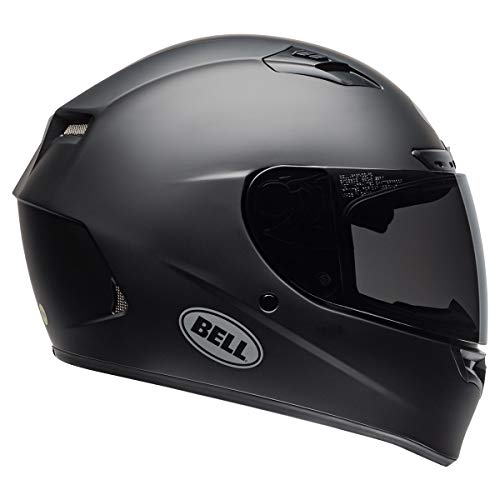
Bell Qualifier DLX
A Transitions photochromic face shield darkens automatically in bright sun and clears again at night, removing the need to swap shields mid-ride. Polycarbonate shell construction keeps the price accessible for new and returning riders. Emergency cheek pad release tabs let first responders remove the helmet without extra neck movement.
Pros
- Photochromic shield adjusts tint automatically with light
- Emergency release cheek pads aid first responder removal
- Priced below most helmets with auto-tinting shields
Cons
- Photochromic shield transition speed slows in extreme cold
- Heavier shell than premium fiberglass competitors

ScorpionEXO EXO-AT950
A modular flip-up design pairs with an adjustable peak visor built for standing on pegs over rough terrain. The included drop-down sun lens and dust-sealed vents suit riders who split time between pavement and gravel. A removable chin curtain blocks dust on unpaved roads, then comes out for highway comfort.
Pros
- Adjustable peak visor suits standing adventure riding posture
- Modular design works for both street and off-road stops
- Removable chin curtain blocks dust on gravel roads
Cons
- Peak visor catches wind at sustained highway speeds
- Bulkier shape than dedicated street full-face helmets

Bell Pit Boss
An open-face half shell keeps weight low and airflow high, matching the riding posture common on cruisers and lower-speed city streets. A flip-down internal sun lens removes the need for separate sunglasses underneath a visor. Coverage stops well short of full-face protection, a tradeoff cruiser riders accept for visibility and feel.
Pros
- Lightweight half shell suits cruiser riding posture
- Internal sun lens removes need for separate eyewear
- More affordable than most full-face or modular helmets
Cons
- Offers far less facial and chin protection than full-face designs
- Less effective at highway speeds or in bad weather
The lineup, side by side
| # | Model | Shell Material | Best for | Score | Price |
|---|---|---|---|---|---|
| 1 | Shoei RF-1400 | Multi-ply fiberglass, 4 shell sizes | Best Overall | 9.3 | Check price |
| 2 | HJC i10 | Polycarbonate composite | Best Value | 8.6 | Check price |
| 3 | Schuberth C5 | Fiberglass composite, modular flip-up | Best Touring Modular | 9.0 | Check price |
| 4 | AGV K1 S | Thermoplastic resin, race-derived shape | Best for Sport and Track Riding | 8.8 | Check price |
| 5 | Bell Qualifier DLX | Polycarbonate composite | Best Photochromic Shield | 8.5 | Check price |
| 6 | ScorpionEXO EXO-AT950 | Polycarbonate composite, modular flip-up | Best Adventure and Dual-Sport | 8.7 | Check price |
| 7 | Bell Pit Boss | ABS composite, half shell | Best Half Helmet for Cruisers | 8.0 | Check price |
What to look for
What certification labels actually mean DOT certification is a legal minimum in the US, based on self-certified impact and penetration testing. Snell M2020 certification adds independent third-party testing with tighter impact thresholds, which is why helmets like the Shoei RF-1400 carry both labels. ECE 22.06, common on helmets sold in Europe, uses a different rotational-impact test method than either DOT or Snell.
Full-face, modular and half helmets compared Full-face helmets, including the Shoei RF-1400 and AGV K1 S, offer the most chin and facial coverage for highway and sport riding. Modular helmets like the Schuberth C5 and ScorpionEXO EXO-AT950 flip open at stops without full removal, trading a small amount of structural rigidity for convenience. Half helmets such as the Bell Pit Boss protect the skull but leave the face and chin exposed, a tradeoff cruiser riders often accept for airflow and visibility.
Matching shell material to riding speed Fiberglass and multi-ply composite shells, used in the Shoei RF-1400 and Schuberth C5, spread impact energy more efficiently at high speed than single-layer polycarbonate. Polycarbonate shells, found in the HJC i10 and Bell Qualifier DLX, still meet DOT standards and cost less to manufacture, which keeps retail prices lower. Riders who stick mostly to city streets under 45 mph see less practical difference between shell materials than highway or track riders do.
Ventilation and visor features for different climates Riders in hot climates benefit most from active chin and crown vents, like those on the Shoei RF-1400 and HJC i10, that channel air directly onto the face. Cold-weather commuters should prioritize Pinlock-ready shields, which resist the fogging that a basic visor cannot prevent. Adventure riders who move between pavement and dirt need a removable chin curtain and adjustable peak, both found on the ScorpionEXO EXO-AT950.
Good to know
What is the safest motorcycle helmet certification?
Snell M2020 involves stricter independent impact testing than DOT alone. Helmets carrying both DOT and Snell certification, like the Shoei RF-1400, have passed two separate testing standards.
Are modular helmets as safe as full-face helmets?
A quality modular helmet like the Schuberth C5 meets the same DOT and ECE standards as a full-face helmet, though the flip-up hinge is a structural point full-face shells do not have.
How long does a motorcycle helmet last before replacement?
Most manufacturers recommend replacing a helmet every five to seven years as EPS foam and shell materials degrade with UV exposure and sweat, even without a crash.
Do half helmets protect as well as full-face helmets?
No. Half helmets like the Bell Pit Boss cover the skull but leave the face and chin exposed, offering significantly less protection in a frontal impact.
What does a photochromic motorcycle shield do?
A photochromic shield, like the one on the Bell Qualifier DLX, darkens automatically in bright sunlight and clears in low light, removing the need to swap shields.
Is a heavier motorcycle helmet safer than a lighter one?
Not necessarily. Weight relates more to shell material and features than impact protection. Multi-ply fiberglass shells can be both lighter and stronger than single-layer polycarbonate.
What helmet features matter most for adventure riding?
An adjustable peak visor, a removable chin curtain for dust, and a modular chin bar, all found on the ScorpionEXO EXO-AT950, matter most for mixed pavement and dirt riding.
Can I replace just the face shield on a motorcycle helmet?
Most full-face and modular helmets, including every model on this list, sell replacement shields separately so riders do not need a new helmet for shield damage or fogging issues.
Do track days require Snell certification?
Many track day organizations and racing bodies require Snell-certified helmets, which is one reason riders who plan to track their bike should prioritize helmets like the Shoei RF-1400 or AGV K1 S.
Final word
The Shoei RF-1400 suits riders who want one helmet that handles commuting, touring and weekend sport riding without major compromises. Riders who frequently stop for tolls, gas or conversations should pick the Schuberth C5 instead for its flip-up convenience. New riders working with a tighter budget still get solid DOT-certified protection from the HJC i10 without paying for premium shell materials they may not yet need.
Tony Russo
Tony trained as an automotive technician and spent years in service and parts retail before moving into writing. He focuses on garage tools, car care products and accessories from a hands-on maintenance perspective.