Is a Motorcycle Cover Really Necessary for a Garage-Kept Bike?
A cover is still worth using on a garage-kept bike, just a lighter one than you would choose for outdoor storage. Indoor risks come from dust settling into seams and vents, humidity swings causing overnight condensation on metal and chrome, incidental scrapes from gear stored nearby, and UV fading through a window or an open door, not rain or direct sun exposure. None of these risks are as severe as what an outdoor-parked bike faces, but they are real enough that most owners find a thin cover worth the few seconds it takes to use.
What actually threatens a bike stored indoors
Dust is the most constant issue, settling into vents, chain links, and seat seams over weeks of sitting. Temperature swings between day and night cause condensation to form on cold metal and chrome even without any rain involved. Bikes, tools, or lawn equipment stored nearby add a real risk of incidental scrapes, and a window or a garage door left open on sunny days still delivers enough UV to fade paint gradually over a season. Dust settling into an exposed chain or cable housing can also dry out lubrication faster than normal, which matters more for a bike that sits between rides than one ridden daily.
Why condensation is the real indoor risk
An unheated garage swings in temperature across a day, and when warm, moist air meets a cold metal surface overnight, moisture condenses directly on it, the same way a cold drink sweats on a humid afternoon. That trapped moisture sitting on chrome, exposed fasteners, or an exhaust pipe encourages light surface rust over time, especially in humid climates, even though the bike was never actually rained on. Fork tubes and brake rotors are particularly exposed to this, since both are bare metal surfaces meant to stay in constant contact with moving parts, and a light film of surface rust on either can affect feel slightly even after it’s wiped away.
When a cover matters less
A heated, insulated, low-traffic garage with nothing else stored near the bike reduces most of these risks on its own. Dust still accumulates and a stray scrape is still possible if anything else shares the space, but the urgency drops considerably compared to a bike parked outdoors or in a shared, drafty garage. A garage attached to a house also tends to see smaller humidity swings than a detached, uninsulated structure, which is worth factoring in when deciding how much protection actually makes sense.
Breathable versus non-breathable material matters indoors too
An indoor cover should still be a breathable fabric rather than a heavy vinyl tarp built for rain. A non-breathable cover traps whatever moisture is already present against the bike’s surface, which can actually encourage more condensation underneath than leaving the bike uncovered in a dry, climate-controlled space. Many indoor-rated covers use a lightweight polyester or cotton-poly blend specifically because it allows some airflow while still keeping dust off, unlike the laminated vinyl shells built for sitting outside in actual rain.
What a cover does not protect against
A cover will not stop a falling object, a bike that gets knocked over, or rust that was already forming because the bike was put away wet. It is a barrier against dust, light scuffs, and fading, not a substitute for storing a genuinely dry, properly maintained bike in the first place. It also isn’t a substitute for basic maintenance checks, since a cover left on a bike with a slow oil or coolant leak simply hides the problem until it’s noticed some other way, usually by a stain spreading on the garage floor.
Half cover versus full indoor cover
A half cover protecting just the seat and tank handles the areas most sensitive to fading and dust for a bike ridden often and only parked briefly between rides. A full cover makes more sense for longer indoor storage stretches, such as an off-season layup, when every surface benefits from the added protection. Either option should still be removed periodically rather than left on indefinitely, since even indoors a bike benefits from an occasional wipe-down and a quick look-over for anything developing underneath.
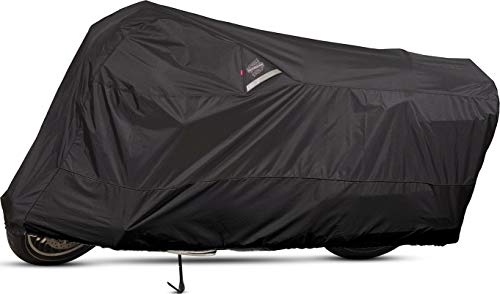
Dowco Guardian WeatherAll Plus Motorcycle Cover
A breathable all-season cover suited to both outdoor and indoor storage without trapping moisture against the bike.
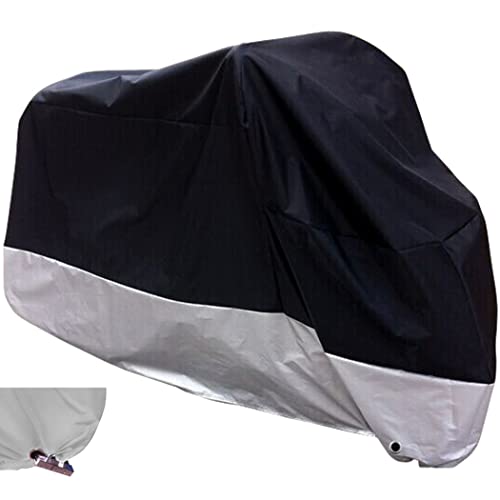
XYZCTEM Motorcycle Cover
A lightweight, budget-friendly cover commonly used for indoor dust and scuff protection rather than heavy weather exposure.
Good to know
Does a motorcycle really need a cover if it’s kept in a garage?
It benefits from one, though a lighter cover than outdoor storage requires, mainly to block dust, incidental scuffs, and window-filtered sunlight rather than rain.
Can a cover trap moisture and cause rust indoors?
Yes, if it’s a non-breathable material or the bike was covered while still damp, trapping humidity against the metal rather than letting it dissipate.
What material is best for an indoor motorcycle cover?
A breathable woven fabric is generally better than vinyl indoors, since it blocks dust without sealing in ambient moisture the way a waterproof tarp can.
Does sunlight through a garage window really fade a motorcycle?
Yes, UV exposure through glass still happens gradually, and a bike parked in the same sunny spot for months can show noticeably faded paint or plastic.
How often should an indoor cover be removed and aired out?
Taking it off every week or two, especially after any damp weather, helps prevent trapped moisture from building up underneath over long storage stretches.
Can a cover scratch motorcycle paint?
A low-quality or dirty cover can cause light swirl marks from rubbing against the tank or fenders, which is why a soft-lined cover is worth choosing.
Is a half cover enough for indoor storage?
For a bike ridden regularly and parked only briefly, a half cover protecting the tank and seat covers the areas most exposed to dust and fading.
Does a cover protect against dust buildup in vents and gaps?
Yes, this is one of the more useful things a cover does indoors, since dust otherwise settles steadily into chain links, vents, and seat seams.
Should a motorcycle be covered if it’s ridden every few days?
A quick-on half cover is reasonable for frequent riders mainly to block dust between rides, though it’s less critical than for a bike parked for weeks.
Does a heated garage change whether a cover is needed?
It reduces the condensation risk significantly, but dust and incidental scrapes from shared storage space still make a light cover worthwhile.
Can covering a wet bike cause more harm than good?
Yes, sealing moisture against the bike’s surface with a cover before it’s fully dry can encourage rust faster than leaving it uncovered to air dry first.
Do cheap covers wear out faster indoors too?
Thin fabric covers can fray or develop small holes from repeated handling even without weather exposure, so quality still matters for indoor use.
Does a cover help keep pet hair or insects off a parked bike?
Yes, this is a practical everyday benefit in a garage shared with pets or where insects are common, even aside from dust and UV concerns.
Is a cover necessary for a bike with a battery tender attached?
Most covers have a small gap or grommet option for a charging cable, so a tender can stay connected without needing to leave the bike uncovered.
Does covering reduce the need for regular cleaning?
It reduces how often a full wash is needed by limiting dust accumulation, though it doesn’t eliminate the need for periodic cleaning entirely.
Can a cover left on too long trap more dust than it blocks?
Rarely, though a cover that’s never removed can accumulate its own layer of dust on top, which eventually transfers to the bike during removal if not shaken out first.
Does garage humidity vary enough by season to change cover habits?
In many climates yes, a cover is more useful during damp spring and fall months than in a consistently dry summer stretch, so adjusting use seasonally makes sense.
Is a reflective or light-colored cover better for a garage near a window?
A lighter color reflects more of the UV reaching it through glass, which can modestly reduce how much heat and light pass through to the bike underneath.
Can mice or small pests be an issue for an uncovered bike in a garage?
Yes, exposed seat foam and wiring can attract small pests in some garages, and a snug-fitting cover adds a minor physical barrier against that kind of damage.
Should a cover be tied down or secured even indoors?
Most indoor covers don’t need tie-downs since there’s no wind, though a snug fit still helps it stay in place if the garage door opens and closes often.
Does the type of garage floor affect how much a cover is needed?
A bare concrete floor can hold more ambient moisture than a sealed or epoxy-coated floor, which can slightly increase condensation risk and make a breathable cover more worthwhile.
Our take
Indoor storage removes the worst risks a cover guards against outdoors, but dust, condensation, and incidental scrapes still happen inside a garage. A light, breathable cover is cheap insurance against those smaller but real risks, while a heavy waterproof cover built for rain is more than a garage-kept bike actually needs. The honest answer is that it’s not strictly mandatory, but the small amount of effort it takes to use one consistently pays off in less cleaning and fewer small surprises over months of storage.
Tony Russo
Tony trained as an automotive technician and spent years in service and parts retail before moving into writing. He focuses on garage tools, car care products and accessories from a hands-on maintenance perspective.