How to Choose Motorcycle Gloves That Protect Your Hands
Alpinestars SP-8 V3 gloves balance protection and daily comfort for most riders. Dainese Carbon 4 Short gloves add heavier armor for sport riding. REV’IT! Sand 4 H2O gloves bring a waterproof membrane for touring in changing weather. Fit and seam placement matter as much as the brand on the cuff.
Pick the Alpinestars SP-8 V3 for one pair that handles commuting and weekend rides. Sport riders get more coverage from the Dainese Carbon 4 Short, and the REV’IT! Sand 4 H2O suits trips where rain is likely. Seam placement and palm reinforcement decide comfort more than any badge on the cuff.
A glove can look armored yet expose stitching exactly where the road would hit first. We compared shell materials, armor placement, certification claims, ventilation and closure systems, then weighed owner feedback on break in, sizing and durability over a season.
What we recommend

Alpinestars SP-8 V3 Motorcycle Gloves
Goat leather and stretch panels give the SP-8 V3 a close, flexible fit rather than a stiff gauntlet feel. A hard knuckle protector and reinforced palm sliders cover the two areas that matter most in a fall. Perforated panels keep air moving in summer, and touchscreen fingertips work with a phone without removing the glove.
Pros
- Balances protection with everyday comfort
- Perforated panels ventilate well in heat
- Short cuff layers under most jacket sleeves
Cons
- Perforation lets cold air in during winter
- No waterproofing for wet commutes

Dainese Carbon 4 Short Motorcycle Gloves
Dainese shapes these around an aggressive riding position, with a pre curved fit that matches a forward lean on sportbikes. Carbon knuckle protection and reinforced palm and finger inserts push impact protection higher than any short cuff glove in this group. Thicker leather means a break in period before the fit feels natural.
Pros
- Highest impact protection in a short cuff design
- Pre curved shape suits an aggressive riding position
- Thick leather holds up over years of use
Cons
- Stiff feel until the leather breaks in
- Limited airflow for hot city traffic

REV’IT! Sand 4 H2O Motorcycle Gloves
A waterproof membrane sits under the shell, and a longer cuff with dual adjustment seals against a soaked motorway stretch. Knuckle and palm protection stay in place without adding noticeable bulk. Riders heading into unpredictable weather gain the most from this design.
Pros
- Waterproof membrane blocks rain reliably
- Long cuff seals tightly over a jacket sleeve
- Comfortable across a wide temperature range
Cons
- Membrane cuts airflow when temperatures climb
- Feels bulkier at the handlebar controls

Klim Induction Motorcycle Gloves
Mesh panels and perforated leather cover most of the shell, moving as much air as possible through the glove. Knuckle armor and palm reinforcement remain, though at a lighter level than a dedicated sport glove. Cold weather and rain turn this glove ineffective almost immediately.
Pros
- Best ventilation of any glove in this lineup
- Light, unobtrusive feel at the controls
- Dries fast after a sweaty ride
Cons
- Offers no protection once temperatures drop
- Mesh panels resist abrasion less than leather

Joe Rocket Phoenix 5.1 Motorcycle Gloves
Mesh construction with leather palm reinforcement keeps this glove light for summer commuting. A hard knuckle protector adds impact coverage without raising the price much. Riders have relied on this model for warm weather rides for years, even though the build quality trails premium brands.
Pros
- Strong ventilation relative to the price
- Light enough to wear comfortably all day
- Sold in a wide range of sizes
Cons
- Less abrasion resistance than full leather gloves
- Stitching wears faster than premium options

ILM Motorcycle Gloves with Touchscreen Fingertips
Synthetic leather and textile replace the premium hides used elsewhere in this lineup, which keeps the price low. Hard knuckle protection, padded palms and touchscreen fingertips cover the basics for a first pair or a spare. Sizing runs snug, so riders between sizes should size up.
Pros
- Lowest price here with real knuckle armor
- Touchscreen fingertips work without removing the glove
- Doubles well as a spare pair
Cons
- Synthetic shell resists abrasion less than leather
- Sizing runs small for many hand shapes
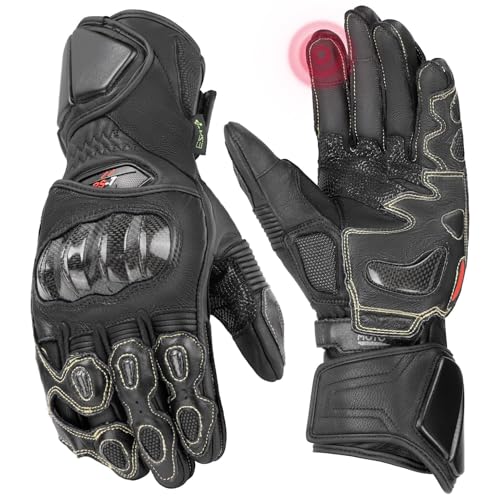
Kemimoto Motorcycle Riding Gloves
Scooter riders and casual commuters get padding, grip and light weather protection without a sport glove’s stiffness. No break in period is needed since the shell flexes from the first wear. Short urban trips suit this glove better than sustained motorway speeds.
Pros
- Comfortable straight out of the packaging
- Grips the bars well in light rain
- Inexpensive option for everyday city riding
Cons
- Protection drops off at higher speeds
- Not built for long distance touring
How they stack up
| # | Model | Shell | Best for | Score | Price |
|---|---|---|---|---|---|
| 1 | Alpinestars SP-8 V3 Motorcycle Gloves | Goat leather with stretch inserts | Best overall | 9.4 | Check price |
| 2 | Dainese Carbon 4 Short Motorcycle Gloves | Goat and cowhide leather | Best for sport riding | 9.2 | Check price |
| 3 | REV’IT! Sand 4 H2O Motorcycle Gloves | Leather and textile with waterproof membrane | Best for touring and adventure | 9.0 | Check price |
| 4 | Klim Induction Motorcycle Gloves | Perforated leather and mesh | Best for hot weather | 8.8 | Check price |
| 5 | Joe Rocket Phoenix 5.1 Motorcycle Gloves | Mesh with leather palm | Best value | 8.6 | Check price |
| 6 | ILM Motorcycle Gloves with Touchscreen Fingertips | Synthetic leather and textile | Best budget | 8.3 | Check price |
| 7 | Kemimoto Motorcycle Riding Gloves | Synthetic with breathable panels | Best for casual riders | 8.0 | Check price |
How to pick the right one
What matters most in motorcycle glove protection? Most falls put a rider’s hands down first, so the palm takes the abrasion and the wrist absorbs the twist. Reinforced palm material, a slider patch that lets the hand skid instead of catch, and a secure wrist closure protect more than knuckle armor alone. A hard knuckle on a glove that flies off at the wrist protects nothing. Check the closure strength before anything else.
Leather, textile or waterproof: which material fits your climate? Leather resists abrasion best and molds to the hand with wear, while mesh and textile breathe far better in heat. Waterproof membranes keep rain out but trap warmth, which turns uncomfortable above a certain temperature. Many riders keep two pairs, a ventilated summer glove and a waterproof one for the rest of the year. No single glove covers every condition well.
How should motorcycle gloves fit at the controls? Snug gloves with no loose fabric at the fingertips preserve feel on the brake and clutch lever. Leather stretches with use, so buy it close fitting, while textile stays close to the size purchased. Test the indicator switch and horn without shifting your grip. Confirm the cuff works with the jacket sleeve you actually wear.
What does CE certification mean and how do I check seam quality? European gloves sold as protective equipment carry a CE rating that reflects abrasion and impact performance, which tells you more than marketing copy. Turn a glove inside out and check whether seams sit on the palm surface, where a slide would grind them away. External seams and reinforced stitching along impact zones signal a design built for crashes, not just for looks.
Good to know
Do motorcycle gloves need armor to be safe?
Hard knuckle protection helps in impacts, but palm abrasion resistance and a secure wrist closure matter more. A glove with strong palm reinforcement and a tight cuff protects better than one with dramatic knuckles alone.
How tight should motorcycle gloves fit?
Snug, with no loose material at the fingertips and full finger movement. Leather relaxes with wear so buy it close fitting, while textile gloves stay close to the size purchased.
What does CE certification mean on motorcycle gloves?
It shows the gloves were tested against abrasion, tear and impact standards for protective equipment, with levels indicating performance achieved. That is a more reliable signal than words like reinforced or heavy duty.
Can one pair of gloves work year round?
Rarely in comfort. Ventilated summer gloves turn cold and wet in winter, and insulated waterproof gloves feel unbearable in heat. Most regular riders keep a summer pair and a waterproof pair.
Are touchscreen fingertips worth having on riding gloves?
They let you use navigation and payment apps without removing a glove, at no cost to protection. The conductive material wears out after a season or two of heavy use.
How long do motorcycle gloves typically last?
Anywhere from a season to several years depending on mileage and materials. Leather outlasts mesh, and any glove involved in a crash should be replaced even if it looks intact, since protective layers may be compromised.
Should I choose short cuff or gauntlet gloves?
Short cuff gloves go on quickly and tuck under a jacket sleeve for city riding. Gauntlets seal better against rain and wind and cover more of the wrist, which suits touring and higher speeds.
How do I care for leather motorcycle gloves?
Let them air dry away from direct heat, condition the leather occasionally, and skip the washing machine entirely. Heat sources dry leather out and crack it at the seams.
The verdict
Alpinestars SP-8 V3 gloves remain the most sensible single purchase, protective enough for spirited rides and comfortable enough for daily wear. Sport riders should step up to the stiffer, better armored Dainese Carbon 4 Short, and anyone touring through changeable weather should reach for the REV’IT! Sand 4 H2O. Check palm reinforcement and wrist closure before knuckle armor, whichever pair you choose.
Tony Russo
Tony trained as an automotive technician and spent years in service and parts retail before moving into writing. He focuses on garage tools, car care products and accessories from a hands-on maintenance perspective.