How to Pick a Massage Ball for Deep Tissue Relief
TriggerPoint MB1 ranks first for a firm, grippy ball that digs into knots without rolling away mid session. Kieba Massage Lacrosse Balls deliver similar deep pressure in a two pack for less money. Tune Up Fitness Therapy Balls suit gentler full body mobility work instead of pinpoint pressure.
TriggerPoint MB1 is the ball worth reaching for first, thanks to a firm core and grippy surface that stays put against a wall or floor. Kieba’s lacrosse balls deliver comparable deep pressure for far less money, and Tune Up Fitness balls handle gentler mobility work instead.
Grabbing any rubber ball is not the same as choosing a massage ball, since firmness, surface grip and size all change how pressure feels on a knot. Too soft does nothing; too hard leaves a bruise. We compared current balls on density, grip against smooth walls and floors, and how precisely each reaches a trigger point versus a broad muscle area.
What we recommend

TriggerPoint MB1 Massage Ball
A firm, high-density core pairs with a tacky rubber surface that grips walls and floors instead of skidding mid roll. Deep knots in the shoulders, glutes and back respond with more control than a bare lacrosse ball offers, according to owner reports. Daily use does not wear the surface down quickly.
Pros
- Firm core reaches deep knots
- Tacky surface stays put on walls and floors
- Holds up to daily use
Cons
- Too firm for very sensitive areas
- Costs more than a plain lacrosse ball

Kieba Massage Lacrosse Balls
Two firm rubber lacrosse-style balls deliver intense deep tissue pressure at a low price. Pressed against a wall, they work well on shoulders and back, based on owner feedback. Smooth surfaces can slip on hard floors more than tackier, textured options.
Pros
- Two balls for a low price
- Very firm deep tissue pressure
- Simple, durable construction
Cons
- Smooth surface can slip on hard floors
- Intensity may overwhelm beginners

Tune Up Fitness Yoga Tune Up Therapy Balls
Grippy rubber balls ship in a mesh tote and are designed to grab skin and fascia for broad rolling release rather than sharp point pressure. Necks, feet and full body mobility routines all suit this pair well. Softer than a hard lacrosse ball, they feel gentler through a session.
Pros
- Gentle enough for necks and feet
- Grippy surface grabs fascia
- Ships with a carry tote
Cons
- Softer feel reaches deep knots less effectively
- Priced higher than plain rubber balls

RAD Roller RAD Round
A shaped, slightly giving surface molds around joints and tendons for targeted work near the spine and ankles. Bony areas feel more comfortable under this ball than under a hard lacrosse ball, owners report, while deep tissue pressure still comes through. Contouring makes it useful in spots a round ball skids past.
Pros
- Molds around joints and tendons
- Comfortable on bony areas
- Still reaches deep tissue
Cons
- Less intense than a standard lacrosse ball
- Priced higher than basic round balls
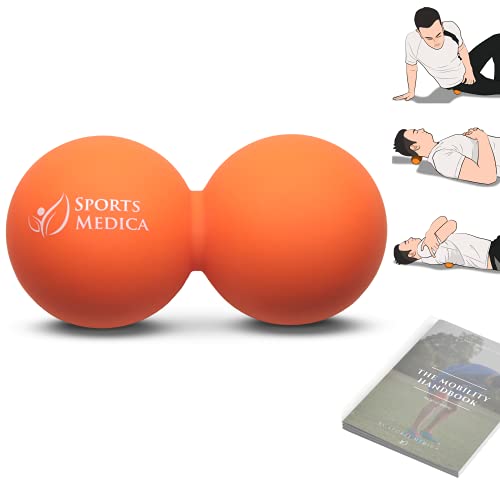
Physix Gear Sport Peanut Massage Ball
A double-ball peanut design straddles the spine so pressure lands on the muscles either side rather than on the vertebrae. Upper back and neck tension respond well, and the shape rolls smoothly along the back against a wall or floor. EPP foam construction keeps it lightweight for travel.
Pros
- Straddles the spine safely
- Effective for upper-back and neck tension
- Rolls smoothly during use
Cons
- Fixed shape limits pinpoint work elsewhere
- Less useful on arms and legs

Gaiam Restore Muscle Therapy Massage Roller Ball
A rolling ball sits inside a handled housing, so sore calves and shoulders get worked without pinning the body to the floor. Limited mobility users find the handheld format easier to manage, owners report, though it delivers less bodyweight pressure than a floor ball. A molded grip keeps control steady through longer sessions.
Pros
- Easy to use without lying down
- Suited to limited mobility
- Molded handle improves control
Cons
- Delivers less pressure than a floor ball
- Not built for deep pinpoint knots
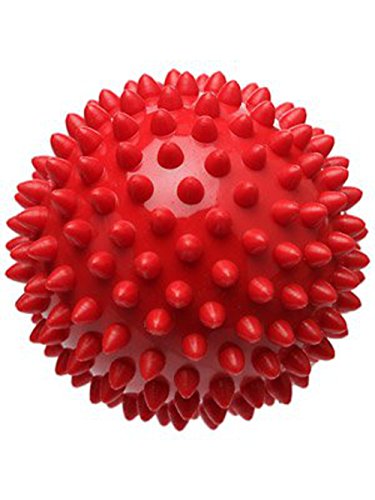
Pro-Tec Athletics Spiky Ball
Raised nubs stimulate blood flow and work into the soles of the feet and broader muscle groups. Plantar tension and general soreness respond well to the texture, based on owner feedback, though pinpoint knot-busting suits a smooth ball better. Light weight makes it easy to keep in a bag.
Pros
- Spikes feel good on the feet
- Encourages blood flow
- Light and portable
Cons
- Texture spreads rather than focuses pressure
- Not ideal for a single deep knot
Compared at a glance
| # | Model | Diameter | Best for | Score | Price |
|---|---|---|---|---|---|
| 1 | TriggerPoint MB1 Massage Ball | 2.6 in | Best overall | 9.4 | Check price |
| 2 | Kieba Massage Lacrosse Balls | 2.5 in | Best value | 9.1 | Check price |
| 3 | Tune Up Fitness Yoga Tune Up Therapy Balls | 2.5 in | Best for full-body mobility | 8.9 | Check price |
| 4 | RAD Roller RAD Round | 2.75 in | Best for targeted release | 8.6 | Check price |
| 5 | Physix Gear Sport Peanut Massage Ball | Peanut | Best for the spine and back | 8.4 | Check price |
| 6 | Gaiam Restore Muscle Therapy Massage Roller Ball | Handheld roller | Best handheld option | 8.2 | Check price |
| 7 | Pro-Tec Athletics Spiky Ball | 2.6 in | Best spiky option | 8.0 | Check price |
What to look for
Firmness decides how deep it goes A firmer ball reaches deeper into muscle and works better on stubborn knots. Softer balls stay gentler on bony or sensitive areas instead. Beginners often start medium and move firmer as tissue adapts, so match density to tolerance rather than grabbing the hardest option on the shelf.
Grip keeps the ball where you want it Tacky rubber grips walls and floors, keeping the ball on the exact spot being targeted instead of shooting out sideways. Smooth lacrosse-style balls hit just as hard but slide more. Pinning a ball against a wall is where grip matters most.
Shape changes what you can reach Round balls work as an all-rounder for most muscle groups. Peanut shapes straddle the spine to protect the vertebrae, and spiky balls spread pressure for feet and circulation. Pick the shape around the areas that bother you most, not the other way around.
Size and portability matter for daily use Smaller balls pinpoint a single knot, while larger balls cover broad areas like the glutes and back. Desk workers and frequent travelers benefit from a compact ball or a handled roller, since both pack easily and work almost anywhere.
Questions worth asking
Are massage balls better than a foam roller?
Massage balls target small, specific knots that a broad foam roller simply rolls over. Use a roller for large muscle groups and a ball for pinpoint trigger points, since the two complement rather than replace each other.
How firm should a massage ball be?
Start medium-firm if this is new territory, then move firmer as muscles adapt. Firmer balls reach deeper knots but can feel too intense on sensitive or bony spots.
Can I use a massage ball every day?
Yes, short daily sessions of a few minutes per area work fine for most people. Ease off if bruising or lingering soreness shows up, and avoid rolling directly on joints or the spine.
What is the peanut shape actually for?
A gap down the middle straddles the spine, so pressure lands on the muscles on each side instead of the vertebrae. It works especially well along the back and neck.
Are spiky massage balls better than smooth ones?
Spiky balls spread pressure across raised points, which many find pleasant on the feet and for general circulation. Smooth balls drive deeper into a single knot, so the right choice depends on the goal.
Can a massage ball help with plantar fasciitis?
Rolling the sole of the foot over a firm ball can ease tightness that contributes to plantar discomfort for many people. It works as a self-care aid rather than a medical treatment, so persistent pain deserves a professional opinion.
Where should a massage ball never be used?
Avoid rolling directly over the spine, joints, bones or areas of acute injury, bruising or inflammation. Stick to the muscle belly and stop immediately if sharp pain shows up.
What size massage ball should I buy first?
Around 2.5 inches works for most trigger points, while larger balls suit broad areas like the glutes. A standard lacrosse-ball size makes the most versatile starting point.
Our take
TriggerPoint MB1 is worth buying for firm, controlled pressure that stays exactly where a knot needs it. Kieba’s two-pack delivers similar deep tissue relief for less money, and Tune Up Fitness balls suit anyone who wants gentler, full body mobility work instead.
Derek Holt
Derek has a background coaching recreational and amateur athletes and has worked the sales floor at specialty fitness retailers. He focuses on equipment durability, ergonomics and realistic use cases rather than marketing claims.