7 Pickleball Paddles Worth Adding to Your Bag
JOOLA’s Ben Johns Hyperion CFS 16 tops this group for its spin and forgiving sweet spot. Selkirk’s Amped S2 suits players who live at the kitchen line and want softer control. New to the sport? The Niupipo paddle is USAPA approved and genuinely playable for very little outlay.
Club players consistently rate the JOOLA Ben Johns Hyperion CFS 16 first, thanks to a carbon face that grips the ball and a sweet spot wide enough to forgive off center hits. Control focused players tend to prefer the Selkirk Amped S2 instead. Beginners can start well with the Niupipo paddle and upgrade once their style is clear.
Two numbers decide how a paddle actually plays, swing weight and core thickness, yet listings often bury or skip them entirely. We compared face material, core thickness, static weight, grip circumference and tournament approval across seven current paddles. Extra weight went to paddles owners report keep their surface texture through a full season of play.
The best picks, ranked
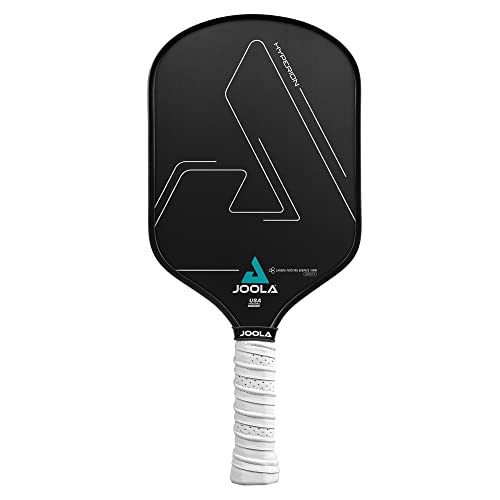
JOOLA Ben Johns Hyperion CFS 16 Pickleball Paddle
Carbon friction on the face grips the ball for noticeably more spin than fiberglass, especially on third shot drops and topspin rolls. A 16mm polypropylene core softens impact and widens the usable hitting area. Players moving from a wide body shape need a few sessions to adjust to the elongated length.
Pros
- Strong spin from the carbon friction surface
- Wide sweet spot forgives off center contact
- Balances power with real control
Cons
- Elongated shape takes time to adjust to
- Surface texture wears down with heavy use

Selkirk Amped S2 Pickleball Paddle
Selkirk’s wide body shape pairs with an X5 polypropylene core to produce the softest feel in this lineup, ideal for dinking and resetting at the net. Finding the middle of the larger face comes easier than with an elongated paddle. Aggressive drivers may find the tradeoff in raw power limiting.
Pros
- Excellent touch on soft dinks and resets
- Wide face forgives mishits
- Backed by strong build quality and warranty
Cons
- Less power on drives than carbon faced paddles
- Fiberglass grips the ball less than carbon

Paddletek Tempest Wave Pro Pickleball Paddle
Placement matters more than pace with this paddle, thanks to a thin profile and a muted feel that rewards deliberate shot making. Owners report it punishes off center contact more than the JOOLA does. Skilled players grow into it rather than start their first season with it.
Pros
- Precise shot placement for skilled players
- Quiet, muted feel off the paddle face
- Consistent quality control across units
Cons
- Smaller sweet spot than beginner focused paddles
- Unforgiving for players still building technique

Onix Z5 Graphite Pickleball Paddle
Wide body shape and a nomex core have made this the default club recommendation for years, suiting almost any skill level reasonably well. Nomex plays louder and firmer than the polymer cores used elsewhere in this list. First serious paddles rarely go wrong with this one.
Pros
- Balanced play style across skill levels
- Widely available with strong club support
- Good pop on drives
Cons
- Louder than polymer core paddles
- Firm feel on soft dinking shots

Engage Pursuit MX 6.0 Pickleball Paddle
A softer, thicker core holds the ball on the face longer than most rivals, translating into more spin and easier resets from deep court. Rough surface texture bites hard when new. Owners report that texture is the limiting factor on longevity, so treat this as a performance paddle rather than an everyday basher.
Pros
- Long dwell time boosts spin and resets
- Comfortable, dampened feel on contact
- Excellent for deep court defense
Cons
- Texture wears faster on abrasive court surfaces
- Sits heavier than average at the top of its range

HEAD Radical Elite Pickleball Paddle
Tennis converts find a familiar grip shape here, paired with a head heavy balance that carries speed into shots. A larger sweet spot helps through the first few months of learning the sport. Spin generation stays limited, since the face lacks the surface grit carbon paddles use.
Pros
- Comfortable for players coming from tennis
- Generous sweet spot eases the learning curve
- Solid build at a modest cost
Cons
- Limited spin from the smooth fiberglass face
- Head heavy balance tires the wrist over time

Niupipo Pickleball Paddle
USAPA approval on a paddle this affordable is not something every budget option can claim, and this one plays well in recreational games. A cushioned grip absorbs shock reasonably for new players. Based on specifications, the core runs thinner than premium paddles, so soft shots feel firmer and give less feedback.
Pros
- Tournament approved at a low starting cost
- Cushioned grip suits new players
- Reasonable starting weight for learning
Cons
- Firm feel on dinks and resets
- Face texture fades faster than pricier paddles
How to choose
What does core thickness change about how a paddle plays? A 16mm core absorbs impact, extends dwell time, and forgives shots that miss the center, which explains why most control paddles use one. Thinner 13mm or 14mm cores return more pop, favoring drivers and doubles players who put balls away fast. Unsure where to start? 16mm is the safer default, since forgiveness matters more than extra pace for most club players.
How does face material change spin and power? Raw carbon and carbon friction surfaces grip the ball hard, producing noticeably more topspin and slice than smooth fiberglass or graphite. That same grip is what wears down fastest, so expect texture to fade over a season of regular play. Fiberglass returns more power off the face but generates less spin, a fair trade for players who favor flat, driving shots.
Does paddle weight and swing weight matter for beginners? Static weight between 7.3 and 8.5 ounces covers nearly every paddle sold, yet two paddles at the same weight can feel completely different depending on where the mass sits. Head heavy builds hit harder and tire the wrist faster. Players managing tennis elbow report that lighter, head light paddles with thicker cores ease discomfort more than any grip change does.
What grip size and handle length fit my hand? Grip circumference between 4 and 4.5 inches suits most hands, and a grip that runs slightly small can be built up with overgrip. One that runs too large has no easy fix. Longer handles help two handed backhands and tennis converts, though they trade away some face area. Hold a paddle in person if you fall between sizes.
How they compare
| # | Model | Core | Best for | Score | Price |
|---|---|---|---|---|---|
| 1 | JOOLA Ben Johns Hyperion CFS 16 Pickleball Paddle | 16mm polypropylene honeycomb | Best overall | 9.4 | Check price |
| 2 | Selkirk Amped S2 Pickleball Paddle | X5 polypropylene honeycomb | Best for control | 9.2 | Check price |
| 3 | Paddletek Tempest Wave Pro Pickleball Paddle | Paddletek polymer honeycomb | Best for advanced players | 9.0 | Check price |
| 4 | Onix Z5 Graphite Pickleball Paddle | Nomex honeycomb | Best all rounder for clubs | 8.8 | Check price |
| 5 | Engage Pursuit MX 6.0 Pickleball Paddle | Control Pro polymer | Best for spin and dwell | 8.6 | Check price |
| 6 | HEAD Radical Elite Pickleball Paddle | Polypropylene honeycomb | Best value | 8.3 | Check price |
| 7 | Niupipo Pickleball Paddle | Polypropylene honeycomb | Best budget | 8.0 | Check price |
Good to know
What weight pickleball paddle should beginners use?
Most players do well between 7.5 and 8.3 ounces. Lighter paddles favor quick hands at the net, while heavier ones add power on drives and cut down on vibration.
Does core thickness really change how a paddle feels?
Yes, more than almost any other spec. A 16mm core plays softer and forgives mishits, while a 13mm or 14mm core snaps back faster with more pop.
Are expensive paddles worth it for a beginner?
Not right away. A USAPA approved paddle in the budget range plays fine while technique develops. Upgrading after a few months, once a preference for control or power emerges, spends the money more wisely.
How long does a pickleball paddle typically last?
Regular players usually notice the face texture and core softening after one to two years. Recreational players often get considerably longer before performance drops off.
What does USAPA approved mean on a paddle?
It confirms the paddle meets the official specification for surface roughness, size and deflection, making it legal for sanctioned tournament play. Casual games do not require it.
Elongated or wide body paddle, which is better?
Elongated shapes add reach and power but narrow the sweet spot. Wide body shapes forgive more mishits and suit most club level players better.
How do I stop a pickleball paddle slipping in my hand?
Add an overgrip and swap it out once it glazes over. Overgrips also let you fine tune grip circumference by roughly half a size.
Can I use my tennis technique with a pickleball paddle?
Partly. Grip and swing mechanics transfer reasonably well, but the soft game at the net rewards a shorter, quieter stroke than tennis players typically bring.
JOOLA Hyperion or Selkirk Amped, which suits my game?
Choose the JOOLA if spin and an all around game matter most. Pick the Selkirk if your game centers on dinking and resets at the kitchen line, where its softer feel pays off.
What is the best pickleball paddle for a first time player?
The Niupipo paddle is USAPA approved and genuinely playable without a steep cost, making it a sensible starting point before a style preference forms.
The verdict
The JOOLA Ben Johns Hyperion CFS 16 earns the top spot for real spin without giving up the forgiving sweet spot most club players rely on. Games decided at the kitchen line favor the Selkirk Amped S2 and its softer touch instead. Still deciding whether pickleball will stick? Start with the Niupipo paddle and upgrade once a clear style emerges.
Derek Holt
Derek has a background coaching recreational and amateur athletes and has worked the sales floor at specialty fitness retailers. He focuses on equipment durability, ergonomics and realistic use cases rather than marketing claims.