How to Pick a Life Jacket for Paddling, Boating, or Kids
Onyx’s MoveVent Dynamic suits active paddlers who need shoulder mobility, Stohlquist’s Fit adjusts to a wide range of adult body types for general boating, and O’Neill’s Superlite kids’ vest gives young swimmers a snug, Coast Guard-approved fit.
A life jacket only works if it matches the wearer’s actual weight range and the activity it’s rated for.
Paddling, general boating, fishing, and kids’ water play each call for a different cut and buoyancy level, so we compared Coast Guard approval type, fit range, and mobility features across current listings.
The top picks, ranked
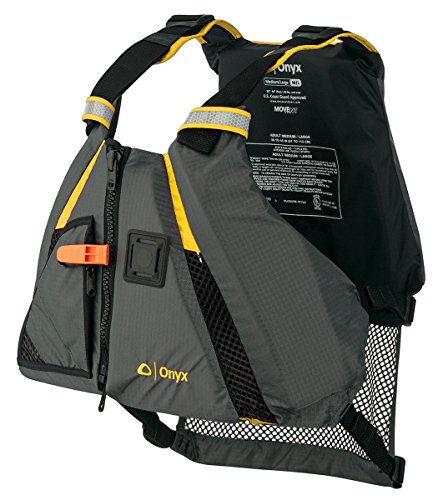
Onyx MoveVent Dynamic Paddle Sports Life Vest
Segmented foam panels flex with paddling motion instead of locking up the shoulders. A mesh back panel cuts bulk against kayak and canoe seats. US Coast Guard approval covers general recreational use for this Type III vest.
Pros
- Segmented foam flexes through paddling strokes
- Mesh back reduces bulk against kayak seats
- USCG Type III approval for general recreational use
Cons
- Less floatation reserve than offshore-rated Type I vests
- Not built for cold-water immersion use
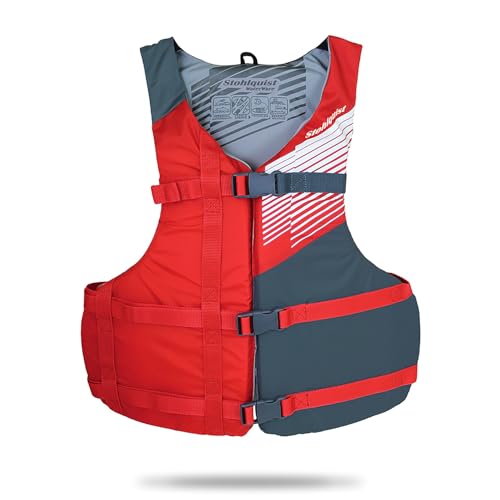
Stohlquist Fit Adult Life Jacket
Four adjustable straps accommodate a broader range of body shapes than typical side-buckle vests. General boating, fishing, and casual paddling all fit its intended use, rather than one specific sport. Owners report it stays secure without riding up during movement.
Pros
- Four-strap system fits a wider range of body shapes
- Stays secure without riding up during activity
- Suits multiple activities instead of one sport
Cons
- Bulkier fit than sport-specific paddling vests
- Fewer color options than sport-focused brands

O’Neill Superlite USCG Kids’ Life Vest
Sizing here is built for children, not scaled down from an adult pattern, which cuts the chance of ride-up in water. A crotch strap adds extra security for active young swimmers. US Coast Guard Type III approval covers the listed child weight range.
Pros
- Child-specific sizing lowers ride-up risk in water
- Crotch strap adds security for active swimmers
- USCG Type III approval across listed child weight ranges
Cons
- Sizes must match weight closely, less forgiving fit
- Not rated for infants under the minimum listed weight

Mustang Survival HIT Inflatable PFD
This vest stays flat and low-profile until manually or automatically triggered, suited to boaters who want minimal bulk. Once inflated, it provides more buoyancy than most foam Type III vests. Manual versions need a cord pull, while hydrostatic models inflate automatically on submersion.
Pros
- Low-profile design stays comfortable for long wear
- Higher buoyancy once inflated than most foam vests
- Available with manual or automatic hydrostatic triggers
Cons
- Not approved for personal watercraft or water sports use
- Needs periodic inspection of the inflation cartridge

Full Throttle Rapid-Dry Flex-Back Life Vest
A flex-back panel design mirrors premium paddling vests at a lower price point. Rapid-dry material sheds water faster than a standard nylon shell. General recreational boating and casual kayaking suit it well, without sport-specific extras.
Pros
- Lower price than premium paddling-specific vests
- Rapid-dry shell sheds water faster than standard nylon
- Flex-back panel improves comfort over rigid budget vests
Cons
- Fewer adjustment points than premium fit-focused vests
- Bulkier than dedicated sport paddling vests

NRS Odyssey Fishing Life Jacket
Multiple front pockets sized for tackle boxes and small tools target anglers on kayaks or small boats. A shorter front profile clears rod-casting motion better than standard vests. A mesh lower back panel accommodates high-back kayak seats.
Pros
- Multiple pockets hold tackle and small tools
- Shorter front profile clears rod-casting motion
- Mesh lower back suits high-back kayak seats
Cons
- Extra pockets add bulk compared to minimalist paddling vests
- Not intended for offshore or rough-water conditions

Airhead Trend Water Sports Vest
Water skiing, wakeboarding, and tubing call for impact-rated protection beyond standard boating vests, and this vest delivers it. Neoprene shoulder panels cut down on chafing during towed sports. Floatation runs lower than a Type III boating vest, matched to its intended use.
Pros
- Impact rating suits towed water sports specifically
- Neoprene shoulders reduce chafing during activity
- Lower bulk than general boating vests for active sports
Cons
- Less general-purpose than standard Type III boating vests
- Neoprene retains water weight after use
How to pick the right one
Understanding Coast Guard life jacket types Type III vests cover most recreational boating and paddling, balancing mobility with moderate buoyancy. Type V vests, including inflatables, apply to specific uses only, like offshore boating, and must match the label exactly to keep approval valid. Checking the activity list on the label matters more than the buoyancy number alone.
How to choose a life jacket by activity Paddling vests prioritize shoulder mobility and a low-bulk back for kayak and canoe seats. Fishing vests add pockets but give up some mobility in return. Towed water sports like wakeboarding need impact-rated vests, since a standard boating vest isn’t built for high-speed falls.
How do you fit a kids’ life jacket correctly? Children’s vests need child-specific sizing rather than a scaled-down adult pattern, since kids’ proportions differ enough that adult-pattern vests ride up in water. A properly fitted vest, with the crotch strap secured, shouldn’t lift past the ears when a child is lifted by the shoulders.
Inflatable vs foam life jackets, which lasts longer in practice? Inflatable vests stay low-profile and comfortable through long wear, but they need manual activation or a hydrostatic trigger plus regular cartridge checks. Foam vests work the instant they’re worn, with no activation step needed, which matters for water sports or situations demanding instant buoyancy.
How they compare
| # | Model | USCG type | Best for | Score | Price |
|---|---|---|---|---|---|
| 1 | Onyx MoveVent Dynamic Paddle Sports Life Vest | Type III | Best overall | 9.2 | Check price |
| 2 | Stohlquist Fit Adult Life Jacket | Type III | Best for general boating | 8.9 | Check price |
| 3 | O’Neill Superlite USCG Kids’ Life Vest | Type III | Best for kids | 8.8 | Check price |
| 4 | Mustang Survival HIT Inflatable PFD | Type V, inflatable | Best for offshore boating | 9.0 | Check price |
| 5 | Full Throttle Rapid-Dry Flex-Back Life Vest | Type III | Best value | 8.4 | Check price |
| 6 | NRS Odyssey Fishing Life Jacket | Type III | Best for fishing | 8.6 | Check price |
| 7 | Airhead Trend Water Sports Vest | Type III, impact-rated for towed sports | Best for water sports | 8.3 | Check price |
Frequently asked questions
What is the best life jacket for kayaking?
The Onyx MoveVent Dynamic ranks highest for kayaking, since its segmented foam and mesh back flex with paddling motion and clear high-back seats.
Are inflatable life jackets as safe as foam ones?
Inflatable Type V vests offer more buoyancy once triggered, but they need activation, so approval covers boating and sailing rather than water sports that require instant floatation.
How do you know if a kids’ life jacket fits correctly?
Fasten every strap, then lift the child by the vest’s shoulders. A properly fitted vest won’t ride up past the chin or ears.
Type II vs Type III life jackets, what’s the difference?
Type II vests turn an unconscious wearer face-up but add bulk, while Type III vests favor mobility and comfort for active recreation, without the automatic turning feature.
Can you use a fishing life jacket for general boating?
Yes, fishing vests carry Type III approval for general use, though their extra pockets add bulk that’s unnecessary if you’re not fishing.
Do life jackets expire?
Foam life jackets have no strict expiration but need replacing once foam becomes compressed or waterlogged. Inflatable vests need cartridge and mechanism checks on the manufacturer’s schedule.
What life jacket is required for water skiing?
Water skiing calls for an impact-rated Type III vest specifically labeled for towed sports, since standard boating vests aren’t built for high-speed impact.
How much weight can a life jacket support?
Buoyancy is measured in pounds of lift, typically 15 to 22 pounds for adult Type III vests, and the vest must match the wearer’s actual weight range on the label.
Is a Type III vest good enough for offshore boating?
Not usually. Offshore conditions favor higher-buoyancy options like the Mustang Survival HIT, an inflatable Type V vest rated well above standard Type III foam vests.
Our take
Match the vest to its activity label first, since Type III paddling vests and impact-rated water sports vests aren’t interchangeable. Kids need vests sized specifically for children, never a smaller cut of an adult design.
Derek Holt
Derek has a background coaching recreational and amateur athletes and has worked the sales floor at specialty fitness retailers. He focuses on equipment durability, ergonomics and realistic use cases rather than marketing claims.


