How to Pick Golf Balls That Suit a Junior Swing
Callaway Supersoft is the top junior ball for its very low compression and forgiving feel. Wilson Duo Soft is the softest option for the slowest swings. Srixon Soft Feel balances distance with short game control as a player improves.
Callaway Supersoft, Wilson Duo Soft, and Srixon Soft Feel stand out for young players. All three use low compression cores that a junior swing can actually compress, which is where the distance gain comes from.
Ball choice confuses parents because most marketing targets adult swing speeds and tour spin numbers, neither of which applies to a child. We compared compression ratings, cover construction, and how each ball behaves at slower speeds. A firm premium ball a junior cannot compress travels shorter and feels harder than an inexpensive soft one.
How to choose
Why compression is the number that matters Compression describes how much a ball deforms at impact. A junior swinging a driver at 60 miles per hour cannot meaningfully compress a tour ball rated near 100, so it feels like a rock and loses distance. Balls rated in the 30s and 40s, such as Supersoft and Duo Soft, spring off a slow swing properly. This single factor outweighs almost everything else for young players.
Two piece or three piece for a junior Two piece balls pair a large core with a durable cover, giving distance and long life at a low cost. Three piece balls add a mantle layer that boosts short game spin, useful only once a player genuinely controls wedge shots. For most juniors under twelve, a soft two piece ball is the right answer.
Does visibility actually matter? Junior rounds involve a lot of searching. Yellow, orange, and matte finishes track noticeably better in flight and stand out in rough, keeping pace of play reasonable and tempers intact. Fewer lost balls per round quietly offsets a slightly higher cost per ball.
Skip premium tour balls for now A tour ball is engineered for high swing speeds and rewards precise strike with spin control. Hand one to a young player and the result is a firmer feel, shorter distance, and a cover that scuffs fast. Save premium boxes until swing speed climbs and the player genuinely shapes shots, then trial a sleeve before buying a dozen.
What we recommend

Callaway Supersoft Golf Balls
Supersoft carries one of the lowest compression ratings of any mainstream ball, so a junior swing compresses it properly and gets the full spring off the face. Parents report noticeably longer drives compared with firmer balls. The soft cover still gives some feel around the green.
Pros
- Low compression suits slower swings
- Soft feel off the putter face
- High visibility colours available
Cons
- Limited greenside spin for advanced juniors
- Cover scuffs with heavy wedge use
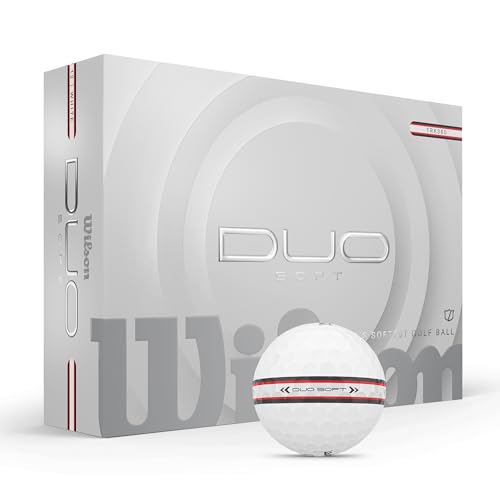
Wilson Duo Soft Golf Balls
Wilson markets Duo Soft as one of the softest balls sold, and for a young player that means easy launch without much clubhead speed. Pricing stays sensible too, which matters once balls start going missing regularly on wooded holes.
Pros
- Easiest ball here to compress
- Very soft feel builds confidence
- Sensible value for a lost ball budget
Cons
- Less control on full wedge shots
- Softer cover marks more easily

Srixon Soft Feel Golf Balls
Soft Feel sits slightly firmer than the softest options, suiting juniors whose swing speed is climbing toward adult range. Srixon’s cover grabs more on the green than most two piece balls, so a teenager working on short game gets useful feedback.
Pros
- More short game control than rivals
- Grows with an improving player
- Consistent flight in wind
Cons
- Too firm for very young beginners
- Slightly less soft off the putter

Titleist TruFeel Golf Balls
TruFeel is Titleist’s softest ball, bringing recognisable brand quality control to a low compression build. Juniors who care about putting feel often prefer it, and ball to ball consistency inside a box is a genuine advantage over cheaper options.
Pros
- Excellent putting feel for the category
- Very consistent from ball to ball
- Reliable straight flight
Cons
- Firmer than the softest junior balls
- Costs more than budget options

TaylorMade Soft Response Golf Balls
Soft Response is built to get the ball airborne easily, addressing the common junior problem of a low, weak flight. Three piece construction adds a bit more spin control than pure two piece designs, which helps once a swing starts producing consistent contact.
Pros
- Helps young players get the ball airborne
- Three piece build adds control
- Soft feel on all shots
Cons
- Higher flight can suffer in wind
- More expensive than two piece rivals

Volvik Vivid Golf Balls
A matte colour finish makes Vivid far easier for young players to track in the air and find in rough. That sounds trivial until counting how many balls a junior round loses. The low compression core also suits their swing speed.
Pros
- Genuinely easier to see and find
- Fun colours keep juniors engaged
- Decent distance for the compression
Cons
- Matte finish shows dirt quickly
- Firmer than the softest options here

Pinnacle Rush Golf Balls
Large value packs make Pinnacle Rush the choice for players who lose balls constantly, which describes most juniors learning the game. Feel runs firmer than the soft options, but for a beginner hitting into water and trees, the cost per ball still makes sense.
Pros
- Very low cost per ball in bulk
- Durable cover survives cart paths
- Good distance for beginners
Cons
- Firm feel on and around the green
- Little spin control on approach shots
The lineup, side by side
| # | Model | Compression | Best for | Score | Price |
|---|---|---|---|---|---|
| 1 | Callaway Supersoft Golf Balls | Very low, around 38 | Best overall | 9.4 | Check price |
| 2 | Wilson Duo Soft Golf Balls | Extremely low, around 35 | Best value | 9.1 | Check price |
| 3 | Srixon Soft Feel Golf Balls | Low, around 60 | Best for improving players | 8.9 | Check price |
| 4 | Titleist TruFeel Golf Balls | Low, around 60 | Best for feel around the green | 8.7 | Check price |
| 5 | TaylorMade Soft Response Golf Balls | Low, around 35 to 40 | Best for higher launch | 8.5 | Check price |
| 6 | Volvik Vivid Golf Balls | Low, around 70 | Best for visibility | 8.3 | Check price |
| 7 | Pinnacle Rush Golf Balls | Mid, around 70 | Best budget option | 8.0 | Check price |
Frequently asked questions
What compression should a junior golfer use?
Look for balls rated below around 60, and ideally in the 30s or 40s for younger children. Lower compression matches the slower clubhead speeds juniors generate.
Are junior specific golf balls necessary?
Not really. A few brands market junior balls, but a mainstream low compression ball like Callaway Supersoft does the same job with better quality control.
Do coloured golf balls perform differently from white ones?
Colour makes no meaningful performance difference. Matte finishes can feel marginally different off the putter, but the real advantage is tracking the ball in flight.
How many golf balls should a junior carry per round?
Six or more is realistic while a child is learning. That is exactly why value packs like Pinnacle Rush make sense early on.
When should a junior switch to a firmer golf ball?
Once driver swing speed climbs past roughly 85 miles per hour, or once wedge distances become consistent. Until then, a soft ball travels further.
Do soft golf balls really add distance for juniors?
Yes, for slow swings, because the player can compress the core. The effect reverses for fast swings, which is why adult low handicappers use firmer balls.
Are used or refurbished golf balls fine for a junior?
Lake balls work reasonably for practice, though water damage affects performance unpredictably. A fresh soft ball performs more consistently for competitive rounds.
Does the ball matter more than the clubs for a young player?
Clubs matter more overall, particularly shaft flex and length. The ball, though, is the cheapest single change that produces a noticeable improvement in distance and feel.
What is the best golf ball for a beginner versus an improving junior?
A beginner benefits most from the softest option, such as Wilson Duo Soft. An improving player who controls contact does better with Srixon Soft Feel for the added short game grip.
The verdict
Callaway Supersoft is the ball to hand a junior golfer, since its very low compression turns a slow swing into real distance without feeling harsh. Choose Wilson Duo Soft for the youngest and slowest swings, and move up to Srixon Soft Feel once the player starts caring about what happens around the green.
Derek Holt
Derek has a background coaching recreational and amateur athletes and has worked the sales floor at specialty fitness retailers. He focuses on equipment durability, ergonomics and realistic use cases rather than marketing claims.


