Which Label Maker Keeps an Office Desk Organized?
Brother P-touch PT-D610BT combines a wide tape range with phone and computer connectivity for general office work. DYMO LabelWriter 550 handles shipping and address labels at volume better. Brother PT-D410 covers routine desk labelling without needing any software.
Brother P-touch PT-D610BT covers the widest range of daily office jobs, printing laminated tape up to 24 millimetres for file spines and shelf edges while pairing with a computer or phone. Offices mainly printing address and shipping labels need a different tool: DYMO LabelWriter 550. Brother PT-D410 handles routine desk labelling for anyone who does not need software at all.
Office labelling actually splits into two jobs that need different machines. Tape-based labellers produce narrow, durable strips for folders, shelves, cables and equipment tags, while thermal label printers churn out address, barcode and shipping labels at speed. We compared tape widths, connectivity, resolution, keyboard quality and what owners report about consumable cost, since a busy office burns through labels faster than any home ever does.
The top picks, ranked
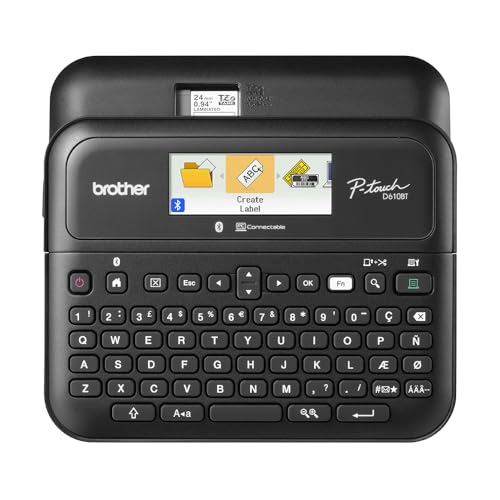
Brother P-touch PT-D610BT Label Maker
Tape up to 24 millimetres wide makes this machine genuinely useful for lever arch spines and shelf edge labels, not just cable tags. A large backlit display, mains power and Bluetooth to phone or computer let it serve a whole floor. Owners say the wide tape capability is exactly why it stays out on the desk instead of a drawer.
Pros
- Wide tape suits file spines and shelving
- Works standalone or driven from software
- Mains power skips constant battery changes
Cons
- Larger footprint than handheld models
- Wide TZe cartridges cost more per roll

Brother P-touch PT-D410 Label Maker
18 millimetre tape capacity and a full keyboard remain, while wireless connectivity drops away, suiting offices that type labels directly. Built-in templates cover folders, asset tags and cables, so most jobs need no design work. Specifications point to it as the practical pick for a single department.
Pros
- 18mm tape covers most filing labels
- Built-in templates speed up repeat jobs
- No app or driver required
Cons
- No Bluetooth or computer connection
- Narrower tape than the PT-D610BT

DYMO LabelWriter 550 Label Printer
A thermal desktop printer rather than a tape labeller, this DYMO prints address, shipping and barcode labels at high speed straight from a computer. Automatic label recognition identifies which roll is loaded. Because it only works tethered to a computer, it belongs in a mailroom rather than a bag.
Pros
- Fast for high-volume address printing
- No ink or toner to replace
- Integrates with common shipping software
Cons
- Requires a computer connection to work
- Uses proprietary DYMO label rolls

Brother QL-800 Label Printer
Continuous or die-cut labels print at speed here, and compatible paper allows black and red output, genuinely useful for priority markings and warning tags. Like the LabelWriter, it stays tethered to a computer. Wider roll options than tape cover shelf and box labelling well.
Pros
- Two-colour printing without ink
- Fast automatic cutting between labels
- Wide roll options for box and shelf work
Cons
- Tethered to a computer
- Paper labels wear less well than laminated tape

DYMO LabelManager 280 Label Maker
A QWERTY keyboard pairs with a rechargeable lithium battery here, so the machine travels around an office all day without hunting for AA cells. Computer connection allows designing labels in software too. D1 tape is easy to source but scuffs more than laminated alternatives.
Pros
- Rechargeable instead of battery hungry
- Computer connection for bulk label design
- Comfortable to carry and use one-handed
Cons
- 12mm maximum tape limits file spine use
- D1 tape scuffs more than laminated tape

Brother P-touch PT-D460BT Label Maker
Dedicated cable wrap and flag label templates come built in, plus flexible ID tape support, exactly what network and facilities teams need. Bluetooth lets a phone push long text instead of typing on the keypad. Size lands between the handheld and desktop classes.
Pros
- Purpose-built cable labelling templates
- Supports flexible ID tape for cable wraps
- Phone connection skips keypad typing
Cons
- More features than a general office needs
- Flexible ID tape costs more per roll

Epson LabelWorks LW-400 Label Maker
A straightforward handheld design pairs a QWERTY keyboard with a decent symbol library and support for laminated LC tape up to 18 millimetres. Stationery cupboard duty suits it better than daily printing. Print quality holds up, though the interface feels dated next to current Brother models.
Pros
- Laminated tape support at a low cost
- Wide symbol library built in
- Simple enough to hand to any colleague
Cons
- Epson tape is less widely stocked
- Interface runs slower than current Brother models
What matters most
Tape label maker or thermal label printer: which do you need? Two different tools both get called label makers, and mixing them up wastes money. Tape machines print narrow, durable strips onto laminated plastic and work standalone, suiting folders, shelves, cables and equipment. Thermal label printers print address and shipping labels onto paper rolls at speed but need a computer. Most offices eventually need one of each rather than forcing one machine to cover both roles.
What tape width does office filing actually need? Twelve millimetre tape works fine for cables and small folder tabs, but lever arch spines, shelf edges and archive boxes need eighteen or twenty-four millimetres to stay readable across a room. Archive and filing work as a real part of the job point toward the wider maximum on a machine like the PT-D610BT. That single specification matters more than any other for heavy filers.
Should your label maker connect to a computer or phone? A machine that only works through an app becomes a bottleneck the moment the person who installed it is out. Keyboard models let anyone in the office print without extra setup. Shared offices do best with a machine offering both: routine labels typed directly, longer batches pushed from a computer. Check that the label software can import from a spreadsheet if asset tags print in runs.
How much does it cost to run a label maker? Consumable spend in an office quickly outpaces the machine cost itself. Laminated tape costs more per metre but survives years of handling and filing, while thermal paper labels run far cheaper and work fine for anything replaced regularly. Standardising on one tape system across the office also cuts down the cartridge types worth stocking.
How they compare
| # | Model | Tape width | Best for | Score | Price |
|---|---|---|---|---|---|
| 1 | Brother P-touch PT-D610BT Label Maker | Up to 24mm laminated TZe | Best overall | 9.4 | Check price |
| 2 | Brother P-touch PT-D410 Label Maker | Up to 18mm laminated TZe | Best value | 9.2 | Check price |
| 3 | DYMO LabelWriter 550 Label Printer | Direct thermal, no ink | Best for shipping and address labels | 9.0 | Check price |
| 4 | Brother QL-800 Label Printer | Direct thermal, black and red capable | Best for two colour labels | 8.8 | Check price |
| 5 | DYMO LabelManager 280 Label Maker | DYMO D1, up to 12mm | Best rechargeable handheld | 8.6 | Check price |
| 6 | Brother P-touch PT-D460BT Label Maker | Up to 18mm including flexible ID tape | Best for cable and asset labelling | 8.3 | Check price |
| 7 | Epson LabelWorks LW-400 Label Maker | Up to 18mm Epson LC tape | Best budget | 8.0 | Check price |
Common questions
What is the best label maker for filing cabinets?
A tape machine taking at least 18 millimetre laminated tape, such as Brother PT-D410 or the wider PT-D610BT, works best. Narrow tape produces labels that are hard to read on a spine from across a room.
Do I need a label printer or a label maker for shipping?
Shipping calls for a thermal label printer such as DYMO LabelWriter 550 or Brother QL-800. Both print full address labels from shipping software at speed, something tape machines cannot do.
Which tape lasts longest on office files?
Laminated tape, such as Brother TZe, seals print between plastic layers and resists the rubbing filing causes. Paper and unlaminated tapes fade and scuff much faster in a working archive.
Can label makers print barcodes?
Many can. Brother P-touch models with computer connectivity and thermal printers like LabelWriter 550 and QL-800 handle barcodes well. Standalone handhelds vary, so check for barcode support if asset tracking matters.
Are rechargeable label makers better for office use?
They help when a machine gets carried around, since AA and AAA models drain fast during long labelling sessions. A fixed desk machine does better on mains power than either battery option.
How much does it cost to run a label maker?
Consumables drive the real cost. Laminated tape costs more per metre than thermal paper labels but lasts far longer, so standardising on one tape system pays off when buying in quantity.
Can several people share one label maker?
Yes, and keyboard-based machines share best since nobody needs software installed first. An app-driven model should have more than one person set up, or labelling stops the moment they are away.
What label maker suits IT cable labelling?
Brother PT-D460BT is built for it, with cable wrap and flag templates plus flexible ID tape that conforms around a cable without peeling. General-purpose tape tends to lift off round surfaces.
Is a Brother or DYMO label maker better for an office?
Brother’s P-touch range covers general filing and cable work with tape flexibility, while DYMO’s LabelWriter line focuses on high-volume thermal printing for shipping. Pick based on the job, not the brand alone.
Our pick
Brother P-touch PT-D610BT remains the most capable single machine for an office, since 24 millimetre laminated tape turns it into a filing and shelving tool rather than just a cable labeller. Add DYMO LabelWriter 550 for regular package shipping, and choose PT-D410 when a straightforward keyboard machine covers a department’s needs.
Marcus Chen
Marcus covered consumer electronics for enthusiast tech publications for six years before joining ChoiceCrest. He specializes in translating manufacturer spec sheets into plain-language buying advice, with a focus on audio, computing accessories and smart-home gear.
You might also need

Best Wireless Label Makers, From Tape to Thermal Rolls
6 Desk Phone Holders That Keep Screens at Eye Level
