How Does a Drawing Tablet’s Pressure Sensitivity Actually Register Pen Force?
Most drawing tablet pens use electromagnetic resonance, often shortened to EMR, where the tablet surface sends a signal to a coil inside the pen tip and reads back a shifted frequency as the pen responds. Pressing harder compresses a small spring inside the pen tip, which changes the coil’s resonant frequency in a way the tablet interprets as pressure level. This is why these pens need no internal battery, and why pressure level specs like 4096 or 8192 describe how finely that frequency shift is measured.
How EMR technology actually works
The tablet surface itself generates an electromagnetic field, which induces a current in the passive coil built into the pen tip, essentially powering the pen wirelessly the way certain wireless chargers power a device without a direct connection. The pen then sends a resonant signal back to the tablet, and both the position of the pen and the compression state of its tip spring get encoded into that returning signal, which the tablet’s sensor grid reads continuously as the pen moves.
What pressure level numbers like 4096 or 8192 actually mean
That number describes how many distinct gradations of pressure the tablet can distinguish between the lightest touch and the hardest press, so a higher number theoretically allows finer control over line weight transitions. In practice, most artists cannot reliably control pressure precisely enough to use anywhere near the full range of an 8192-level pen, and the practical difference between a well-tuned 4096-level pen and an 8192-level one is smaller than the spec sheets suggest.
Tilt sensitivity is a separate feature from pressure
Tilt sensing detects the angle of the pen relative to the tablet surface, which is used in many art programs to simulate the broad, angled strokes you get from tilting a real pencil or marker. This relies on a different part of the signal exchange between pen and tablet than pressure does, and a pen can have strong pressure sensitivity without supporting tilt at all, or vice versa, depending on the specific model.
How nib wear affects accuracy over time
The plastic nib tip that physically contacts the tablet surface gradually wears down with use, and a worn nib can start to feel scratchy or slightly less precise, though this generally affects tactile feel more than the underlying pressure-sensing electronics, which sit further back in the pen and are not directly worn down by surface contact. Most tablet pens use replaceable nibs specifically because this wear is expected over time.
Pressure curve settings let software customize the feel
Programs like Photoshop, Clip Studio Paint, and Procreate all include a pressure curve setting that lets you adjust how a given amount of physical pressure translates into line weight or opacity on screen, independent of the tablet hardware itself. Someone who presses lightly by habit can set a curve that reaches full line weight sooner, while someone with a heavier hand can flatten the curve to avoid overly thick lines by default.
Battery-free EMR pens versus active battery-powered pens
Most higher-end tablet pens, including those from Wacom and several competing brands, use the battery-free EMR design described above, while some budget and certain specialized tablets use an active capacitive pen design that does require an internal battery or regular charging. Battery-free pens are generally lighter and never run out of charge mid-session, which is part of why EMR has become the more common approach among established drawing tablet brands.
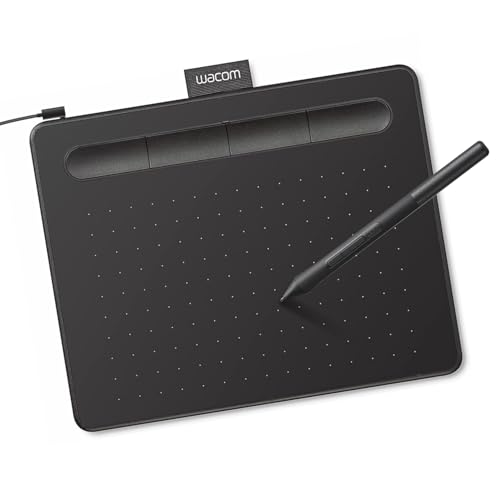
Wacom Intuos
An entry-level drawing tablet using a battery-free EMR pen, commonly used as a reference point for how pressure and tilt sensing feel in a widely adopted design.

Huion Inspiroy 2
A budget-friendly drawing tablet also built around battery-free EMR pen technology, aimed at offering similar pressure sensitivity mechanics at a lower price point.
Common questions
Does a higher pressure level number always mean a tablet feels better to draw on?
Not necessarily, since actual drawing feel also depends on the pen’s tip material, the tablet surface texture, and how well the software’s pressure curve is tuned, all of which can matter more than the raw pressure level number alone.
Can you feel the actual pressure levels changing as you press harder?
No, the gradations are far too fine and fast for conscious perception, and what you actually feel is the physical spring resistance in the pen tip, not the discrete pressure steps the tablet is reading electronically.
Do drawing tablet pens ever need to be charged?
Most pens using EMR technology never need charging since they draw power wirelessly from the tablet itself, but some tablets, particularly certain budget or specialized models, use battery-powered active pens that do require periodic charging.
Why does a pen sometimes feel like it has a slight delay before registering pressure?
This is usually a software or driver-level issue related to how quickly the application processes incoming pressure data, rather than a hardware delay in the EMR sensing itself, and updating tablet drivers often resolves noticeable lag.
Does pressing too hard on a drawing tablet pen damage the tablet?
Normal drawing pressure, even heavy-handed use, is well within the design tolerance of both the pen tip and tablet surface, though repeatedly pressing far beyond normal pressure can accelerate nib wear faster than typical use.
Can tilt sensitivity be used without pressure sensitivity in the same stroke?
Yes, many programs let you map tilt to control brush angle or shading independently of pressure, which is commonly used to simulate the broad side-strokes of a tilted pencil or charcoal stick.
Do replacement nibs change the pressure sensitivity of a pen?
No, standard replacement nibs from the same manufacturer are built to the same specification and should not change pressure response, though third-party or felt-tip nib variants can slightly alter the tactile feel of pressing.
Is 4096 levels of pressure enough for professional digital art work?
Yes, the vast majority of professional illustrators and concept artists work comfortably within 4096 pressure levels, and the step up to 8192 levels is a marginal refinement rather than a meaningful practical limitation at the lower figure.
Does a tablet’s screen size affect how pressure sensitivity feels?
Not directly, since pressure sensing is a function of the pen and the sensor grid beneath the surface rather than the physical screen size, though a larger working area can make broad gestures feel more natural regardless of pressure response.
Can software settings fully compensate for a tablet with a weak pressure sensor?
Software curve adjustments can improve the usable feel of a given sensor’s output, but they cannot add resolution the hardware simply does not capture, so a genuinely low-quality sensor will still show its limits under careful inspection.
Why do some artists prefer a lighter pressure curve setting than the default?
A lighter curve lets a gentle touch produce a fuller range of line weight sooner, which many digital painters prefer for finer control during detailed shading work, compared to the stock curve that often requires firmer pressure to reach full effect.
Does humidity or temperature affect EMR pressure sensing accuracy?
Under normal indoor conditions this is not a practical concern, since EMR relies on electromagnetic coupling rather than anything significantly affected by typical humidity or temperature swings in a home or studio.
Can you use a drawing tablet pen from one brand on a different brand’s tablet?
Generally no, since EMR frequency specifications and signal protocols vary between manufacturers, and a pen is typically only guaranteed to work correctly with tablets from the same brand or an explicitly stated compatible line.
Does holding the pen at an unusual angle affect pressure accuracy?
Extreme angles can slightly affect how cleanly the tablet reads the returning signal, which is part of why most manufacturers recommend holding the pen at something close to a natural, moderate angle for the most consistent pressure response.
Where this leaves you
The mechanics behind pressure sensitivity are more elegant than most people realize, a passive spring and coil exchanging a wireless signal with the tablet beneath it, and the spec sheet numbers matter far less in practice than how well the software’s pressure curve is tuned to an individual artist’s hand. A mid-range tablet with good curve settings often feels better in actual use than a higher-spec one left on default settings.
Marcus Chen
Marcus covered consumer electronics for enthusiast tech publications for six years before joining ChoiceCrest. He specializes in translating manufacturer spec sheets into plain-language buying advice, with a focus on audio, computing accessories and smart-home gear.
You might also need

How Does a Smart Doorbell’s Battery Last Longer Than Constant Streaming Would Suggest?

Why Do Tablet Screens Crack Easier Than Phone Screens?
How to Choose a Gaming Headset for Your Setup
