Microfiber Applicators That Spread Dressing Evenly
Chemical Guys’ CCS Applicator Pads are the best overall pick, using a finger-pocket design and flexible foam core that spreads dressing evenly across both flat trim and curved panels. Griot’s Garage works better on leather, and Meguiar’s costs less per pad.
Chemical Guys’ CCS Applicator Pads lead this list because the finger pocket keeps the pad from slipping during use, and the foam core flexes enough to follow curved door panels and dashboard trim. Griot’s Garage’s plusher pile works leather conditioner into stitched seams more effectively. Buyers detailing only a few times a year can save money with Meguiar’s basic multi-pack instead.
Interior applicator pads differ mainly in foam density and microfiber pile length, so we compared how evenly each pad releases product on flat trim, how well it flexes around seat bolsters and seams, and how it holds up to repeated washing.
The shortlist, ranked

Chemical Guys CCS Applicator Pads
Chemical Guys builds these pads with a microfiber face over a foam core, so dressing or conditioner spreads evenly across dashboard and door panel plastic without pooling in texture lines. The foam core has enough give to follow curved trim pieces. A finger pocket on the back keeps the pad from slipping during application.
Pros
- Finger pocket prevents slipping during use
- Foam core follows curved trim shapes
- Machine washable for repeated use
Cons
- Pricier than basic foam pads
- Microfiber face mats down faster with heavy dressing use

The Rag Company Eco-Flex Applicator Pads
The Rag Company packs a denser foam core into this pad, which resists compressing unevenly under hand pressure and spreads dressing more consistently across a panel. The microfiber face pulls less product than looser weaves, reducing waste. It holds its shape better than lower-density pads after repeated washing.
Pros
- Dense foam spreads product more evenly
- Microfiber face wastes less dressing
- Holds shape well after washing
Cons
- Firmer feel than softer foam pads
- Less flexible around tight curves
Adam’s Polishes Interior Detailing Applicator
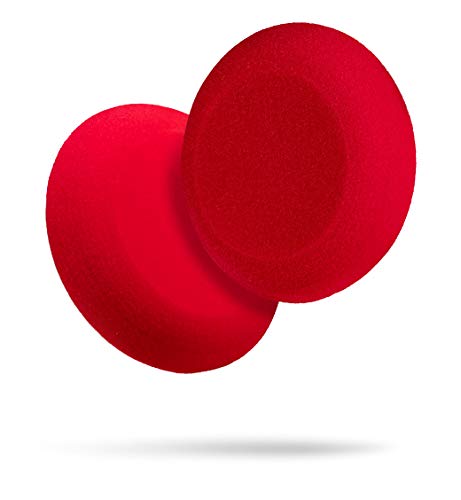
Adam’s Polishes shapes this applicator specifically around its own interior dressing line, though it works with other brands’ products just as well. The microfiber face is shorter-pile than exterior wax applicators, reducing streaking on matte dashboard finishes. It is sized smaller than some pads, suiting tighter trim gaps.
Pros
- Short pile reduces streaking on matte finishes
- Compact size reaches tighter trim gaps
- Works with most interior dressing brands
Cons
- Smaller size means more passes on large panels
- Not ideal for leather conditioner, which needs a plusher pad
Meguiar’s Soft Foam Applicator Pads
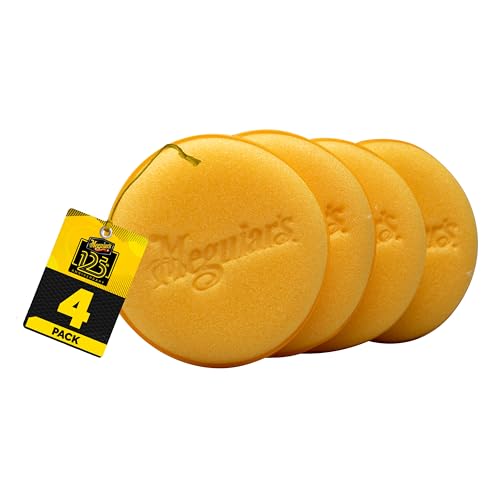
Meguiar’s sells these pads in a multi-pack at a lower per-pad cost than premium microfiber-faced options. The foam is soft rather than dense, spreading dressing easily but holding less product per pass. They work fine for occasional interior detailing rather than frequent professional use.
Pros
- Lowest price per pad in this lineup
- Soft foam spreads dressing easily
- Multi-pack covers several detailing sessions
Cons
- No microfiber face means less even product release
- Less durable than microfiber-faced pads over time
Griot’s Garage Microfiber Applicator Pads
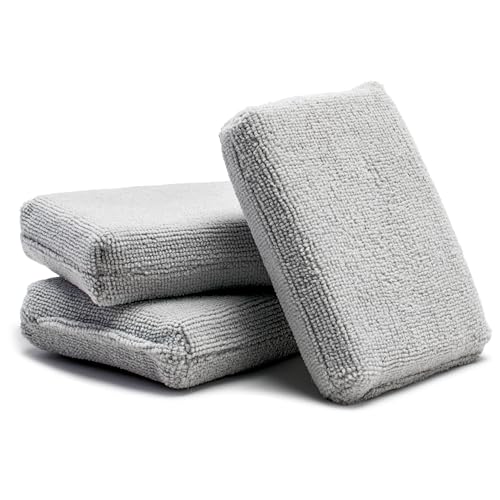
Griot’s Garage uses a plusher, longer-pile microfiber face than most pads here, which holds more leather conditioner per pass and works it into grain lines better than a short-pile pad. The foam core stays soft enough to flex around seat bolsters and stitched seams. It takes slightly longer to dry after washing due to the thicker pile.
Pros
- Plush pile holds more conditioner per pass
- Flexes well around seat bolsters and seams
- Works conditioner into grain lines effectively
Cons
- Longer pile takes more time to dry after washing
- Less precise than short-pile pads on flat trim

Lake Country Microfiber Wax Applicator
Lake Country originally built this applicator for exterior wax, and the same dense foam and tight microfiber weave work well for interior vinyl and plastic protectants that need an even, thin layer. It resists oversaturating one spot the way looser foam can. The round shape suits broad flat panels like a dashboard top.
Pros
- Even product layering on flat panels
- Resists oversaturating one spot
- Durable dense foam construction
Cons
- Round shape less precise in corners and seams
- Originally designed for exterior use, so interior fit is secondary

Armor All Microfiber Applicator Pads
Armor All sells a straightforward multi-pack with a thin microfiber face over basic foam, priced for buyers who want several pads on hand without a big outlay. Each pad lacks the finger pocket or shaped grip found on premium options. They suit light, infrequent dressing applications rather than daily detailing work.
Pros
- Affordable multi-pack pricing
- Thin profile works for quick touch-ups
- Easy to find alongside other Armor All products
Cons
- No finger pocket or shaped grip
- Basic foam wears out faster under frequent use
The lineup, side by side
| # | Model | Material | Best for | Score | Price |
|---|---|---|---|---|---|
| 1 | Chemical Guys CCS Applicator Pads | Microfiber face, foam core | Best overall | 9.4 | Check price |
| 2 | The Rag Company Eco-Flex Applicator Pads | Microfiber face, dense foam core | Best for even coat spreading | 9.1 | Check price |
| 3 | Adam’s Polishes Interior Detailing Applicator | Short-pile microfiber, foam core | Best for matte dashboard dressing | 8.8 | Check price |
| 4 | Meguiar’s Soft Foam Applicator Pads | Soft foam, no microfiber face | Best value | 8.6 | Check price |
| 5 | Griot’s Garage Microfiber Applicator Pads | Plush microfiber face, foam core | Best for leather conditioner | 8.4 | Check price |
| 6 | Lake Country Microfiber Wax Applicator | Microfiber face, dense foam core | Best for protectant coats | 8.2 | Check price |
| 7 | Armor All Microfiber Applicator Pads | Thin microfiber face, basic foam | Best budget multi-pack | 8.0 | Check price |
Before you buy
What to Look For in an Interior Applicator Pad Foam density and microfiber pile length decide how a pad releases product. Dense foam with a short pile spreads dressing evenly on flat panels, while a plusher pile holds more product for textured surfaces like stitched leather.
Matching Pad Type to Interior Surface Matte dashboard trim benefits from a short-pile pad that avoids streaking, while leather seats need a plusher pile that works conditioner into grain lines and stitching. Using the wrong pile length can leave product unevenly applied.
Best for Leather and Stitched Surfaces Seat bolsters and seams need a flexible foam core that follows curves rather than a stiff flat pad. Griot’s Garage’s plush, flexible design handles that shape better than denser foam built for flat panels.
Best for Occasional or Budget Detailing Buyers who dress their interior a few times a year do not need premium microfiber-faced pads. Meguiar’s or Armor All’s basic multi-packs cost less and still spread dressing adequately for infrequent use.
Questions worth asking
What is a microfiber applicator pad used for?
It spreads interior dressing, protectant, or leather conditioner evenly across dashboard, door panel, or seat surfaces without leaving excess product pooled in one spot.
Can the same applicator pad be used for leather and plastic trim?
A plush pad works better on leather’s textured grain, while a shorter-pile pad spreads product more evenly on flat plastic trim, so many detailers keep separate pads for each.
Are foam or microfiber-faced applicator pads better?
Microfiber-faced pads generally release product more evenly and last longer through washing than plain foam pads, though plain foam costs less upfront.
How do you clean a microfiber applicator pad?
Most microfiber-faced pads are machine washable on a gentle cycle without fabric softener, while basic foam pads often need hand washing to avoid breaking down the foam.
Can interior applicator pads be reused?
Yes, washable microfiber-faced pads can be reused many times if rinsed or washed after each session to remove trapped product residue.
Do applicator pads work for both interior and exterior products?
Some, like Lake Country’s dense foam pad, cross over well between exterior wax and interior protectant use, though dedicated interior pads often use a shorter, less absorbent pile.
What size applicator pad works best for dashboards?
A rectangular or round pad around 4 to 5 inches across covers a dashboard efficiently without being too bulky to maneuver around vents and gauges.
How many applicator pads does a full interior detail need?
Most detailers use at least two, one for leather or plush surfaces and one for flat plastic trim, to avoid cross-contaminating different product types.
Our take
Chemical Guys’ CCS Applicator Pads are the safest all-around choice, since the finger pocket and foam core handle both flat trim and curved panels without slipping during use. Anyone conditioning leather seats regularly should add Griot’s Garage’s plusher pad instead, since the longer pile works conditioner into stitched seams better than a short-pile design. Buyers detailing only a few times a year get adequate results from Meguiar’s lower-cost multi-pack.
Tony Russo
Tony trained as an automotive technician and spent years in service and parts retail before moving into writing. He focuses on garage tools, car care products and accessories from a hands-on maintenance perspective.
You might also need

VSTM Automotive Wire Tracer: Can It Actually Find a Short in Your Car’s Wiring?

Reliant Pet Mouse Repellent Pouches: Do Peppermint Pouches Actually Deter Mice?

Why Do Car Floor Mats Need a Specific Fit Instead of Universal Size?