Why Do Car Floor Mats Need a Specific Fit Instead of Universal Size?
A universal mat is cut to a generic size and shape that doesn’t match any particular vehicle’s footwell contour, which means it can shift, bunch up, or ride forward over the factory anchor points and even into the pedal area, a genuine documented safety hazard. A vehicle-specific mat is molded to that exact model’s floor pan, pedal zone, and factory retention hooks, so it locks into place and actually covers the footwell the way it’s supposed to.
The pedal interference risk is a real, documented hazard
A universal mat that isn’t anchored correctly can slide forward under normal driving vibration and end up wedged under or over the gas or brake pedal, which has been a cited factor in unintended acceleration incidents reported to safety regulators. A properly fitted, vehicle-specific mat includes a cutout and anchor points positioned specifically to keep material away from the pedal’s travel path in that exact vehicle.
Every model has a different footwell contour
Floor pan depth, the height of the center transmission tunnel hump, and the exact position of the pedals all vary significantly between models, and even more between a sedan and an SUV or truck with a different drivetrain layout. A flat universal mat can’t account for any of that, so it tends to bunch up in exactly the spots where a specific vehicle’s floor doesn’t match the mat’s generic shape.
Factory retention hooks only work with matching holes
Most modern vehicles have small anchor posts built into the carpet specifically to hold floor mats in place, and vehicle-specific mats are manufactured with grommets positioned to align precisely with those factory hooks. Universal mats frequently lack matching hole positions, leaving the mat to float loose on the carpet with nothing actually securing it against sliding.
Specific-fit mats extend coverage to the edges that matter
Laser-measured, vehicle-specific mats typically rise up along the door sill and wrap around the transmission tunnel edges, catching spills, mud, and road salt that would otherwise run straight underneath a smaller, flatter universal mat and soak into the carpet beneath it.
Even within one model, trim differences matter
A single model year can still have meaningfully different footwell shapes between a manual and automatic transmission, or between two-wheel and four-wheel drive versions with a different transmission tunnel size, which is exactly the kind of variation a ‘fits most vehicles’ universal claim glosses over and a true vehicle-specific mat accounts for by trim.

WeatherTech FloorLiner
A laser-measured, vehicle-specific floor liner molded to match a particular model’s exact footwell contour and factory anchor points.
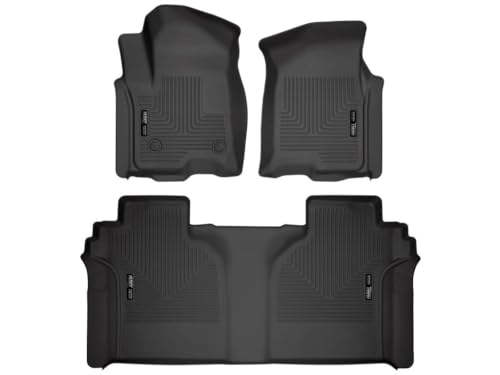
Husky Liners WeatherBeater Floor Mats
Another vehicle-specific molded mat line built with raised edges and model-matched anchor points rather than a generic universal shape.
Frequently asked questions
Can a universal floor mat actually cause pedal problems?
Yes, if it isn’t properly anchored it can slide forward under normal vibration and interfere with pedal travel, which is a documented safety concern that’s part of why vehicle-specific mats with matched anchor points exist.
How do I know if my car’s floor mats are properly secured?
Check that the mat’s grommets or holes are actually attached to the factory anchor hooks built into the carpet, and give the mat a firm tug toward the pedals to confirm it doesn’t shift forward at all.
Do all vehicles have factory floor mat anchor hooks?
Most modern vehicles do on the driver’s side at minimum, since many manufacturers build them in specifically to address the pedal interference risk, though older vehicles and some trims may lack them entirely.
Are laser-measured mats really that different from a good universal mat?
Yes, laser measurement captures the exact three-dimensional contour of that specific model’s footwell, including the tunnel hump and pedal zone, which a universal mat’s generic flat shape simply can’t replicate regardless of material quality.
Can I trim a universal mat to fit my car better?
You can trim the outer edges somewhat, but trimming doesn’t fix the underlying issue of mismatched anchor hole positions or an incorrect pedal-area cutout, so a trimmed universal mat still lacks the secure fit a vehicle-specific mat provides.
Do vehicle-specific mats cost significantly more than universal ones?
They’re generally priced higher than basic universal mats since they require model-specific tooling to manufacture, though many owners consider the safety and coverage benefits worth the difference compared to a loose-fitting generic mat.
Will a vehicle-specific mat fit if I change my car’s trim level later?
Not necessarily, since trim-specific floor pan differences like transmission tunnel size can mean a mat made for one trim doesn’t sit correctly in another trim of the same model, so checking the trim match before buying matters.
Do rubber all-weather mats need the same specific fit as carpet mats?
Yes, fit matters just as much regardless of material, since an all-weather rubber mat that doesn’t match the footwell shape or lack proper anchoring carries the same sliding and pedal interference risk as an ill-fitting carpet mat.
Can floor mats that don’t fit properly void any part of a car’s warranty?
This is uncommon, but some manufacturers have noted in bulletins that improperly secured aftermarket mats can be a factor in certain safety complaints, so following the anchor point guidance in the owner’s manual is a reasonable precaution regardless.
How do I check if my current mats are a safety risk around the pedals?
With the engine off, press the brake and accelerator pedal through their full travel range and watch whether the mat edge or surface comes anywhere near either pedal’s path, repeating the check after the mat has had time to shift from normal use.
Do truck and SUV floor mats need a different specific fit than sedans?
Yes, trucks and SUVs often have a taller transmission tunnel, different footwell depth, and sometimes a third row to account for, all of which require different molding than a sedan’s generally flatter and shallower footwell.
Is it worth buying both front and rear vehicle-specific mats, or just the front?
Front mats address the more safety-relevant pedal area, but rear mats still benefit from the same improved coverage and anchoring, so buying a full set is generally worthwhile if protecting the entire interior from spills and debris is the goal.
Do all-weather rubber mats fit more universally than carpeted mats across different cars?
No, fit still depends on the mold used, not the material, so a rubber all-weather mat made for one specific model fits that model’s footwell just as precisely as a carpeted version would, while a generic rubber mat has the same fitting issues as any other universal mat.
Can floor mat fit affect resale value or inspection requirements for a vehicle?
In most regions it isn’t a formal inspection item, but a well-fitted, clean mat set contributes to a vehicle presenting as well maintained, which some buyers and appraisers do factor into their overall impression during resale.
Is it worth getting custom-cut mats if a vehicle-specific molded option isn’t available?
Custom-cut mats measured directly from the vehicle’s footwell can approximate the benefits of a molded vehicle-specific mat reasonably well, though they typically lack the raised edge lip and exact anchor point alignment that a purpose-molded liner includes.
Does a mat’s fit matter as much in the back seat as it does up front?
The safety stakes are lower in the back seat since there’s no pedal interference risk, but a poorly fitted rear mat can still shift around and fail to properly catch spills or debris the way a correctly fitted one would.
The bottom line
A universal floor mat looks like it should work for any car, but the parts that actually matter, the anchor points, the pedal clearance, the footwell contour, are exactly the parts a generic shape can’t account for. A mat molded specifically for your exact model and trim isn’t just a nicer fit cosmetically, it’s addressing a real and avoidable safety gap that a one-size-fits-all mat leaves open.
Tony Russo
Tony trained as an automotive technician and spent years in service and parts retail before moving into writing. He focuses on garage tools, car care products and accessories from a hands-on maintenance perspective.


