How Indoor Smart Gardens Keep Herbs Growing Year Round
Comparing grow-light wattage, pod capacity, and owner feedback, the AeroGarden Bounty Elite ranks first with a 50-watt LED panel across nine pods. The Click and Grow Smart Garden 9 suits hands-off owners, needing water only once a month. Budget shoppers still get reliable herbs from the AeroGarden Harvest.
Growing herbs indoors year-round depends mostly on light wattage and automation, and the AeroGarden Bounty Elite leads on both counts with a 50-watt LED panel and nine grow pods. Owners who forget to water do better with the Click and Grow Smart Garden 9, which needs a refill only once a month. Small counters and tight budgets fit the AeroGarden Harvest.
Pod count alone misleads shoppers, since a 12-pod unit with a weak light often grows slower than a 6-pod unit with a strong one. We compared grow-light wattage per pod, tank refill intervals, maximum plant height, pump noise, and what owners report harvesting after several months of use.
Our top picks

AeroGarden Bounty Elite
Nine pods sit under a 50-watt full-spectrum LED, more total light than most rivals provide. Owners report the lamp arm extends to 24 inches, tall enough for dwarf tomatoes and peppers. WiFi app controls handle light schedules and vacation watering, and the stainless steel body suits open kitchens.
Pros
- Strongest light output in this group speeds growth and raises yields
- 24-inch clearance supports tomatoes and peppers, not just herbs
- App reminders track watering and plant-food schedules automatically
Cons
- Footprint takes up serious counter space
- Circulation pump hum carries in quiet rooms overnight

Click and Grow Smart Garden 9
A large water tank feeds nine pods through passive wicking, so owners refill roughly every three to four weeks. No pump runs or needs cleaning. Pre-seeded Smart Soil capsules cover more than 50 plant varieties, and the light cycles on automatically for 16 hours daily.
Pros
- Silent operation, since no pump means nothing mechanical to fail
- Weeks between refills survive vacations and forgetful schedules
- Capsule pods drop in like coffee pods for fast replanting
Cons
- Lower light intensity grows herbs slower than the Bounty Elite
- Smart Soil capsules lock owners into Click and Grow’s own pod system
AeroGarden Harvest
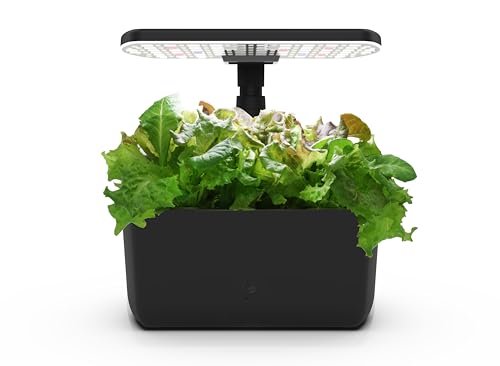
Six pods sit under a 20-watt LED, making this the most common entry point into hydroponic herb growing. Reminders on the control panel flag when to add water or liquid plant food. Twelve inches of grow height covers basil, parsley, dill, and lettuce.
Pros
- Compact base fits under most kitchen cabinets
- Simple reminders suit first-time growers
- Wide seed-kit ecosystem, plus grow-anything pods for outside seeds
Cons
- 12-inch ceiling rules out tomatoes and taller peppers
- Weekly water top-ups, unlike tank-based rivals that last a month

Rise Gardens Personal Garden
Rise tuned this countertop unit for leafy greens, with spacing and light suited to lettuce, kale, and herbs. An app tracks each plant individually and schedules nutrient doses. Owners can carry the same pod system over to Rise’s floor-standing units if they outgrow the counter.
Pros
- Tray spacing grows full-size lettuce heads, not baby leaves
- App walks beginners through nutrient dosing week by week
- Pods and nutrients carry over to a floor-standing upgrade
Cons
- Nutrient dosing stays manual, guided rather than automatic
- Fewer pre-seeded varieties ship compared with AeroGarden or Click and Grow

Gardyn Home Kit 3.0
Two lighted columns grow up to 30 plants inside about two square feet of floor space. Cameras and sensors feed the Kelby AI assistant, which adjusts watering and flags struggling plants. yCube pods span a wide produce-aisle variety, from lettuce to edible flowers.
Pros
- Highest plant capacity here for the floor space used
- AI camera alerts catch drooping plants before they fail
- Grows enough greens to offset regular grocery trips
Cons
- Full AI features sit behind an optional membership
- Weekly tank refills, and the pump is not silent

iDOO 12 Pods Hydroponics Growing System
Twelve pod slots and a height-adjustable LED arm cost well under the big-brand systems. Included grow sponges accept any seeds instead of locking owners into branded kits. Separate veggie and fruit light modes shift the spectrum for leafy or flowering growth.
Pros
- Open seed system keeps running costs low
- Twelve slots allow staggered plantings for a steady supply
- Night mode pauses the pump for quieter operation
Cons
- Light output per pod runs weaker than AeroGarden panels once fully planted
- No app included, so scheduling relies on onboard buttons
Click and Grow Smart Garden 3
Three pods fit this version of the Smart Garden into about the space of a loaf of bread. A passive tank waters plants for up to three weeks per fill, with zero pump noise. Three basil pods ship in the box, and any Click and Grow capsule fits afterward.
Pros
- Fits window sills and cramped apartment counters
- Runs silent, since no pump exists to hum
- Same capsule system as the larger Smart Garden 9
Cons
- Three pods cover garnish quantities, not cooking quantities
- Fixed light height crowds taller plants as they mature
How to choose
How indoor smart gardens work These systems combine a full-spectrum LED, a water reservoir, and timed automation so plants grow without soil or sunlight. Hydroponic pumps or passive wicks feed roots directly, and owners typically see basil ready to trim within three to four weeks. Daily tasks shrink to refilling water, adding nutrients, and harvesting leaves.
Light output and pod count: what actually drives growth Wattage per pod matters more than total pod count. A 50-watt panel spread across nine pods, like the Bounty Elite, outgrows a weak light spread across twelve slots. Grow height matters too: 12 inches suits herbs and lettuce, while tomatoes and peppers need close to 24 inches. Higher light output also means faster water use, so tank size should scale with it.
Best indoor smart gardens for beginners vs high-volume growers First-time growers do well with 3 to 6 pod units, since fewer plants mean fewer things to track. Families feeding salads regularly benefit from vertical systems like the Gardyn, which grow up to 30 plants in a small footprint. Apartment dwellers with limited counter space lean toward compact 3-pod units instead.
Upkeep, noise, and running costs Pump-driven systems need a tank rinse between plantings and a monthly check for root buildup near the pump. Passive systems skip that step entirely but grow more slowly. Seed pods and nutrients make up the real long-term cost, not the initial unit. Power draw stays modest, close to what a large LED bulb uses over a day.
Side by side
| # | Model | Pods | Best for | Score | Price |
|---|---|---|---|---|---|
| 1 | AeroGarden Bounty Elite | 9 | Best overall | 9.4 | Check price |
| 2 | Click and Grow Smart Garden 9 | 9 | Best low maintenance | 9.2 | Check price |
| 3 | AeroGarden Harvest | 6 | Best value | 9.0 | Check price |
| 4 | Rise Gardens Personal Garden | Up to 12 in trays | Best for salad greens | 8.8 | Check price |
| 5 | Gardyn Home Kit 3.0 | Up to 30 | Best for high volume | 8.6 | Check price |
| 6 | iDOO 12 Pods Hydroponics Growing System | 12 | Best budget | 8.3 | Check price |
| 7 | Click and Grow Smart Garden 3 | 3 | Best for small counters | 8.0 | Check price |
Good to know
Which indoor smart garden grows the most food?
The Gardyn Home Kit 3.0 produces the most, with up to 30 plants across two vertical columns. Among countertop units, the AeroGarden Bounty Elite leads, since its 50-watt light drives faster growth across nine pods.
AeroGarden vs Click and Grow: which is better?
AeroGarden grows faster because of stronger lights and an active pump, but it asks for weekly water and occasional cleaning. Click and Grow trades speed for low effort, with silent passive watering and monthly refills. Pick based on how much attention you will realistically give the unit.
What can you grow in a smart garden besides herbs?
Lettuce, kale, and other leafy greens grow well in any unit listed here. Cherry tomatoes, mini peppers, and strawberries need taller clearance, so they suit the Bounty Elite or Gardyn better. Root vegetables and large fruiting plants stay off the menu for pod-based systems.
How long do seed pods take to reach harvest?
Lettuce and herbs sprout within a week and reach first harvest in three to five weeks. Tomatoes and peppers take closer to three months before they fruit. After that, herb pods keep producing for four to six months with regular trimming.
Do indoor smart gardens use a lot of electricity?
Not really. Lights range from about 20 watts on the AeroGarden Harvest to 50 watts on the Bounty Elite, running 14 to 16 hours daily. That usage sits close to a bright LED fixture left on through the evening.
Can you use your own seeds in a smart garden?
Yes, in open systems. The iDOO ships with blank sponges for any seeds, and AeroGarden sells grow-anything pods for the same purpose. Click and Grow stays the most closed, relying on pre-seeded Smart Soil capsules for consistent results.
Is an indoor smart garden worth it for a small apartment?
For herb growers, often yes. A Smart Garden 3 or AeroGarden Harvest fits a small counter and replaces wilting supermarket herb packs that get tossed half-used. Fresh basil, mint, and parsley on demand is the realistic payoff, not full grocery replacement.
Are hydroponic garden pumps noisy at night?
Pump-driven units produce a low hum and occasional water trickle, noticeable in studios and bedrooms. The iDOO includes a night mode that pauses its pump. Click and Grow units stay silent by design, since passive wicking replaces the pump entirely.
What is the best indoor smart garden for beginners?
The AeroGarden Harvest suits beginners well, with six pods, simple reminders, and a proven track record among first-time growers. Its control panel flags watering and nutrient needs automatically, so there is little guesswork involved.
How much space does an indoor smart garden need?
Countertop units range from about 12 by 5 inches for the Smart Garden 3 up to a larger footprint for nine-pod AeroGarden models. Vertical systems like the Gardyn need roughly two square feet of floor space instead of counter space.
Our pick
Serious year-round growers get the most from the AeroGarden Bounty Elite, thanks to its 50-watt light and 24-inch headroom. Owners who want herbs with minimal involvement should look at the Click and Grow Smart Garden 9, which waters itself for weeks at a time. First-timers and small kitchens do well starting with the AeroGarden Harvest, then upgrading only if the habit sticks.
Marcus Chen
Marcus covered consumer electronics for enthusiast tech publications for six years before joining ChoiceCrest. He specializes in translating manufacturer spec sheets into plain-language buying advice, with a focus on audio, computing accessories and smart-home gear.