A Roomier Hamster Cage Makes for a Much Happier Pet
Prevue’s 528 Universal Small Animal Home offers the largest usable floor area for the money, the single most important factor for hamster housing. Niteangel’s Vista suits deep burrowing bedding setups, and the Ferplast Favola works well for smaller dwarf hamsters.
One cage stands out for giving a hamster genuine room to move: the Prevue Pet Products 528, the strongest floor-space value here. The Niteangel Vista suits deep bedding setups better, and the Ferplast Favola works well for dwarf species.
Hamster housing gets confusing because the most heavily marketed cages are often the smallest. Colourful tube systems look enriching on the shelf but deliver very little continuous floor area, and many wire cages have bar spacing wide enough for a dwarf hamster to squeeze through. We compared base dimensions, bar spacing and achievable bedding depth, along with what owners report about escapes and cleaning.
The best picks, ranked
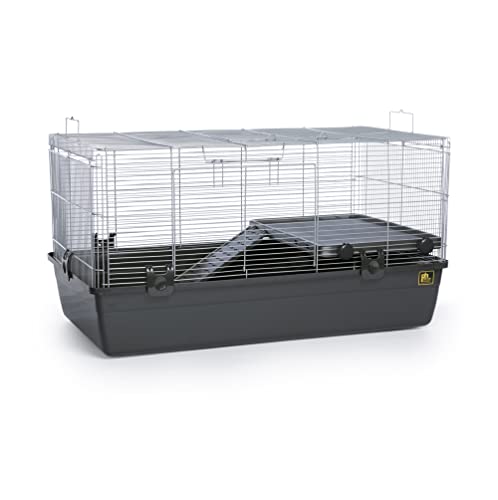
Prevue Pet Products 528 Universal Small Animal Home
Prevue pairs a large open wire cage with a deep plastic base, the combination that matters most for hamsters. A single continuous floor beats any tube system for usable space, and the deep pan holds a real bedding layer without constant spillage. Top and front doors make spot cleaning and handling straightforward.
Pros
- Very large continuous floor area for the price
- Deep pan supports a proper bedding layer
- Wide doors make cleaning and handling easy
Cons
- Takes up a lot of room and needs a sturdy surface
- Bar spacing is too wide for the smallest dwarf hamsters

Niteangel Vista Hamster Cage
Niteangel designed the Vista around the burrowing behaviour hamsters show in the wild, with tall acrylic side panels that let you fill bedding several inches deep without it pouring out. Clear sides also mean you can watch tunnel systems rather than just the surface. It suits owners who want an enrichment-focused setup.
Pros
- Holds deep bedding without constant spillage
- Clear panels give a full view of tunnelling behaviour
- Mesh lid keeps ventilation good despite solid sides
Cons
- Acrylic scratches more easily than glass
- Heavier and more awkward to move than wire cages

Savic Hamster Heaven Metro Cage
Savic combines a decent footprint with genuinely useful accessories in the Hamster Heaven Metro, including platforms, a wheel and tube connections that attach to the sides rather than replacing floor space. A deep base tray holds a real bedding layer. Owners report it holds up well over years of use.
Pros
- Narrow bar spacing suits dwarf species safely
- Deep tray supports a real bedding layer
- Accessories included are actually usable rather than token
Cons
- Included wheel is small for a Syrian hamster
- Assembly takes longer than simpler wire cages
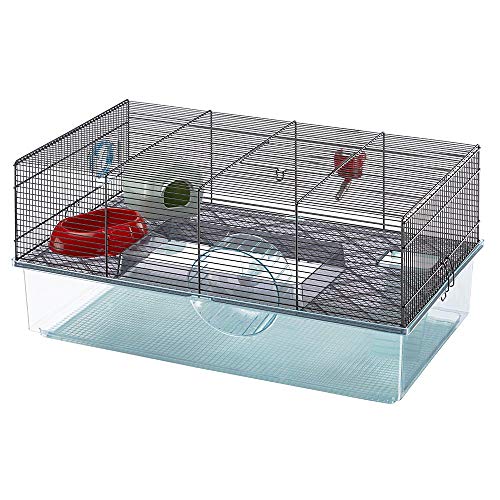
Ferplast Favola Hamster Cage
Ferplast tightens bar spacing on the Favola and pairs it with a deep plastic base, one of the safer commercial options for dwarf hamsters that escape wider-barred cages. It arrives with a wheel, house, bottle and feeder included. A modest footprint means it works best as a base to expand from rather than a permanent home for a Syrian hamster.
Pros
- Bar spacing genuinely suits dwarf hamsters
- Deep tray holds bedding well for its size
- Complete starter kit included
Cons
- Floor area is too small for a Syrian hamster long term
- Included wheel is undersized and worth replacing

Living World Deluxe Habitat, Extra Large
Living World pairs a deep plastic base with a wire top and a balcony platform, and the extra large size gives a respectable footprint for the money. Its base clips off quickly, which makes full bedding changes far less of a chore than cages that need dismantling. That combination lands as a sensible middle ground between budget kits and premium habitats.
Pros
- Good floor area for the price
- Base separates quickly for full cleans
- Deep tray reduces bedding kicked onto the floor
Cons
- Balcony ramp is steep for older hamsters
- Bar spacing suits Syrians better than small dwarfs
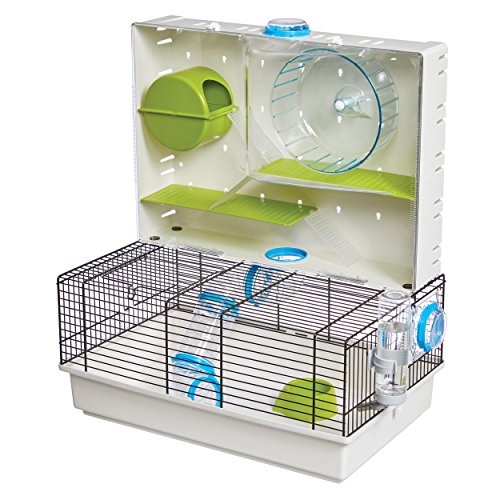
MidWest Critterville Arcade Hamster Cage
The Critterville Arcade is a smaller hybrid cage with a clear base and wire upper section, aimed at owners who cannot devote a full table to a habitat. It includes a wheel, hideout and elevated platform. Treat it as a starter or travel setup rather than a permanent home for a Syrian hamster, since floor space is the trade off.
Pros
- Fits on a shelf or small desk
- Clear base gives good visibility of the hamster
- Simple two part design is quick to clean
Cons
- Floor area is limited for a full grown Syrian
- Shallow base means bedding depth is restricted

Kaytee CritterTrail Super Habitat
Kaytee’s CritterTrail Super Habitat is the largest of the connectable tube cages and links to the wider CritterTrail accessory range, appealing to owners who want to expand a setup room by room. Ventilation and floor area run weaker than open wire cages, so it works best paired with a larger main enclosure rather than used alone.
Pros
- Expands easily with widely available add on parts
- Enclosed design contains bedding scatter well
- Slide out tray simplifies routine cleaning
Cons
- Tubes reduce usable floor space compared with open cages
- Ventilation is poorer than wire sided designs
Side by side
| # | Model | Base dimensions | Best for | Score | Price |
|---|---|---|---|---|---|
| 1 | Prevue Pet Products 528 Universal Small Animal Home | Roughly 46 x 24 inch class | Best overall | 9.4 | Check price |
| 2 | Niteangel Vista Hamster Cage | Tall clear acrylic sides | Best for deep burrowing | 9.2 | Check price |
| 3 | Savic Hamster Heaven Metro Cage | Roughly 31 x 20 inch class | Best for enrichment layout | 9.0 | Check price |
| 4 | Ferplast Favola Hamster Cage | Roughly 24 x 14 inch class | Best for dwarf hamsters | 8.8 | Check price |
| 5 | Living World Deluxe Habitat, Extra Large | Roughly 46 x 22 inch class | Best value | 8.6 | Check price |
| 6 | MidWest Critterville Arcade Hamster Cage | Roughly 24 x 12 inch class | Best compact option | 8.3 | Check price |
| 7 | Kaytee CritterTrail Super Habitat | Connectable modular habitat | Best for tube systems | 8.0 | Check price |
How to choose
How much floor space does a hamster cage actually need? Hamsters are ground dwelling animals that cover long distances at night, so the single most useful measurement is unbroken floor space, not total volume or number of levels. Widely used welfare guidance points to a minimum around 100 by 50 centimetres of continuous base for a Syrian hamster, and more is genuinely better. Two small connected boxes do not equal one large floor. When comparing cages, ignore the marketing photo and look at the base dimensions.
What bar spacing keeps dwarf hamsters from escaping? Dwarf hamsters, particularly Roborovskis, can squeeze through gaps that look far too small. Bar spacing at or below roughly 0.35 inch is the safe range for dwarfs, while Syrians manage fine with the wider 0.5 inch spacing found on larger wire cages. If a cage you like has bars that are too wide, a solid sided tank style habitat or an acrylic panelled cage such as the Niteangel Vista solves the problem completely.
How deep should hamster cage bedding be? Hamsters burrow, and a bedding layer of several inches lets them build tunnels rather than just running on a surface. Shallow trays cannot hold that depth, so the bedding ends up scattered across your floor within a day. Look for a deep plastic pan or tall solid side panels. Paper based and aspen beddings work well for tunnelling, while pine and cedar shavings are best avoided because of the aromatic oils they release.
Which cage designs are easiest to clean? A cage you dread cleaning gets cleaned less often, which matters for both smell and health. Designs where the wire top lifts straight off a deep base are by far the quickest to service, and a large front door lets you spot clean without dismantling anything. Tube systems look fun but need to be pulled apart and dried thoroughly, which is why many owners eventually reduce them to a couple of short runs.
Frequently asked questions
How big should a hamster cage be?
Aim for at least around 100 by 50 centimetres of continuous floor space for a Syrian hamster, and treat that as a floor rather than a target. Dwarf species can manage in slightly less but still benefit from more. Levels and tubes do not substitute for unbroken base area, since hamsters travel horizontally.
Are tube cages bad for hamsters?
They are not harmful in themselves, but they trade usable floor space for novelty and can be poorly ventilated. Tubes also need regular dismantling to clean properly. A short tube run attached to a large main cage is a reasonable compromise, whereas a habitat made entirely of tubes and small pods is generally too cramped.
Can two hamsters share a cage?
Syrian hamsters are strictly solitary and must be housed alone, as they fight seriously when kept together. Some dwarf species can occasionally be kept in pairs from a young age, but conflict is common and separate housing should always be ready. When in doubt, house individually.
What bedding depth should I use?
Several inches is a reasonable target, deeper if the cage design allows, so the hamster can build genuine tunnels rather than surface nests. Paper based bedding and aspen shavings both hold tunnel shapes well. Cages with shallow trays cannot support this, which is a good reason to prioritise base depth when choosing.
How often does a hamster cage need cleaning?
Spot clean the toilet corner and remove damp bedding every day or two, and do a partial bedding change every week or so. Full deep cleans are best kept infrequent, roughly monthly, because replacing all the bedding at once removes the scent markings hamsters rely on and can cause stress.
What size wheel does a hamster need?
A Syrian hamster generally needs a wheel around 11 to 12 inches in diameter so its back stays flat while running, and dwarfs need around 8 inches. The wheels included with most cage kits are smaller than this, so budget for a separate solid surface wheel. Avoid wire rung wheels, which can catch feet.
Is a glass tank better than a wire cage?
Tanks and acrylic habitats hold deep bedding brilliantly and stop escapes entirely, but they need a secure mesh lid for ventilation and are heavy to move. Wire cages ventilate better and are lighter, but scatter bedding and limit burrowing depth. Either works well if the floor area is large enough.
Where should I place a hamster cage in the house?
Choose a spot out of direct sunlight and away from radiators, draughts and constant noise. Hamsters are nocturnal, so a bedroom often means being woken by wheel noise. A quiet corner of a living room or study on a stable surface usually works best for both the animal and the household.
Our take
Prevue’s 528 stands as the best default choice, delivering the continuous floor area that matters most at a sensible price. Choose the Niteangel Vista for a deep burrowing setup you can watch, the Savic Hamster Heaven Metro for a well-equipped middle ground, or the Ferplast Favola if you keep dwarf hamsters needing narrow bar spacing.
Olivia Hartley
Olivia spent several years working at an animal shelter and a pet-supply retailer before joining the editorial team. She researches pet gear with an emphasis on safety, comfort and the fine print that owners often miss.