What Grass Seed Actually Fills In Bare Patches Fast?
Scotts Turf Builder Sun and Shade Mix handles most yards with mixed light and remains the top overall pick. Pennington Smart Seed needs the least water once roots establish. Scotts EZ Seed closes bare patches fastest, since it bundles seed, mulch, and starter fertilizer in one product.
Scotts Turf Builder Sun and Shade Mix suits most yards with a blend of sun and shade, Pennington Smart Seed cuts long-term watering once established, and Scotts EZ Seed fixes bare spots without a full reseed.
Bag labels rarely mention climate zone, yet that detail decides whether a blend thrives or thins out within a season. We compared species mix, stated germination windows, shade tolerance, and what gardeners report about density after the first year.
The shortlist, ranked

Scotts Turf Builder Grass Seed Sun and Shade Mix
Fescue and ryegrass make up this blend, covering everything from full sun to moderate shade. A water absorbing coating on each seed holds moisture close, which helps germination on days watering gets skipped. Sow in early autumn or spring, since this cool season formula struggles in midsummer heat.
Pros
- Covers a wide range of light conditions
- Coated seed improves germination odds
- Works for new lawns and overseeding alike
Cons
- Not suited to southern heat zones
- Coating reduces seed count per pound
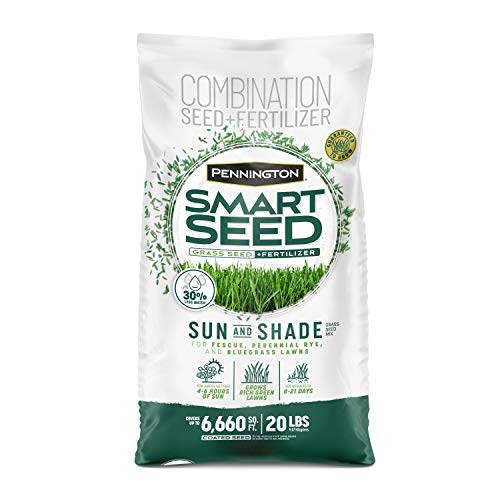
Pennington Smart Seed Sun and Shade Mix
Varieties in this mix need noticeably less water once roots take hold, which suits areas under watering restrictions or dry summers. Fertilizer ships premixed, so seedlings get an early feed without a separate application. Establishment runs slower than a ryegrass heavy blend, the usual tradeoff for deeper roots.
Pros
- Cuts long-term watering demand
- Fertilizer ships premixed with the seed
- Deep roots improve drought resilience
Cons
- Establishes slower than ryegrass blends
- Still needs daily water during germination
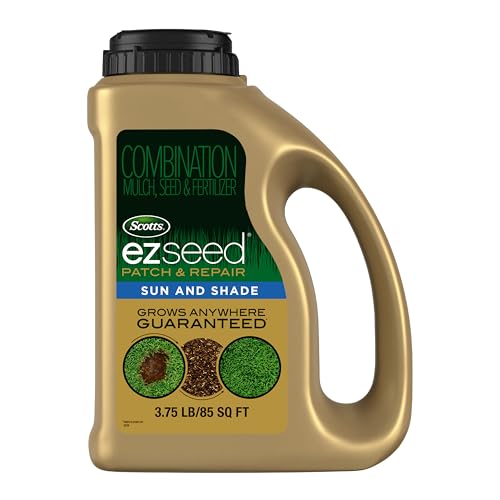
Scotts EZ Seed Patch and Repair
Seed, mulch, and fertilizer arrive combined in one product, so bare spots need no seedbed prep before scattering. Mulch swells when watered and darkens as it dries, removing the guesswork around timing. Cost per square foot runs high, which makes this a repair tool rather than a whole lawn solution.
Pros
- Skips seedbed preparation entirely
- Mulch color signals when to water
- High success rate on small patches
Cons
- Expensive per square foot covered
- Impractical for reseeding a full lawn

Jonathan Green Black Beauty Ultra Grass Seed
Tall fescue, bluegrass, and ryegrass combine here, giving fast initial cover from the ryegrass and long-term density from the other two. Deep fescue roots produce the dark green color that holds through summer stress. Proper soil prep pays off more with this blend, since it targets full renovations rather than patching.
Pros
- Strong colour and density over time
- Deep roots resist summer stress
- Ryegrass component gives fast early cover
Cons
- Needs thorough seedbed preparation
- Costs more per bag than basic blends

Pennington Kentucky 31 Tall Fescue Grass Seed
Kentucky 31 establishes readily and shrugs off heat, drought, and foot traffic better than fine lawn grasses. Large areas, paddocks, and utility lawns benefit most, where cost per square foot outweighs a manicured look. Blades run coarser than premium turf types, so the finish looks less refined up close.
Pros
- Very low cost for large areas
- Handles heat and traffic well
- Establishes readily even in poor soil
Cons
- Coarse blade texture up close
- Less refined look than premium blends
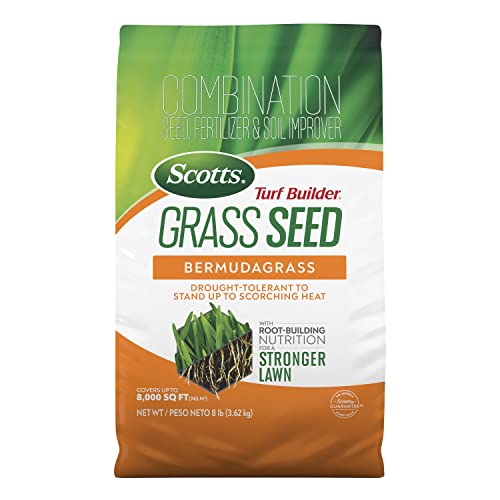
Scotts Turf Builder Bermudagrass Seed
Bermudagrass thrives in summer heat that kills cool season lawns, spreading on its own to close gaps. Full sun and warm soil are required for germination, so a late spring sowing works best. Winter brings dormancy and brown color, a tradeoff southern gardeners accept for summer performance.
Pros
- Thrives in heat and drought conditions
- Spreads to close gaps without reseeding
- Handles heavy foot traffic well
Cons
- Turns brown and dormant in winter
- Performs poorly in shaded areas

Jonathan Green Fast Grow Grass Seed Mixture
Ryegrass dominates this mix, built to green up bare soil fast for erosion control or a lawn that needs to look presentable soon. Germination ranks among the quickest of any blend here. Long-term density falls short of fescue or bluegrass, so many gardeners treat it as a first pass before overseeding.
Pros
- Fastest germination and cover here
- Useful for erosion control on slopes
- Low cost per bag
Cons
- Less durable than fescue blends long-term
- Often needs a later overseed
Side by side
| # | Model | Type | Best for | Score | Price |
|---|---|---|---|---|---|
| 1 | Scotts Turf Builder Grass Seed Sun and Shade Mix | Cool season blend | Best overall | 9.4 | Check price |
| 2 | Pennington Smart Seed Sun and Shade Mix | Cool season blend | Best for low watering | 9.2 | Check price |
| 3 | Scotts EZ Seed Patch and Repair | Seed, mulch and fertiliser combined | Best for bare patches | 9.0 | Check price |
| 4 | Jonathan Green Black Beauty Ultra Grass Seed | Tall fescue, bluegrass and ryegrass blend | Best for full renovation | 8.8 | Check price |
| 5 | Pennington Kentucky 31 Tall Fescue Grass Seed | Tall fescue | Best value | 8.6 | Check price |
| 6 | Scotts Turf Builder Bermudagrass Seed | Warm season bermudagrass | Best for hot climates | 8.3 | Check price |
| 7 | Jonathan Green Fast Grow Grass Seed Mixture | Ryegrass heavy mix | Best budget | 8.0 | Check price |
What matters most
Cool season versus warm season grasses Climate zone decides more than any other factor on the bag. Fescue, ryegrass, and bluegrass grow strongest in spring and autumn, then stall through prolonged summer heat. Bermudagrass does the opposite, thriving in heat and going dormant once temperatures drop. Check your zone before comparing anything else on the label.
When to sow for best germination Cool season seed goes down best in early autumn, when soil still holds warmth but weed competition drops off. Spring ranks as the second best window for these blends. Warm season seed needs steadily warm soil, so late spring into early summer works best. Seed sown outside these windows tends to germinate unevenly no matter the brand.
Prepping soil for seed to soil contact Compacted, hard ground mostly feeds birds rather than growing grass. Rake the surface to loosen the top layer, clear debris, then rake lightly again after sowing so seed contacts soil instead of resting on thatch. A thin compost layer helps considerably. On existing lawns, scarifying and core aerating before overseeding matters more than which brand you choose.
Watering schedule through germination Letting seed dry out mid germination causes most failures. Keep the top inch consistently damp with light watering once or twice daily until seedlings appear, a process that spans five to twenty one days depending on species. Reduce frequency and water more deeply once seedlings show, pushing roots downward. Hold off mowing until new grass reaches about three inches.
Questions worth asking
When is the best time to plant grass seed?
Early autumn suits cool season grasses best, with spring as a solid second option. Bermudagrass and other warm season types prefer late spring into early summer, once soil has warmed. Timing affects results more than brand choice.
How long does grass seed take to germinate?
Ryegrass often shows in five to seven days. Tall fescue takes seven to fourteen, and bluegrass can run up to twenty one. Mixed blends germinate in waves, which is normal rather than a seed quality problem.
How often should I water new grass seed?
Water lightly once or twice daily to keep the top inch damp until seedlings establish. After that, water less often but more deeply. Letting germinating seed dry out even once causes most failed patches.
What grass seed works best in shade?
Fine fescues tolerate shade better than most cool season grasses, which is why sun and shade blends lean on them heavily. No grass thrives in deep shade. Thinning overhanging branches or switching to ground cover often works better than reseeding repeatedly.
Can you put grass seed on top of existing grass?
Yes, that process is called overseeding and it thickens thin lawns effectively. Mow short, scarify to expose soil, spread seed, then keep it watered. Seed dropped onto uncut grass and thatch rarely takes hold.
Do you need to cover grass seed with soil?
A light covering helps, no more than a quarter inch deep. Seed buried too deep struggles to germinate at all. Raking lightly after sowing usually works seed into the surface well enough.
When can you mow new grass?
Wait until new grass reaches about three inches tall. Cut no more than a third of that height at once. Keep the mower blade sharp, since a dull blade tears seedlings out of soft soil.
Should you fertilize when sowing new seed?
Starter fertilizer high in phosphorus supports early root development, and several seed products already include one. Skip weed and feed formulas on new seed, since most herbicides block germination.
What is the best grass seed for high traffic areas?
Kentucky 31 tall fescue and similar tough blends handle traffic better than fine lawn grasses. Bermudagrass also tolerates heavy foot traffic once established. Both trade some visual refinement for durability.
Is Bermuda grass better than fescue?
Bermudagrass spreads aggressively and handles heat and traffic that fescue cannot. Fescue keeps its color through cooler months and tolerates more shade. Climate zone, not personal preference, usually decides which wins.
The verdict
Scotts Turf Builder Sun and Shade Mix remains the safest starting point for a typical yard with mixed light, forgiving imperfect watering along the way. Pennington Smart Seed pays back slower establishment with lower long-term water demand. Keep a bag of Scotts EZ Seed on hand for bare spots, and match species to climate zone before anything else, since timing matters more than brand.
Sierra Daniels
Sierra's background is in landscape design and nursery retail. She focuses on lawn and garden equipment, outdoor furniture and gear durability, weighing published specs against how materials actually hold up outside.


