Golf Clubs Suited to Every Skill Level and Budget
TaylorMade’s Qi10 driver is the overall pick for forgiveness across the whole face. Ping’s G430 Max corrects a slice better than anything else here. Mizuno’s JPX 923 Hot Metal irons pair feel with forgiveness for the middle of the bag.
A driver usually buys the most improvement if you are replacing just one club this season, and the TaylorMade Qi10 is the strongest all round choice here. Slicers get more from the Ping G430 Max. Mizuno’s JPX 923 Hot Metal irons are the pick for the middle of the bag.
Comparing golf clubs is tricky, since a driver, an iron set and a wedge get judged on completely different criteria, and the right answer depends heavily on swing speed and ball flight. We compared published specifications, adjustability and shaft options, then weighed those against owner reports on dispersion to rank the seven below.
What matters most
Does club fitting matter more than the model you buy? Two golfers using the same driver head with different shafts will produce different ball flights. Shaft weight, flex and length change dispersion more than the marketing on the head does. A fitting session with a launch monitor reveals your actual swing speed, attack angle and spin rate. An unfitted premium club often performs worse than a correctly fitted mid range one.
Which club in your bag should you upgrade first? Trees swallowing your drives point to a forgiving driver like the Ping G430 Max as the best use of money. Approach shots finishing short and right point to the irons instead. Three putting regularly means the putter is where strokes go missing. Tracking fairways, greens and putts for a few rounds points to the real problem better than instinct does.
What does forgiveness actually mean on a golf club? Forgiveness mostly comes down to moment of inertia, the head’s resistance to twisting on a missed centre strike. Higher inertia heads lose less ball speed and less direction on a toe or heel hit. Very stable heads become harder to shape deliberately, which is why some better players choose less forgiving clubs. Forgiveness is simply the right call for most amateurs.
How do you check your wedge gapping? Modern iron lofts run stronger than older sets, so a current pitching wedge sits closer to what used to be a 9 iron. That creates a large gap between the pitching wedge and a sand wedge. Measuring carry distances and filling the gap with a gap wedge is usually more valuable than adding another long club you rarely use.
Our top picks

TaylorMade Qi10 Driver
A high inertia head holds ball speed and direction on strikes away from centre, exactly where amateur rounds get decided. An adjustable loft sleeve lets you fine tune launch and face angle. Owners report tighter dispersion rather than dramatic distance gains, which matters more in practice.
Pros
- Very forgiving across the whole face
- Loft sleeve allows real fitting adjustment
- Stable through impact on toe and heel strikes
Cons
- Distance gain over a recent driver is modest
- Premium shaft upgrades add significantly to cost

Ping G430 Max Driver
A movable rear weight shifts between draw, neutral and fade settings, the most direct fix for a persistent slice. Ball speed stays high across the face thanks to Ping’s face design. Owners report a visible drop in right side misses after switching to the draw setting.
Pros
- Movable weight genuinely reduces a slice
- Very stable head on mishits
- Wide range of stock shaft options
Cons
- Head shape looks bulky at address for some players
- Less workable for players who shape shots

Mizuno JPX 923 Hot Metal Irons
Soft feel, the trait Mizuno built its reputation on, meets the forgiveness of a game improvement design here. A chromoly face raises ball speed without turning the club into a pure distance iron. Owners report feel is the reason they choose this set over harsher, more forgiving rivals.
Pros
- Best feel in the game improvement category
- Strong ball speed without losing control
- Extensive fitting options available
Cons
- Less forgiving than the widest sole game improvement irons
- Not suitable for high handicap beginners

Callaway Paradym Ai Smoke Driver
An AI designed face varies thickness across common strike patterns, protecting ball speed away from centre. Loft and lie both adjust through the hosel. Owners report strong ball speed numbers alongside a slightly firmer feel than rivals here.
Pros
- Strong ball speed across the face
- Several head models for different ball flights
- Adjustable hosel for fitting
Cons
- Firmer impact feel than some competitors
- Sound is louder than the TaylorMade and Ping heads

Titleist T150 Irons
A compact head suits low and mid handicap players chasing distance without a chunky topline. A forged L face insert adds ball speed while keeping a players profile at address. Owners report it suits golfers who make consistent centre contact and want control over launch.
Pros
- Clean compact look at address
- Controlled penetrating ball flight
- Tungsten weighting stabilises long irons
Cons
- Punishing on off centre strikes
- Wrong choice for high handicap players
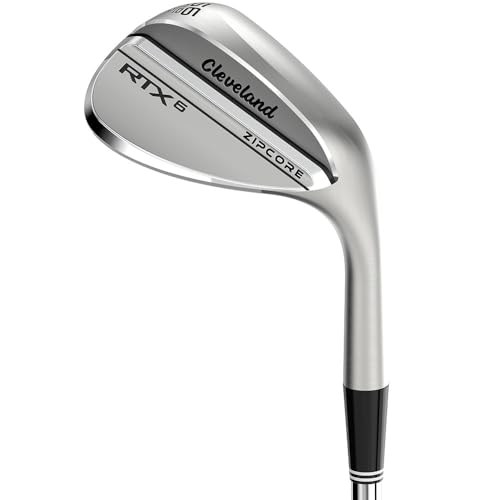
Cleveland RTX 6 ZipCore Wedge
Aggressive milled grooves pair with a repositioned centre of gravity, improving consistency on off centre strikes, common in the short game. Multiple grind options let you match the sole to your turf conditions. Owners report strong spin retention through a full season.
Pros
- Excellent spin on full and partial shots
- Grind options suit different turf conditions
- Consistent across the face
Cons
- Grooves wear with heavy practice use
- Grind selection is confusing without fitting help

Odyssey White Hot OG #7 Putter
A long running White Hot insert pairs with a high inertia mallet head that resists twisting on off centre putts. A double bend shaft suits players with a straight back and through stroke. Owners report the soft roll off the insert is why this design has stayed in bags for decades.
Pros
- Soft consistent roll from the classic insert
- Face balanced head suits straight strokes
- Strong alignment aid on the crown
Cons
- Face balanced design does not suit arced strokes
- Mallet shape is bulky for some players
Compared at a glance
| # | Model | Head size | Best for | Score | Price |
|---|---|---|---|---|---|
| 1 | TaylorMade Qi10 Driver | 460cc titanium | Best overall driver | 9.4 | Check price |
| 2 | Ping G430 Max Driver | 460cc | Best for slice correction | 9.2 | Check price |
| 3 | Mizuno JPX 923 Hot Metal Irons | Chromoly face with cavity back | Best irons overall | 9.0 | Check price |
| 4 | Callaway Paradym Ai Smoke Driver | 460cc | Best for ball speed | 8.8 | Check price |
| 5 | Titleist T150 Irons | Low to mid handicap | Best for better players | 8.6 | Check price |
| 6 | Cleveland RTX 6 ZipCore Wedge | Milled with laser etched face texture | Best wedge | 8.3 | Check price |
| 7 | Odyssey White Hot OG #7 Putter | High MOI mallet | Best putter | 8.0 | Check price |
Common questions
Which golf club should you upgrade first?
The driver, for most amateurs, since tee shots set up every hole and forgiveness gains there prevent the worst scores. Reliable drivers should turn attention to the wedges and putter, since the short game accounts for a large share of strokes.
Do new golf clubs really make a difference?
Against a set more than about ten years old, yes, particularly in forgiveness and driver head design. Against clubs from the last few years, gains shrink and mostly come from better fitting rather than new technology. Fitting an older club correctly often beats buying a new one blind.
What’s the difference between game improvement and players irons?
Game improvement irons carry wider soles, thicker toplines, more offset and lower centres of gravity, all helping the ball get airborne and reducing the mishit penalty. Players irons run more compact, giving more control and feedback but demanding consistent centre contact.
Should you play a hybrid or a long iron?
Most amateurs are better served by a hybrid, which launches higher, forgives more and comes out of rough far easier than a 3 or 4 iron. Players with high swing speeds who want to control trajectory sometimes still prefer long irons or driving irons.
How many wedges do you actually need?
Three is the common setup: a pitching wedge from the iron set, plus a gap wedge and a sand wedge, with a lob wedge added by players needing a high soft shot. Even distance gaps between wedges matter more than hitting a specific number.
How do you choose the right putter?
Match the head style to your stroke. Face balanced mallets suit a straight back and through stroke, while toe hang blades suit an arced stroke. Length matters too, and many golfers use putters too long for them, pushing the hands out and affecting the path.
Does adjustability on a driver actually help?
Yes, when used deliberately. Loft sleeves change launch and spin, and movable weights shift bias toward a draw or a fade. Gains come from setting it correctly once, ideally with a launch monitor, rather than fiddling between rounds based on feel.
How often should you replace golf clubs?
Wedge grooves wear fastest and typically need replacing every couple of seasons with regular play. Drivers and irons last much longer, often five to ten years. Grips deserve replacement every year or two, since worn grips cause pressure problems that affect the whole swing.
Is a heavier or lighter driver head better?
Heavier heads add stability and resist twisting on mishits, which suits faster swings and helps control. Lighter heads generate more clubhead speed for slower swings, aiding distance. Neither is universally better, since the right weight depends on swing speed and tempo.
What’s the difference between forged and cast irons?
Forged irons use a softer metal shaped under pressure, giving a softer feel and easier workability for skilled ball strikers. Cast irons use molten metal poured into a mold, allowing more complex, forgiving shapes at a lower cost. Most game improvement irons are cast for that reason.
Our take
The TaylorMade Qi10 is the club most likely to lower scores for the average golfer, since tee shot dispersion is where amateur rounds fall apart. Slicers get more from the Ping G430 Max and its movable weight. Once the driver is sorted, the Mizuno JPX 923 Hot Metal irons make sense as the next upgrade for the middle of the bag.
Derek Holt
Derek has a background coaching recreational and amateur athletes and has worked the sales floor at specialty fitness retailers. He focuses on equipment durability, ergonomics and realistic use cases rather than marketing claims.


