Is a Tiller Really Necessary for Small Garden Beds?
For small garden beds, a few hundred square feet or less, a full-size tiller is usually overkill. Hand tools, a digging fork, or a compact cultivator can loosen soil just as effectively with less cost, less storage space, and less disruption to soil structure. A tiller earns its place mainly when you are breaking new ground, dealing with heavily compacted clay, or working beds larger than roughly 500 to 1,000 square feet.
What a tiller actually does
A tiller mechanically chops and mixes soil to a set depth using rotating tines, which is mainly useful for breaking up compacted or never-worked ground and for mixing large amounts of amendment into existing soil quickly. On a bed that has already been established and is simply being prepped for a new season, that heavy mixing action is doing more work than the soil actually needs.
Where hand tools catch up
For beds already established, loosening with a digging fork or broadfork and turning compost in by hand achieves a similar level of aeration without inverting soil structure or chopping through earthworms and existing root channels. On a bed under a few hundred square feet, this typically takes fifteen to thirty minutes, not meaningfully longer than setting up and running a tiller.
The soil health tradeoff
Repeated tilling disrupts fungal networks and soil structure season after season, and tilling the same small bed year after year can gradually degrade soil tilth rather than improve it, which is the core argument no-till gardeners point to directly. A bed that gets a thick layer of compost worked in by hand instead often builds better long-term structure than one that gets machine-tilled every spring.
When a tiller genuinely helps
Breaking sod or compacted clay the very first time a bed is established is the clearest case where a tiller saves real labor, since turning virgin ground by hand can take hours per hundred square feet. Incorporating a large volume of amendment, like sand or a thick compost layer, into heavy clay quickly is the other scenario where the machine’s speed matters.
Cost and storage reality for small plots
Gas tillers are heavy, need regular maintenance such as oil changes, spark plug care, and fuel stabilizer if stored over winter, and take up garage or shed space that often isn’t justified by a bed under a few hundred square feet. A digging fork or a basic cultivator pays for itself in convenience far faster for anyone without a genuinely large plot.
A middle ground: mini cultivators
Lightweight electric or cordless cultivators are a different tool class from full tillers, smaller, lighter, and built mainly to break up the top few inches of already-loosened soil rather than new ground. They can speed up small-bed prep each season without the weight, fuel maintenance, or storage footprint of a full tine tiller, which makes them a reasonable middle option for someone who wants power but not a full-size machine.
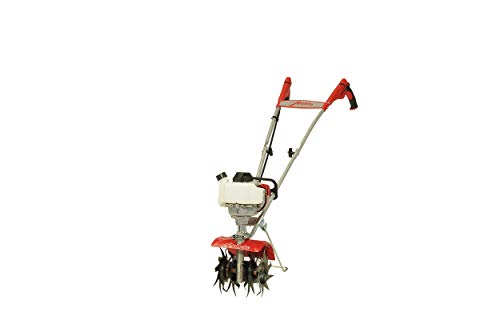
Mantis 7940 Tiller/Cultivator
A lightweight gas-powered tiller sized specifically for small beds and raised rows rather than large plots, with tines narrow enough to work between existing rows.

Sun Joe TJ603E Electric Tiller/Cultivator
A corded electric tiller aimed at small garden beds, lighter and lower maintenance than a gas model since there is no engine to service between seasons.
Frequently asked questions
How big does a garden bed need to be before a tiller actually makes sense?
Most gardeners find the tradeoff tips toward a tiller somewhere around 500 to 1,000 square feet, below that, hand tools are usually just as fast once setup and cleanup time are factored in.
Can you till inside a raised bed without damaging the frame?
You can with a small cultivator used carefully away from the edges, but tines can chip or crack a wooden frame if they contact the sides, so hand tools are often the safer choice in a boxed bed.
Does tilling improve drainage in heavy clay soil?
It can in the short term by breaking up compacted clods, but repeated tilling of wet clay can actually create a compacted layer just below the tilled depth, sometimes called a tillage pan.
Is a cultivator the same thing as a tiller?
Not quite, cultivators are generally smaller and lighter, meant for working already-loose soil or weeding between rows, while tillers are built with the power to break new or compacted ground.
How deep do garden tillers typically dig?
Most consumer tillers work six to ten inches deep, which is plenty for vegetable beds, though breaking truly compacted ground sometimes takes multiple passes to reach full depth.
Will tilling kill earthworms and beneficial soil organisms?
Some will be harmed by the tines directly, but the bigger long-term issue is disrupted fungal networks and soil structure, which matters more for soil biology than the earthworm count after a single pass.
Can you till wet soil?
It’s not recommended, wet soil clumps and smears under tines instead of breaking apart cleanly, and working it while wet can create compaction that takes a season or more to correct.
How often should an established garden bed be tilled?
Many experienced gardeners till an established bed rarely or never after the first season, relying instead on top-dressing with compost and light hand cultivation.
Is double digging a substitute for tilling?
Yes, double digging by hand achieves a similar depth of loosening and amendment mixing as a tiller, just with more manual labor and no engine or cord involved.
Do electric tillers work as well as gas tillers for small beds?
For soil that’s already been worked before, yes, electric models handle it fine; for breaking truly hard, compacted, or rocky ground, gas tillers generally have more sustained power.
Can you rent a tiller instead of buying one for an occasional job?
Yes, and for a one-time task like establishing a new bed, renting is often more cost-effective than buying and storing a tiller used once a year or less.
Does no-till gardening actually produce comparable yields to tilled beds?
Studies and long-term grower reports generally show comparable or sometimes better yields over time with no-till methods, particularly once soil structure has had a few seasons to build up.
What is the difference between a front-tine and rear-tine tiller?
Front-tine tillers are lighter and better suited to small, already-cultivated beds, while rear-tine tillers are heavier and better at breaking new or compacted ground without bouncing as much.
Can a tiller handle rocky soil?
Small to moderate rocks are usually fine, but larger rocks can jam or damage tines, so rocky ground often needs rocks cleared by hand first regardless of tiller power.
Is it worth buying a tiller just for a one-time new bed?
Usually not, renting or borrowing one for the single job of breaking ground is more practical than owning a machine that will sit unused most years afterward.
How long does tilling typically take for a backyard-sized bed?
A bed in the 100 to 300 square foot range usually takes well under an hour with a tiller, compared to potentially several hours of hand digging for the same new-ground scenario.
Does a tiller help control weeds better than hand tools?
In the short term yes, since it chops up existing weed growth along with the soil, but tilling also brings buried weed seeds up to the surface where they can germinate, so it isn’t necessarily a long-term weed control advantage over consistent hand weeding and mulching.
Can a tiller be shared or borrowed among neighbors for occasional small-bed use?
Yes, since most small beds only need a tiller rarely, splitting the cost of one machine with a neighbor or joining a tool-lending library is often more practical than each household buying and storing its own.
Final word
For most backyard growers with beds under a few hundred square feet, a tiller is a nice-to-have rather than a must-have purchase. Hand tools and consistent soil-building habits typically do the same job over time with less wear on both the soil structure and the owner’s storage space, and the tiller’s real value shows up mainly at the one-time job of breaking new ground.
Sierra Daniels
Sierra's background is in landscape design and nursery retail. She focuses on lawn and garden equipment, outdoor furniture and gear durability, weighing published specs against how materials actually hold up outside.
You might also need

Smart Stackable Planters for Vertical Gardens and Small Patios

Compact Hedge Trimmers That Pack a Punch for Small Gardens

Commercial Grade Weatherproof Garden Beds That Last for Years
